• العربية
  • فارسی
BrandBrand
  • Iran Insight
  • Politics
  • Economy
  • Analysis
  • Special Report
  • Opinion
  • Podcast
  • Live TV
  • Iran Insight
  • Politics
  • Economy
  • Analysis
  • Special Report
  • Opinion
  • Podcast
  • Live TV
  • Theme
  • Language
    • العربية
    • فارسی
  • Iran Insight
  • Politics
  • Economy
  • Analysis
  • Special Report
  • Opinion
  • Podcast
  • Live TV
All rights reserved for Volant Media UK Limited
volant media logo

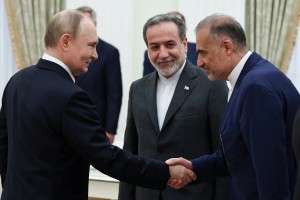
Putin offered help to end Iran war, Rezaei says after Moscow talks

Nov 5, 2026, 18:02 GMT+0

Russian President Vladimir Putin offered to help end the war with Iran and backed regional security arrangements without foreign interference, Iranian security chief Mohsen Rezaei said after meeting him in Moscow.

Rezaei told Iranian state television that he had delivered a message from Supreme Leader Mojtaba Khamenei, who wanted it conveyed to Putin as soon as possible. He said Putin sent warm greetings in return.

According to Rezaei, Putin strongly condemned US and Israeli attacks on Iran, including the bombing of its nuclear sites, and described the war as unjust.

“He believed this was an unjust war and that it should end as soon as possible,” Rezaei said. “He said, ‘We are ready to cooperate in any way we can to help end the war.’”

Rezaei said their discussions also covered the postwar period, particularly regional security arrangements. He briefed Putin on a four-country meeting held in Tehran, which the Russian president welcomed.

“He said, ‘Like our Chinese friends, we believe there should be regional arrangements and that foreign countries should not interfere in the region’s security,’” Rezaei said.

Most Viewed

Russia agreed to supply Iran with 90 advanced missile launchers - FT
1

Russia agreed to supply Iran with 90 advanced missile launchers - FT

2

Could Democrats' midterm victory accelerate Trump's Iran war?

3

US can't end Iran war with symbolic Pickaxe strike, state TV commentators say

4

Democrats demand end to Iran war after US midterm sweep

5
ANALYSIS

Iran looks to China and Russia for leverage in US talks

Banner
Banner

Editors' Pick

  • Iran says US tone shifts but demands still block talks

    Iran says US tone shifts but demands still block talks

  • Halloween gathering in Tehran ends in arrests and police crackdown

    Halloween gathering in Tehran ends in arrests and police crackdown

  • Netanyahu or Eisenkot? Tehran sees little difference on war
    INSIGHT

    Netanyahu or Eisenkot? Tehran sees little difference on war

Banner
Banner
Banner
Banner

Spotlight

  • Why social control remains central to Tehran's survival
    ANALYSIS

    Why social control remains central to Tehran's survival

  • Gold loses its shine as Iranians struggle to make ends meet

    Gold loses its shine as Iranians struggle to make ends meet

  • Tehran's war debate turns to wider strikes and nuclear threats
    INSIGHT

    Tehran's war debate turns to wider strikes and nuclear threats

  • Iran sentences activist to death over X posts, lawyer says

    Iran sentences activist to death over X posts, lawyer says

  • Iran can repair war damage, but can it revive its energy industry?
    ANALYSIS

    Iran can repair war damage, but can it revive its energy industry?

  • Could Democrats' midterm victory accelerate Trump's Iran war?

    Could Democrats' midterm victory accelerate Trump's Iran war?

•
•
•

More Stories

US condemns Iran protest executions, highlights families’ suffering

Nov 5, 2026, 17:29 GMT+0
100%
A photo illustration combining images of an execution scene in Iran and graffiti reading “ISIS beheads, the Islamic Republic hangs."

The US State Department on Thursday condemned Iran’s execution of three young men detained over January protests, highlighting their families’ suffering amid a broader campaign of executions that rights monitors say extends far beyond political cases.

In a post on its Persian-language account, USABehFarsi, the department said Iranian authorities had responded to young people’s peaceful demands with violence, closed trials and executions throughout the Islamic Republic’s 47-year rule.

“The Iranian people deserve justice, accountability for those responsible for these crimes, and a future free from terror and fear,” it said.

The post highlighted the suffering of prisoners’ families, citing three young men executed last month over their participation in the January 2026 protests.

“Three young lives unjustly taken. Three families torn apart,” it said.

The men were Alireza Raeisi, 21, and Alireza Sepahi, 24, who were executed on October 5 after what the department described as closed trials based on forced confessions, and taekwondo athlete Siavash Jamshidi Kheirabadi, executed several days earlier.

Raeisi was arrested just hours after his cousin was killed during the demonstrations, according to the post. His father, who remains imprisoned, was taken blindfolded to his son’s secret funeral without being shown where his body was buried.

Sepahi, a university student, married his fiancée, Mahshad, in prison before his execution. She remains behind bars serving a five-year sentence, the department said. His mother was denied a final farewell.

Executions linked to the protests have continued since those cases. On November 3, authorities hanged Amirhossein Maleki and Amirhossein Ebrahimi in connection with the Alikhani Square protest case in Isfahan. The judiciary alleged that the men had been armed and said the Supreme Court had upheld their sentences.

They were among 12 defendants sentenced to death in the case, which stems from January 8 protests. Seven other defendants had already been executed since July 19, according to the Norway-based organization Iran Human Rights. A lawyer representing defendants disputed the official account, saying none had been formally charged with murder and the alleged killings had not been tried.

Human Rights Watch and the Abdorrahman Boroumand Center said in September that authorities were using rushed proceedings, torture-tainted confessions and public executions to instill fear and deter dissent. Their review found that 16 of 29 protest-related execution cases involved no allegation of killing.

An Iran International investigation in October showed Iran had executed nearly two people a week in political and security cases since the January protests, including over protest- and war-related accusations, while another 190 people faced death sentences.

At least 70 people were executed from January 7 to October 5. Human rights organizations and activists say the figures are minimum totals, covering only cases that have been reported and verified.

  • Iran executes nearly two people a week since January protests

    Iran executes nearly two people a week since January protests

Of the 70 people executed, 35 were put to death in cases connected to the January protests, nine in cases linked to the 12-day and 40-day wars, and 26 in other political and security cases.

Why social control remains central to Tehran's survival

Nov 5, 2026, 14:54 GMT+0
•
Negar Mojtahedi
100%
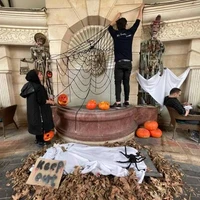
Young Iranians gathering in downtown Tehran on Halloween night, October 31, 2026

Even as Iran grapples with war, economic crisis and the threat of renewed US and Israeli attacks, its security forces are breaking up Halloween celebrations, closing cafes and detaining people for gathering in public.

Analysts say the crackdown on everyday freedoms, alongside the continued execution of protesters, serves several purposes: intimidating a discontented population, reassuring loyalists and demonstrating that the authorities remain firmly in control.

"I think they feel cornered and they feel threatened by the impending military conflict with the US and Israel," Shahin Milani, executive director of the Iran Human Rights Documentation Center, told Iran International.

"They just want to tell the population that we're staying here, we're not going to go anywhere."

On October 30, Basij paramilitary forces and plainclothes security personnel broke up Halloween celebrations on Tehran's Iranshahr Street, beating and detaining people and forcing nearby cafes to close, witnesses told Iran International.

Families spending the evening at nearby Artists Park were also ordered to leave.

The crackdown extended to other cities, where authorities shut down businesses and initiated legal proceedings against organisers of Halloween celebrations.

Social control as a means of survival

Roya Boroumand, executive director of the Abdorrahman Boroumand Center for Human Rights in Iran, said the repression reflects a longstanding feature of the Islamic Republic rather than a new wartime strategy.

She pointed to the years following the 1979 revolution, when authorities targeted cinemas, alcohol sales and women who refused compulsory veiling, even as Iran faced war with Iraq.

"They focused on these issues because this is how they keep people in their place," she told Iran International.

Omid Memarian, an Iran analyst with DAWN, said sweeping social changes in recent years have unsettled the government's conservative base, prompting hardline institutions to enforce restrictions that reassure their supporters.

"These performative acts, which might cost some Iranian citizens their time and their life and their freedoms, [are] designed to satisfy the base, the very hardline base that has been supporting the government over the past seven months," Memarian said.

He distinguished between the civilian government and powerful hardline institutions, including the judiciary, which continue to enforce ideological restrictions.

No respite from executions

The policing of social freedoms comes alongside an escalating campaign of executions following January's nationwide anti-government uprising.

On November 3, Iranian authorities executed Amirhossein Maleki and Amirhossein Ebrahimi, both 19, at Isfahan Central Prison.

Iran Human Rights said the executions brought to nine the number of defendants put to death in the Alikhani Square case, which has been marred by allegations of torture, forced confessions and serious violations of due process.

Three other defendants remain at grave risk of execution.

At least 36 protesters have been executed in connection with the January uprising since March, according to Iran Human Rights.

"They want to intimidate people and just send the message that nothing is going to change and that they're not going to give up an inch," Milani said.

Boroumand argued that international attention to military developments has given the authorities greater room to pursue repression.

"Of course, that's why they are executing so many political prisoners and protesters, because the world is focused on fuel prices and the Strait of Hormuz," she said.

But Boroumand stressed that repression is an existential issue for the Islamic Republic, regardless of whether the country is at war.

A show of strength with limits

Milani cautioned against assuming that every restriction reflects a coordinated national strategy.

"Just because the regime is dictatorial and authoritarian doesn't necessarily mean that it is efficient, even in repression," he said.

Decisions can be arbitrary, he explained, with local officials sometimes imposing restrictions independently of senior authorities.

Memarian said hardline institutions are attempting to demonstrate strength at a time when the government faces unprecedented external pressure.

But he questioned whether they could reverse the social changes that have already taken place, arguing that enforcing restrictions on the scale seen in previous decades has become increasingly difficult.

Milani pointed out that intimidation continues to have devastating consequences for families. Many who have lost children or have loved ones imprisoned may remain silent out of fear that speaking publicly could endanger other loved ones.

Boroumand warned that the consequences of January's crackdown must not disappear from international attention as the war dominates headlines.

"The war is very important, but it should not overshadow the massive and unprecedented killings of January and the repression that Iranians have been experiencing since," she said.

She also pointed to the continuing arrests of lawyers and the difficulties protesters face in securing legal representation.

For the Islamic Republic, repression remains a means of asserting authority. But while it can intimidate citizens into silence, whether it can reverse the social changes that have transformed Iranian society is another matter.


Unpaid insurance bills push Iran's private hospitals into financial strain

Nov 5, 2026, 12:26 GMT+0
100%
A healthcare worker speaks with a patient at a hospital in Iran.

Unpaid insurance reimbursements and rising medicine and equipment prices are draining private hospitals' finances, threatening their ability to maintain services and increasing costs for patients, hospital executives said in accounts published on Thursday.

A journalist in Iran described the financial pressures facing non-government hospitals following a meeting of hospital directors, with some executives saying insurers had failed to settle bills dating back to the Iranian calendar year that ended in March 2025.

One director of a major hospital in a provincial capital said the facility had contracts with about 35 basic and supplementary insurers, welfare departments, banks and other institutions, none of which had settled their outstanding bills for that year.

  • Drug prices jump up to 400% as shortages strain Iranian pharmacies

    Drug prices jump up to 400% as shortages strain Iranian pharmacies

The largest unpaid balances belonged to Dey and Dana Insurance, the director said.

The financial shortfalls come as hospitals face rapidly increasing costs for medicines and medical supplies, with treatment tariffs adjusted annually even as procurement prices change daily.

A director overseeing another hospital with more than 1,200 medical and administrative employees said inflation had made it increasingly difficult to replace medicines and supplies after use.

The price of Ringer's solution, a commonly used intravenous fluid, had increased by 600 percent over three years, the director said.

Insulin and widely used blood pressure medications have also risen in price by as much as 50 percent over the past month.

Some retirees said these medicines were unavailable at Social Security medical facilities, forcing them to seek supplies from other pharmacies.

Hospital costs rise faster than treatment tariffs

One private hospital with more than 300 beds and nearly 20 operating rooms has established a separate department to update medicine prices because they change daily, its director said.

The hospital is not profitable, with revenue covering only operating expenses and staff salaries, according to the director.

The mismatch between changing procurement costs and annually fixed treatment tariffs has added to the financial pressures on hospitals already waiting for overdue insurance payments.

The difficulties extend to Iran's public health insurance system.

  • Iran’s healthcare crunch forces patients to cut treatment

    Iran’s healthcare crunch forces patients to cut treatment

Inflation and rising expenditure have created an imbalance between resources and spending at the Iran Health Insurance Organization since the second half of the Iranian calendar year beginning in March 2024, its chief executive Mohammad Mehdi Nasehi said on October 24.

The Health Ministry owed the organization 420 trillion rials (about $157 million), while shares worth 850 trillion rials (about $318 million) transferred to settle outstanding receivables had not been converted into cash, Nasehi said.

Those figures cover the organization's wider network of contracted providers rather than the outstanding debts owed to individual hospitals.

Iran's Social Security Organization announced on November 3 that it had paid 50 trillion rials (about $19 million) to private pharmacies, family physicians and university-affiliated and private medical facilities.

The announcement did not specify how much of the outstanding debt to hospitals remained unpaid.

Patients face higher costs and reduced coverage

Private hospital executives said rising foreign exchange rates and tighter sanctions could make obtaining medicines and medical equipment more difficult.

Patients are also facing higher treatment costs and restrictions on insurance coverage, adding to the financial pressures across Iran's healthcare system.

The removal of some injectable medicines from outpatient insurance coverage is among the changes that could increase patients' out-of-pocket expenses.

  • Soaring medical costs and staff shortages strain Iran’s hospitals

    Soaring medical costs and staff shortages strain Iran’s hospitals

Some retirees have stopped visiting doctors or purchasing medicines because of treatment costs, retirement rights advocate Ali Akbar Eyvazi told the ILNA news agency on Thursday, November 5.

The removal of medicines from insurance coverage had extended to commonly used diabetes and blood pressure treatments, Eyvazi said.

Prices for some pharmaceutical products have increased by as much as 380 percent in recent months, while patients have described shortages and rising insulin prices.

Iranian state TV broadcasts mock hanging of Trump live

Nov 5, 2026, 09:35 GMT+0
100%
An actor wearing a Donald Trump mask and an orange prison uniform stands inside a mock prison cell alongside a man dressed in a Revolutionary Guards uniform during a staged execution performance in Tehran.

Iranian state television broadcast live a mock hanging of US President Donald Trump as part of a pro-establishment campaign featuring public displays calling for his killing, following Republican losses in Tuesday's US midterm elections.

Footage circulated by Iranian media showed an actor wearing a Trump mask and dressed as a prisoner being subjected to a mock execution by a man in a Revolutionary Guards uniform in Tehran's Tajrish Square, as spectators watched and cheered.

The performance was part of a series of anti-American displays organized by Iranian authorities across the capital.

Banner depicting US and Israeli leaders set ablaze

Videos circulating on social media also showed a large banner depicting Trump, US Vice President JD Vance, Israeli Prime Minister Benjamin Netanyahu and US special envoy Steve Witkoff being set on fire in Tehran's Enghelab Square on Wednesday evening, November 4.

100%
Pro-establishment demonstrators set fire to a large banner depicting US President Donald Trump, Vice President JD Vance, Israeli Prime Minister Benjamin Netanyahu and US special envoy Steve Witkoff in Tehran's Enghelab Square on November 4, 2026.

People gathered in front of the banner chanted "We will kill Trump" as it burned. Several Iranian media outlets also published the footage.

Another large billboard installed in Enghelab Square depicted Trump behind prison bars, his head bowed beneath the English-language message "We will kill Trump."

100%
Pro-establishment demonstrators gather in Tehran's Enghelab Square on November 4, 2026, beneath a giant billboard depicting US President Donald Trump behind bars with the message "We Will Kill Trump."

State-backed campaign targets Trump

Tehran's municipal authorities organized the prison-themed exhibition in Tajrish Square, which included a life-size cell and an actor impersonating the American president.

The displays coincided with events marking the anniversary of the 1979 seizure of the US Embassy in Tehran, during which demonstrators carried placards calling for Trump's death.

Iranian diplomatic accounts also joined the campaign following the US midterms.

The Islamic Republic's embassy account in India shared an AI-generated video depicting Trump being carried out of the White House and thrown into a dumpster marked "Hazardous waste."

Another AI-generated image portrayed a defeated Trump outside the White House, accompanied by the words "Mission Failed" and a message mocking his election losses.

Iran targets Trump after Republican election losses

The displays followed major Republican setbacks in the November 3 elections, which handed control of Congress to the Democrats.

Trump attributed much of the Republican defeat to the US-Israeli war with Iran and the resulting increases in gasoline prices and inflation, although he maintained that the war had been worthwhile.

Russia agreed to supply Iran with 90 advanced missile launchers - FT

Nov 5, 2026, 08:49 GMT+0
100%
A man walks past a display of Iran's Kheibar Shekan ballistic missile in Tehran.

Russia agreed to supply Iran with 90 helicopter-mounted launchers for precision-guided missiles widely used by Russian forces in Ukraine, the Financial Times reported on Thursday, revealing another dimension of Moscow's military cooperation with Tehran.

The previously unreported order adds to evidence of Russian assistance to Iran's military, including a secret program to help Tehran develop supersonic cruise missiles that could potentially threaten US Navy vessels in the Persian Gulf.

A Russian defense industry production schedule covering 2024 and 2025, obtained by the FT, identified an export order for 90 APU-L launchers from a buyer designated "K-10," a code used by Russia's state arms exporter to refer to Iran.

The documents did not establish whether the launchers were ultimately delivered.

Precision-guided weapons used in Ukraine

The launchers are designed to carry Russia's light multipurpose guided missile, known as LMUR or Izdeliye 305, a precision weapon capable of striking moving targets.

The missile entered Russian military service in 2022 and has since been widely used in Ukraine. An operator can guide it during flight, allowing adjustments to its target.

According to the US Army's Worldwide Equipment Guide, APU-L launchers are designed for Russia's Mi-28 attack helicopters and can carry two missiles each.

Iran has already acquired Russian Mi-28 helicopters. In November 2023, Iranian officials announced that arrangements for their delivery had been finalized. Images appearing online in January 2026 subsequently showed an Mi-28 at an aviation facility in Tehran, according to the FT.

The production documents were provided to the newspaper by Dallas Analytics, a Ukrainian private intelligence organization.

A May 2024 letter from Russian missile manufacturer Vympel warned another defense bureau that delays in supplying launcher components could jeopardize several contracts.

Russia also helped Iran develop supersonic cruise missiles

The latest report follows a September FT investigation revealing that Russia had secretly assisted Iran in developing supersonic cruise missile technology through a program codenamed C430L.

According to leaked Russian correspondence, travel records and military patents reviewed by the newspaper, the program began in 2023 and continued during this year's war involving Iran, the United States and Israel.

The project focused on developing a ramjet propulsion system capable of sustaining missile flight at several times the speed of sound, potentially reducing the time available for US and allied air defenses to respond.

"For the Iranians, this would give them a qualitatively new strategic weapon system that could threaten US Navy vessels," Jim Lamson, a former CIA military analyst specializing in Iran, told the FT.

Iran had built and flight-tested the propulsion system, but the newspaper found no evidence that a Russian-assisted supersonic cruise missile had entered operational service.

  • How far would Russia and China go to save the Islamic Republic?

    How far would Russia and China go to save the Islamic Republic?

  • Russia secretly assists Iran with supersonic cruise missiles - FT

    Russia secretly assists Iran with supersonic cruise missiles - FT

  • Iran agrees €500 mln arms deal with Russia to rebuild air defenses - FT

    Iran agrees €500 mln arms deal with Russia to rebuild air defenses - FT

Russian engineers reportedly traveled repeatedly to Iran and later analyzed Iranian flight-test data, advising on fuel systems, combustion stability, air intake and engine design.

"This is the transfer of a highly strategically sensitive military technology from Russia that the Iranians have wanted to acquire for decades," Fabian Hinz, a senior analyst at Conflict Armament Research, told the FT in September.

Military cooperation deepens during Iran war

The launcher agreement and missile development program illustrate different aspects of Russian assistance to Tehran, ranging from supplying military equipment to transferring specialized technical knowledge.

The FT has also reported that Russia agreed to supply Iran with Verba shoulder-fired air defense systems.

The relationship has developed in both directions. Iran previously supplied Russia with Shahed attack drones used in Ukraine and helped Moscow establish domestic production.

Western intelligence officials told the FT that Moscow and Tehran had strengthened their military partnership further during this year's conflict in the Middle East, despite US President Donald Trump's assertion that Russia was doing "very little, if anything" to assist Iran.

"It is indicative of Russia's willingness to continue supplying Iran despite its own wartime demands and with far less concern about western objections than in the past," Nicole Grajewski, a scholar at the Carnegie Endowment for International Peace, told the newspaper.

Limits to Moscow's involvement

Despite growing cooperation, analysts cautioned against overstating Russia's role in the ongoing conflict.

Hanna Notte, Eurasia program director at the James Martin Center for Nonproliferation Studies, said Moscow was balancing its support for Iran against its relationships with Washington and other countries in the Middle East.

"Russia still has certain red lines when it comes to its involvement in this war," Notte told the FT.

"Which is why the support it has provided to Iran is operationally helpful but is not the game changer in this war."