• العربية
  • فارسی
BrandBrand
  • Iran Insight
  • Politics
  • Economy
  • Analysis
  • Special Report
  • Opinion
  • Podcast
  • Live TV
  • Iran Insight
  • Politics
  • Economy
  • Analysis
  • Special Report
  • Opinion
  • Podcast
  • Live TV
  • Theme
  • Language
    • العربية
    • فارسی
  • Iran Insight
  • Politics
  • Economy
  • Analysis
  • Special Report
  • Opinion
  • Podcast
  • Live TV
All rights reserved for Volant Media UK Limited
volant media logo

UK raises inflation forecast for 2027 as Iran war drives up energy costs

Oct 28, 2026, 14:43 GMT+0

British inflation is set to average 3.4% in 2027, up from an earlier forecast of 2%, the country's budget watchdog said Wednesday.

The Office for Budget Responsibility expects inflation to peak at 3.75% in early 2027 before falling to 2% by 2030.

The revised forecasts come as rising energy prices linked to the Iran war have pushed British inflation to 3.5% in September, its highest since October 2025.

Most Viewed

'Iraq-first' message from Iran ally sparks calls for retaliation
1
INSIGHT

'Iraq-first' message from Iran ally sparks calls for retaliation

2
ANALYSIS

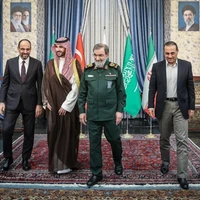
Iran talks with Mecca pact states may be ‘last chance’ before military action

3
INSIGHT

Tehran plans for $130 oil it struggles to sell

4

Tehran summit divides Iranian hardliners over Yemen and US talks

5
ANALYSIS

Iran’s neighbors push diplomacy, prepare for its failure

Spotlight

  • Iran's Great Depression? Economists weigh Bessent's dire forecast
    ANALYSIS

    Iran's Great Depression? Economists weigh Bessent's dire forecast

  • Inside the alleged IRGC Intelligence takeover of Iran’s sanctioned oil trade
    EXCLUSIVE

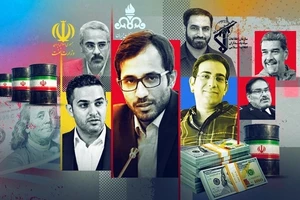
    Inside the alleged IRGC Intelligence takeover of Iran’s sanctioned oil trade

  • Tehran plans for $130 oil it struggles to sell
    INSIGHT

    Tehran plans for $130 oil it struggles to sell

  • Tehran summit divides Iranian hardliners over Yemen and US talks

    Tehran summit divides Iranian hardliners over Yemen and US talks

  • Iran’s neighbors push diplomacy, prepare for its failure
    ANALYSIS

    Iran’s neighbors push diplomacy, prepare for its failure

Banner
Banner
Banner
Banner
Banner
•
•
•

More Stories

Netanyahu holds on, raises prospect of new Iran strikes

Oct 28, 2026, 13:55 GMT+0
100%
Israel's Prime Minister Benjamin Netanyahu speaks to the media after voting at a polling station in Jerusalem, Israel, on the day of Israel's legislative election, October 27, 2026.

Israeli Prime Minister Benjamin Netanyahu appeared set to remain in power after Tuesday’s election left his opponents short of the seats needed to unseat him, as he raised the prospect of renewed military action against Iran alongside the United States.

With nearly all votes counted on Wednesday, projections by Israel’s three main broadcasters gave Netanyahu’s bloc of right-wing, far-right and ultra-Orthodox parties 53 seats in the 120-seat Knesset, against 48 for the opposition led by former military chief Gadi Eisenkot.

Arab parties were projected to win a record 19 seats.

Neither bloc secured a majority, but the opposition's weaker-than-expected performance left Eisenkot with little prospect of forming a government without support from Arab parties, an arrangement many Jewish political leaders oppose.

Netanyahu is therefore likely to remain caretaker prime minister while coalition negotiations proceed or until another election is held.

President Isaac Herzog has said that Israel must avoid heading to the polls again after Tuesday’s vote.

“We need to do everything, certainly after yesterday, so as not to hold another election,” he said.

‘Once and for all’

Addressing supporters in Jerusalem early Wednesday, Netanyahu called for a “strong, right-wing national government” and highlighted Israel’s military successes, including its operations against Iran.

“Israel faces a singular historical opportunity, together with our partner President Trump, to remove the existential threat of Iran once and for all. But ulterior motives must not divert us from this sacred mission,” he said.

His remarks raised the prospect of renewed joint military action against Tehran at a time of heightened tensions and diplomatic efforts to avert another round of fighting.

Trump, who had urged Israelis to reelect Netanyahu so the two leaders could “finish the job” in Iran, praised his performance and credited his own endorsement.

“It might be winning or tie. The tie is sort of considered a win in that case because it's a big chess match,” Trump said Wednesday during a campaign stop in Texas.

Eisenkot, meanwhile, acknowledged that Netanyahu would remain in office as a caretaker but argued that the prime minister had lost public support and should retire from politics.

He also warned security and civil service officials against allowing Netanyahu to use national security for political purposes.

“Remember that you serve only the state and the interests of Israel's citizens. Stand firm in the face of any attempt to challenge you,” Eisenkot said. “Netanyahu, do not dare use Israel’s security for your political needs.”

Turnout reached 77.7%, the highest in more than two decades, with particularly strong participation among Arab voters.

Their parties' projected gains could give them an unusually influential role in determining whether an alternative government can be formed.

Iran's new internet bill raises fears of tighter online restrictions

Oct 28, 2026, 13:40 GMT+0
100%
People use their mobile phones in a public park in Iran.

Iranian lawmakers are reviewing a new internet regulation bill that could expand authorities' powers to restrict online access, raising concerns over further controls after months of nationwide internet shutdowns.

The proposed Cyberspace Regulation Bill is being examined by a parliamentary committee, but its official text remains unpublished, Iranian news outlet Jamaran reported.

Parliament received the proposal on August 3, but lawmakers reviewing it have declined to disclose its provisions.

"A decision has been made not to publicize the details of the Cyberspace Regulation Bill for the time being," Rouhollah Abbaspour, spokesman for the parliamentary committee, said.

An unofficial 12-article draft circulating online resembles the controversial Internet Protection Bill, known as the Sianat plan, which stalled in the previous parliament. However, a committee member told local media that the version under review differs from the circulating text.

Lawmakers divided over restrictions

The proposal has drawn criticism within parliament, with some lawmakers questioning the need for additional controls when international internet access is already heavily restricted.

Mostafa Pourdehghan, a member of parliament's Industries and Mines Committee, criticized repeated attempts to restrict international connectivity and expand domestic alternatives, citing existing filtering, poor internet quality and rising costs.

Pourdehghan warned that further restrictions during wartime could increase public anxiety, particularly among young people, and predicted the bill would meet the same fate as the earlier so-called Protection Plan.

Lawyer warns of sweeping powers

Lawyer Kambiz Norouzi warned that the proposed legislation could give the Supreme Council of Cyberspace extensive authority while weakening government oversight.

In an editorial published by Shargh newspaper, Norouzi criticized Article 1 of the circulating draft, which designates the council as the highest authority for internet policymaking.

  • President takes fire as Iran fast-tracks ‘cyber censorship’ bill

    President takes fire as Iran fast-tracks ‘cyber censorship’ bill

Article 6 would also allow internet access to be suspended or restricted on orders from judicial authorities or other competent bodies, without clearly identifying those additional authorities.

"This provision amounts to creating unlimited and unregulated power to violate fundamental freedoms and is certainly unconstitutional and illegitimate," Norouzi wrote.

Norouzi also argued that the bill would concentrate decision-making in an institution whose proceedings are largely closed to public scrutiny.

The official parliamentary text has not been published, leaving uncertainty over whether these provisions appear in the version under review.

Months of shutdowns and previous restrictions

The proposal follows months of internet disruption affecting millions of Iranians.

Authorities imposed a nationwide blackout on January 8, 2026, during anti-government protests. Connectivity was only partially restored before another near-total shutdown began on February 28 following the outbreak of war involving Iran, Israel and the United States.

The second blackout lasted 88 days, with international connectivity beginning to return on May 26.

Restrictions disrupted businesses, education and communications. Iran's Chamber of Commerce estimated direct economic losses at $30 million to $40 million daily, with indirect losses potentially doubling that figure.

  • Two months offline: Iran blackout drives losses, access splits

    Two months offline: Iran blackout drives losses, access splits

The legislation follows years of attempts to expand state control over online communications.

The earlier so-called Protection Plan sought greater oversight of foreign platforms but stalled following public opposition.

In July 2025, President Masoud Pezeshkian's administration also withdrew a separate cyber censorship bill following criticism over its potential impact on free expression.

  • Iran withdraws cyber bill after outcry over free speech

    Iran withdraws cyber bill after outcry over free speech

Authorities have continued developing the National Information Network, which allows selected domestic services to operate independently of international connectivity.

The Supreme Council of Cyberspace, established by former Supreme Leader Ali Khamenei in 2012, already plays a central role in internet policymaking.

For now, lawmakers remain divided over the proposal's prospects, while the refusal to release its official text has left its scope, legal implications and potential impact on internet access unclear.

Kuwait summons Iranian ambassador over 'interference in internal affairs'

Oct 28, 2026, 12:46 GMT+0
100%

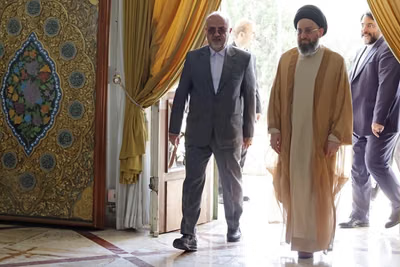
Kuwait summoned Iran's ambassador on Wednesday and handed him a formal protest over a statement by the Iranian embassy that it said interfered in the country's internal affairs and undermined the independence of its judiciary.

Kuwait's Foreign Ministry said Deputy Foreign Minister Hamad Suleiman Al-Mashaan summoned Iranian Ambassador Mohammad Toutounchi over the embassy's statement issued earlier on Wednesday.

The ministry described the statement as "blatant interference in the internal affairs of the State of Kuwait" and an infringement on its sovereignty and judicial independence, in violation of international laws and norms.

Kuwait strongly rejected any interference in rulings issued by its courts and urged Iran to respect international law, the UN Charter and the 1961 Vienna Convention on Diplomatic Relations, particularly the principles of good neighborliness and noninterference in other countries' affairs.

Iran rejects accusations over assassination plot

The diplomatic dispute followed a Kuwaiti court ruling on Monday sentencing three men to death after convicting them of collaborating with Iran and Lebanon's Hezbollah and plotting to assassinate senior Kuwaiti officials, including First Deputy Prime Minister and Interior Minister Sheikh Fahad Al-Yousef Al-Sabah.

Iran's embassy in Kuwait said it "categorically rejects" the Kuwaiti government's accusation that an Iranian citizen was involved in a plot to assassinate officials or in any activity threatening Kuwait's national security.

The embassy said the individual "has not been present in Kuwait during the past 10 years."

In its statement, the embassy expressed deep regret over what it described as a continued "negative approach toward Iran," citing repeated "baseless and worn-out scenarios" involving accusations of Iranian interference in Kuwaiti affairs.

It said making such "false accusations against Iranian citizens" violated international law and the principle of good neighborliness.

Referring to the US-Israeli military attacks on Iran, the embassy said countries in the region were expected to "adopt responsible and wise policies" to prevent further escalation of tensions affecting the wider region.

Kuwait court sentences three to death

Kuwait's State Security Criminal Court sentenced the three men on Monday over charges including espionage, plotting attacks, membership in an outlawed organization and activities harmful to national interests, according to Kuwait Times.

Prosecutors accused some of the defendants of planning to use explosives to assassinate senior officials, while one was accused of attempting to smuggle explosives into Kuwait.

The court said the defendants sought to undermine national security, create instability and weaken public confidence in the authorities' ability to maintain order.

AFP, citing judicial sources, identified one of those sentenced to death as Hussein Abdallah al-Maatouq, a religious figure and secretary-general of the National Islamic Alliance.

The death sentences are not final and remain subject to review by Kuwait's Court of Appeals.

Tensions rise across Persian Gulf region

The diplomatic dispute comes amid heightened tensions between Iran and Persian Gulf countries during the ongoing US-Israeli war on Iran.

Kuwait has pursued other cases involving suspected cooperation with Iran and Hezbollah. In July, a Kuwaiti appeals court sentenced a citizen to life imprisonment after overturning an earlier 10-year prison term in a case involving alleged cooperation with Iran's Revolutionary Guards and Hezbollah.

Bahrain has also prosecuted people accused of working with Iran's Revolutionary Guards. In May, a Bahraini court sentenced nine defendants to life imprisonment and two others to three years over activities authorities linked to the Iranian force.

Iran oil chief faces scrutiny over missing revenues, appointments

Oct 28, 2026, 12:24 GMT+0
100%
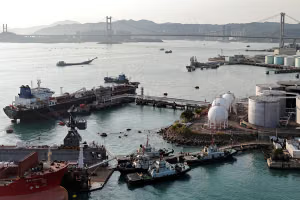
Offshore oil platforms in the Persian Gulf. Iran's oil industry faces renewed scrutiny over billions of dollars in outstanding export revenues and questions surrounding senior management appointments.

Iran's acting oil minister Hamid Bovard is facing questions over his role in recovering billions of dollars in oil revenues and allegations of his brother's involvement in senior appointments, news outlet Rouydad24 reported on Wednesday.

The report follows the resignation of Oil Minister Mohsen Paknejad on October 4 and Bovard's appointment as caretaker minister, despite his previous responsibility for overseeing oil operations as managing director of the National Iranian Oil Company (NIOC).

The controversy has intensified following a debate hosted by the Revolutionary Guard-affiliated Fars news agency over billions of dollars in outstanding oil revenues, the performance of Persian Gulf Petrochemical Industries Company and the circumstances surrounding Paknejad's departure.

The debate raised questions about Bovard's appointment as acting oil minister, given his previous responsibility for overseeing oil sales as head of the National Iranian Oil Company, and whether he should also be held accountable for the failure to recover export revenues.

  • Inside the alleged IRGC Intelligence takeover of Iran’s sanctioned oil trade

    Inside the alleged IRGC Intelligence takeover of Iran’s sanctioned oil trade

The criticism centres on the failure of intermediaries, commonly known in Iran as trustees, to transfer proceeds from oil exports back to the country.

Reports have put the outstanding revenues at several billion dollars, including an estimated $4.7 billion associated with sales during Paknejad's tenure.

Questions over family influence

Rouydad24 also raised questions about the possible involvement of Bovard's brother, Javad Bovard, in recent management appointments across the oil sector.

100%
Iran's caretaker Oil Minister Hamid Bovard

The outlet cited unverified reports and rumours suggesting that Javad Bovard may have influenced personnel decisions.

The National Iranian Oil Company has previously denied allegations that family connections were being used to secure business advantages, saying certain contracts dated back to the previous administration.

Among the appointments highlighted was Mohammad Salehi Dolabi's selection as managing director of Oil Exploration Operations Company (OEOC), an upstream oil services company.

  • IRGC commander, son helped build new oil-sales network

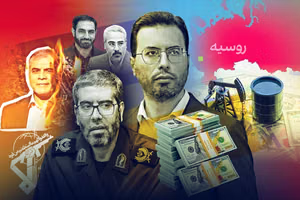
    IRGC commander, son helped build new oil-sales network

Rouydad24 questioned the limited publicly available information about his technical qualifications and previous experience in exploration and drilling, saying the lack of transparency had contributed to concerns over the selection process.

Uncertainty over permanent minister

Bovard's appointment as caretaker minister does not guarantee that he will become the permanent head of the ministry.

Under Article 135 of Iran's constitution, President Masoud Pezeshkian has three months to nominate a replacement minister for parliamentary approval.

Rouydad24 identified several potential candidates, including former economy minister Masoud Karbasian, former minister Mohammad Shariatmadari and former Social Security Organization chief Mostafa Salari.

  • Secret documents expose new network selling sanctioned Iranian oil

    Secret documents expose new network selling sanctioned Iranian oil

The report suggested Bovard could face competition from candidates with greater ministerial or managerial experience.

The unresolved oil revenues and questions surrounding senior appointments have placed the ministry's leadership under renewed scrutiny, with the government yet to announce its nominee for the permanent post.

Iran rejects Qatari peace ideas as Trump leaves door open to new strikes

Oct 28, 2026, 10:38 GMT+0
100%
Iranian President Masoud Pezeshkian meets Qatar’s Emir Sheikh Tamim bin Hamad Al Thani on the sidelines of the 8th Gas Exporting Countries Forum summit in Moscow, October 27, 2026.

A senior Iranian official said on Wednesday that Qatar had presented Tehran with ideas that were unacceptable rather than a new peace proposal, casting doubt on diplomatic efforts to end the US-Israeli war on Iran as Washington weighs further military action.

The unnamed official told Reuters that Tehran would show no flexibility on the nuclear issue, a key point of dispute in efforts to reach an agreement.

The remarks came hours after Reuters cited another unnamed official briefed on the negotiations as saying that Qatari mediators had presented Iran with a new draft agreement in Tehran on Sunday, with a response expected by the end of the week.

Qatar pushes seven-day agreement

According to the official briefed on the negotiations, the draft sets out a seven-day timeline to address concerns on both sides, requiring each side to take daily confidence-building steps.

The process could begin early next week, while several countries would act as guarantors of the agreement. The official also said there had been concerns ahead of Sunday's meeting in Tehran that Israeli Prime Minister Benjamin Netanyahu could resume attacks on Iran this week.

  • Bessent says Iran economy will contract by more than 25%

    Bessent says Iran economy will contract by more than 25%

  • Tehran summit divides Iranian hardliners over Yemen and US talks

    Tehran summit divides Iranian hardliners over Yemen and US talks

  • Iran’s neighbors push diplomacy, prepare for its failure

    Iran’s neighbors push diplomacy, prepare for its failure

Trump leaves military options open

US President Donald Trump on Wednesday declined to rule out further strikes on Iran after the November 3 US midterm elections, saying "anything is possible."

"I can't tell you that," Trump told reporters at Joint Base Andrews in Maryland when asked whether he planned to attack Iran after the elections. "But anything is possible."

Trump said Iran wanted an agreement and might be waiting until after the elections, but warned that delaying a deal "is not going to help."

"We've decimated their military. We've decimated the finances. They have no money. They have inflation the highest in the world, 300 percent. The government is gone. But we'll see what happens," Trump said.

His remarks came as the Wall Street Journal reported that Washington had warned several Arab states in the Persian Gulf to prepare for a possible short, intense military campaign against Iran after the elections.

US and Israel prepare for possible strikes

The United States has sent warnings through diplomatic and military channels as Washington and Israel prepare for a possible new round of attacks aimed at weakening Tehran and pushing it toward negotiations, the Journal reported, citing people briefed on the discussions.

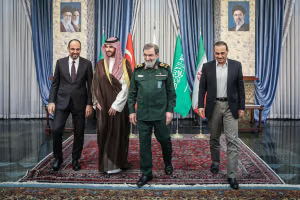
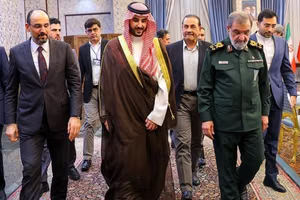
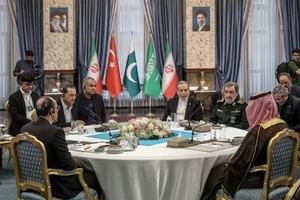
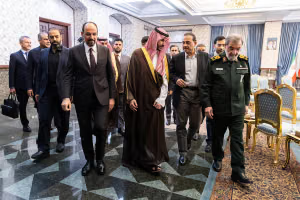
  • Mecca defense pact members hold talks with Iran

    Mecca defense pact members hold talks with Iran

  • Iran talks with Mecca pact states may be ‘last chance’ before military action

    Iran talks with Mecca pact states may be ‘last chance’ before military action

  • Oil price surge fuels Iran hardliners’ case against US deal

    Oil price surge fuels Iran hardliners’ case against US deal

The US military is moving a Patriot missile defense system from Texas to strengthen regional defenses and has relocated troops from vulnerable bases in preparation for a possible escalation, according to the report.

US forces have also been replenishing munitions, while bombers and fighter jets are being prepared for potential operations.

An additional aircraft carrier strike group and a Marine expeditionary unit are expected to join roughly 20 US warships in the Middle East next month, although some vessels could rotate out, the Journal reported.

Trump has not made a final decision but is leaning toward a large-scale attack after the elections that could target Iranian infrastructure and nuclear facilities, the newspaper said, citing people familiar with his thinking.

Israel has also prepared plans and identified targets for possible strikes, while Netanyahu has pushed for renewed military action against Iran, according to the report.

The White House declined to comment on "sensitive military plans that may or may not exist," but said Trump "keeps all options on the table to ensure that Iran can never have a nuclear weapon."