• العربية
  • فارسی
BrandBrand
  • Iran Insight
  • Politics
  • Economy
  • Analysis
  • Special Report
  • Opinion
  • Podcast
  • Live TV
  • Iran Insight
  • Politics
  • Economy
  • Analysis
  • Special Report
  • Opinion
  • Podcast
  • Live TV
  • Theme
  • Language
    • العربية
    • فارسی
  • Iran Insight
  • Politics
  • Economy
  • Analysis
  • Special Report
  • Opinion
  • Podcast
  • Live TV
All rights reserved for Volant Media UK Limited
volant media logo

Iran war fuels oil and gas boom across Americas - FT

Oct 28, 2026, 03:26 GMT+0

The Iran war is driving an oil and gas production and export boom across the Americas as buyers seek alternatives to Middle East supplies disrupted by the conflict, the Financial Times reported Tuesday.

Oil production in North and South America is on course to rise 10% in the two years through December 2026, according to Rystad Energy. Canada and Brazil have set production records this year, while Venezuela, Argentina and the United States are also increasing output or exports.

Global markets have lost more than 2 billion barrels of crude because of attacks on oil infrastructure and tankers in the Strait of Hormuz, pushing buyers and investors to diversify supply and increase investment in the Americas, the FT reported.

Argentina has emerged as one of the biggest beneficiaries, with rising production from the Vaca Muerta shale formation helping push the country’s total exports above $10 billion for the first time in September. TotalEnergies this month announced a $10 billion investment in Argentina, while Chevron plans to invest $13.8 billion in its El Trapial project over the next decade.

Canada is also attracting increased investment, with nearly four in five institutional investors surveyed by ATB Cormark Capital Markets saying restrictions on Middle East crude and LNG exports had made them more likely to invest in Canadian energy companies.

The FT cited analysts as saying increased production across the Americas could limit OPEC’s pricing power in the future, although the region cannot fully replace lower-cost Middle East supplies.

Most Viewed

Bessent says Iran economy will contract by more than 25%
1
EXCLUSIVE

Bessent says Iran economy will contract by more than 25%

2
INSIGHT

'Iraq-first' message from Iran ally sparks calls for retaliation

3

Oil price surge fuels Iran hardliners’ case against US deal

4

Mecca defense pact members hold talks with Iran

5
ANALYSIS

Iran talks with Mecca pact states may be ‘last chance’ before military action

Banner
Banner
Banner
Banner
Banner

Spotlight

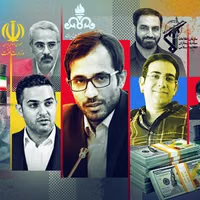
  • Inside the alleged IRGC Intelligence takeover of Iran’s sanctioned oil trade
    EXCLUSIVE

    Inside the alleged IRGC Intelligence takeover of Iran’s sanctioned oil trade

  • Tehran plans for $130 oil it struggles to sell
    INSIGHT

    Tehran plans for $130 oil it struggles to sell

  • Tehran summit divides Iranian hardliners over Yemen and US talks

    Tehran summit divides Iranian hardliners over Yemen and US talks

  • Iran’s neighbors push diplomacy, prepare for its failure
    ANALYSIS

    Iran’s neighbors push diplomacy, prepare for its failure

  • Three members of Iranian family die within months after protest killing

    Three members of Iranian family die within months after protest killing

  • Iran talks with Mecca pact states may be ‘last chance’ before military action
    ANALYSIS

    Iran talks with Mecca pact states may be ‘last chance’ before military action

  • 'Iraq-first' message from Iran ally sparks calls for retaliation
    INSIGHT

    'Iraq-first' message from Iran ally sparks calls for retaliation

  • Oil price surge fuels Iran hardliners’ case against US deal

    Oil price surge fuels Iran hardliners’ case against US deal

•
•
•

More Stories

Tehran plans for $130 oil it struggles to sell

Oct 28, 2026, 02:00 GMT+0
•
Behrouz Turani
100%
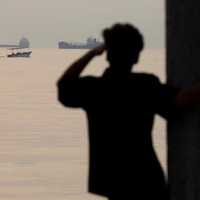
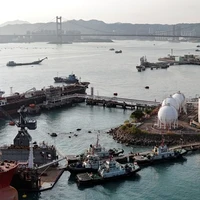
A man looks out at ships off the coast of Bandar Abbas, near the Strait of Hormuz, October 24, 2026

Iran’s budget planners are considering oil at $130 per barrel for the next Iranian year even as the conflict driving global prices higher has severely restricted Tehran’s ability to export crude.

The scenario, reported by the IRGC-linked Fars News Agency, would put the assumed price at more than twice the $55 used in the previous budget and highlights an increasingly difficult calculation for Tehran.

Plan and Budget Organization chief Hamid Pourmohammadi said Sunday that Iran’s Economic Council had approved the directive for drafting the budget for the year 1406, which begins in March 2027, and that the bill would be submitted to parliament within a month.

He did not disclose the baseline oil price the government intends to use. Fars reported separately that the PBO was considering a scenario based on oil reaching $130 per barrel.

An agreement with Washington could ease restrictions on Iranian exports but push global oil prices lower. Continued conflict could keep prices elevated while making Iranian oil even harder to sell.

A $130 scenario

Global oil prices have risen sharply since the war involving Iran, the United States and Israel and the regional conflicts that followed, climbing from around $70 to roughly $117 per barrel.

Some Iranian oil-market commentators say prices could reach $130 if the conflict continues and Tehran and Washington fail to reach an agreement.

But Iranian budgets have traditionally used more conservative oil-price assumptions to reduce the risk of revenues falling short.

Tehran’s Haft-e Sobh newspaper described the $130 figure as a “shock,” while the economic news website Faraz Energy also reported that it was under consideration.

Iran’s ability to sell crude has been severely constrained by the US naval blockade and sanctions. The higher global price therefore does not necessarily translate into higher revenues for Tehran.

Disputed export figures

Iranian officials insist that oil continues to leave the country despite US efforts to stop exports.

Mohsen Zanganeh, a member of parliament’s Planning and Budget Committee, said Iran earned more than $11.5 billion from oil during the first four months of the year and achieved 85% of its projected oil revenue.

He also claimed that Iran continued to export at least 600,000 barrels of crude per day despite the blockade and sanctions.

The US military’s Central Command presents a sharply different picture, saying its blockade of Iranian ports has prevented at least $25 billion in crude exports and that no goods other than humanitarian supplies have moved by sea.

The competing claims from parties to the conflict have not been independently verified.

Iran’s oil infrastructure has also suffered serious damage during the war, while the government has resorted to rationing and other austerity measures to curb domestic energy consumption.

Risk of a shortfall

Hossein Selahvarzi, a former head of Iran’s Chamber of Commerce, warned in comments published by the economic daily Donya-ye Eghtesad that the greatest danger would be to prepare the 1406 budget as though Iran were facing a normal year.

Such an approach, he argued, could combine optimistic revenue forecasts with existing spending commitments, producing a deficit that would fuel inflation and discourage investment.

The uncertainty surrounding both prices and export volumes makes the eventual assumptions particularly important.

If $130 becomes the government’s baseline rather than merely one scenario, and either prices or export volumes fall short, Tehran would have to find other ways to close the revenue gap.

Those could include borrowing from the National Development Fund, selling government bonds or relying indirectly on financing from the Central Bank—measures that could add to inflationary pressure and further weaken the rial.

The government has yet to disclose which oil price or export volume it will ultimately use. But the $130 scenario illustrates the unusual calculation facing Tehran: the conflict that has made oil more valuable has also made Iran’s considerably harder to sell.

Tehran summit divides Iranian hardliners over Yemen and US talks

Oct 27, 2026, 22:56 GMT+0
•
Maryam Sinaiee
100%
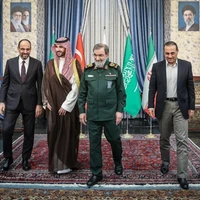
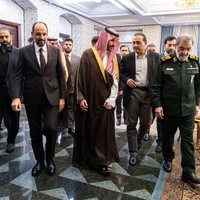
Turkish intelligence chief Ibrahim Kalin, Saudi Defense Minister Prince Khalid bin Salman, Iran’s Supreme National Security Council Secretary Mohsen Rezaei, and Pakistan’s Chief of Defense Forces Field Marshal Asim Munir pose for a photograph during a meeting in Tehran, Iran, October 26, 2026. IRNA

A visit to Tehran by senior Saudi, Turkish and Pakistani officials has exposed divisions among Iranian commentators, with some hailing it as recognition of Iran's influence and others warning that the visitors may be seeking concessions over Yemen and in talks with Washington.

The four-way meeting ended with a cautious statement committing the participants to continued dialogue on regional peace and security, without announcing specific agreements on the war involving Iran, the United States and Israel, the Strait of Hormuz or Iran's nuclear program.

Reuters reported, citing a Pakistani official, that Pakistan's army chief, Asim Munir, had presented Tehran with a proposal to end hostilities that had the approval of US President Donald Trump.

According to the official cited by Reuters, Pakistan, Turkey, Saudi Arabia and Qatar would act as guarantors if Iran accepted the proposal.

The prospect of regional powers helping broker an agreement has raised a question among Iranian commentators: whether the visitors came to offer Tehran a way out of the confrontation or to press it into concessions.

Recognition or pressure?

The state-run Iran newspaper chose the headline "Without Iran, Never" for its Tuesday report on the meeting, arguing that the presence of senior officials from three major regional powers demonstrated that no regional security order could be established without Tehran.

Abdollah Ganji, a hardline commentator and former editor of the IRGC-affiliated Javan newspaper, went further, describing Iran as the center of an emerging regional security arrangement.

"Iran is the axis of security creation in West Asia," he wrote on X, adding that a new "anti-Zionist bloc" was taking shape.

Former Foreign Minister Mohammad Javad Zarif proposed a broader West Asian security network based on non-aggression, confidence-building and shared prosperity.

"Regional security cannot be imported; it must be built together by the people of this region," he wrote.

But many hardliners were considerably less enthusiastic.

"It is far too early to judge the results of this meeting, but it does not seem that trust has replaced mistrust or cooperation has replaced competition," hardline commentator Mostafa Najafi wrote on X.

"In today's Middle East, meetings are more about managing crises and tensions, or avoiding their consequences, than resolving them."

Heshmatollah Falahatpisheh, a former chairman of parliament's National Security and Foreign Policy Committee, argued that Yemen remained a more immediate concern for the visiting countries than Iran's confrontation with Washington.

"As long as the Yemen issue remains unresolved, the Iran issue will not be put on the agenda," he told Khabar Online.

Yemen at the heart of the mistrust

The Houthis' attacks on Saudi Arabia and regional shipping have made Yemen a major security concern for Riyadh. But Tehran's relationship with the group is also regarded by hardliners as an important source of Iranian influence.

Hossein Shariatmadari, managing editor of the hardline Kayhan newspaper, questioned the purpose of the meeting in a commentary titled "Tehran Summit: Water or Mirage?"

He warned that cooperation with countries involved in the Mecca defense pact could lead to pressure on Iran to distance itself from the Houthis, insisting that Tehran would not abandon the group.

Hardline lawmaker Mahmoud Nabavian portrayed Saudi Arabia's difficulties in confronting the Houthis as a reason for Riyadh's participation in the talks.

"Let the Saudis know that as long as the unjust blockade against the oppressed people of Yemen continues, Ansar Allah's attacks will continue, and assistance from other countries will be of no benefit to them," he wrote on X, using the Houthis' official name.

Hardline journalist Fereshteh Sadeghi was equally suspicious, interpreting the visit as an attempt to warn Tehran over Yemen.

"Iran would have to be foolish to accept their words and warnings," she wrote, arguing that the Houthis would continue acting independently even if Tehran came under pressure.

The disagreement illustrates a central obstacle to regional diplomacy: measures Saudi Arabia might seek to protect itself from Houthi attacks could be viewed by Iranian hardliners as concessions that undermine Tehran's regional influence.

Can regional powers guarantee a deal?

Beyond Yemen, the meeting has also prompted debate over whether Saudi Arabia, Turkey, Pakistan and Qatar could help provide assurances against another US or Israeli attack on Iran.

Tehran has sought guarantees that any agreement with Washington would prevent renewed hostilities, an issue that has become central to discussions about reviving diplomacy.

Maryam Salari, diplomatic editor of the state-run Iran newspaper, argued that the possibility of regional guarantees showed that the principal issue was no longer simply what Iran might concede over its nuclear program.

"The question is not whether Iran should make concessions on the nuclear issue now," she wrote. "It is what guarantee there is that war will not break out again if it makes concessions."

She suggested that the visiting officials had come to Tehran to address that concern.

Reformist journalist Farid Modarresi also saw an opportunity for diplomacy, arguing that Saudi Arabia and Turkey could bring greater regional influence to mediation efforts previously led by Pakistan and Qatar.

But the contrasting reactions among Iranian hardliners show how difficult that effort could prove.

For some Iranian hardliners, the visit signals recognition of Tehran's regional influence. For others, it raises the prospect of being asked to surrender some of that influence in exchange for peace.

Prosecutor says defendants filmed journalists' addresses to plan attacks

Oct 27, 2026, 21:02 GMT+0
100%
Court sketch from Woolwich Crown Court. Credit: SWNS/Julia Quenzler

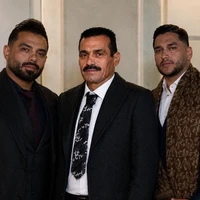
Two men accused of assisting Iranian intelligence knowingly helped prepare attacks on Iran International journalists, a prosecutor told a London court on Tuesday, citing photographs and videos of addresses linked to them.

At Woolwich Crown Court, prosecutors alleged that Shapoor Qalehali Khani Noori, 57, and Farhad Javadi Manesh, 46, knowingly assisted Mostafa Sepahvand, 41, in targeting Iran International journalists Mojtaba Pourmohsen and Kambiz Hosseini.

All three defendants deny the charges brought under Britain's National Security Act. Prosecutors allege they gathered information for Iranian intelligence to prepare for serious violence against at least one target, with Sepahvand expected to carry out an attack.

Prosecutor Bill Emlyn Jones accused Noori of being a trusted member of Sepahvand's surveillance team, citing photographs, messages and mobile phone location data. Noori denied knowingly participating in the alleged plot, saying he had taken photographs and videos at Sepahvand's request without understanding their purpose.

Late-night filming and repeated visits

Jones questioned Noori about a video filmed on St Dunstan's Avenue, an address linked to Hosseini, and sent to Sepahvand via WhatsApp at 11:56 p.m. on December 12, 2024.

Noori acknowledged taking the video but said they had gone for a drive because they were bored. He said Sepahvand asked him to film near a park, send the recording and delete it.

Jones challenged that account, suggesting the camera had deliberately focused on a particular house rather than randomly filming the area.

The prosecutor also cited phone and vehicle location data indicating repeated visits to the Malthouse Court area, linked to Pourmohsen, arguing that the movements were part of coordinated surveillance.

Noori said he did not know the significance of the locations and believed the recordings might have been connected to Sepahvand's business activities.

Jones also questioned him about four videos recorded over more than three hours in Kingston upon Thames on March 4, 2025, near premises associated with a business called Need a Fixer.

The prosecutor cited messages discussing recordings at hourly intervals to demonstrate Sepahvand's presence at a location, suggesting Noori knowingly participated in reconnaissance intended to help identify and ultimately attack targets.

Noori denied the allegation, saying he had never suspected Sepahvand of planning violence.

Prosecutor challenges Noori over police interviews

Jones questioned why Noori had not identified Sepahvand as a friend or explained the recordings during police interviews following his arrest in May 2025.

The prosecutor suggested Noori had remained silent because he had not yet developed an innocent explanation for his activities.

Noori said he had followed his solicitor's advice and was distressed by accusations that he had assisted a government he had fled.

He told the court he had been imprisoned three times in Iran and fled the country in 2019 because he feared for his life. During questioning by his defense lawyer, the court heard that Noori was granted asylum in Britain in 2024.

Earlier hearing examined £150,000 payment for alleged attack

During Monday's hearing, prosecutors challenged Sepahvand's claim that he had been deceiving the Revolutionary Guards, arguing that he was motivated by money and assistance with a criminal case in Iran.

Sepahvand acknowledged that a proposed £150,000 payment was conditional on harming a journalist but maintained that he demanded the sum to deter the IRGC and never intended to carry out an attack.

Noori and Javadi Manesh accept visiting locations and taking photographs or videos but deny knowing they were assisting Iranian intelligence.

The trial is scheduled to resume on November 2.

Iran, Russia eye joint oil and gas projects amid US blockade

Oct 27, 2026, 18:18 GMT+0
100%
Russian President Vladimir Putin shakes hands with Iranian President Masoud Pezeshkian during the official welcoming ceremony at the Summit of Heads of State and Government of the Gas Exporting Countries Forum (GECF) in Moscow, Russia, October 27, 2026.

Russian President Vladimir Putin and Iranian President Masoud Pezeshkian discussed joint oil and gas projects in Moscow on Tuesday, as Tehran seeks closer economic ties with Russia while its energy exports remain squeezed by a US naval blockade.

The two leaders discussed expanding political, economic, trade and energy cooperation, including joint projects in the oil and gas sectors, according to a readout from the Iranian government.

Pezeshkian also called for greater cooperation on natural gas exports, saying Iran produces around 280 billion cubic meters of gas annually, ranking behind only the United States and Russia.

He said global developments required greater technical and engineering cooperation and “strategic governance” of international energy markets.

The meeting took place on the sidelines of the Gas Exporting Countries Forum summit, which brought together some of the world's largest gas producers.

Putin also met Qatar's Emir Sheikh Tamim bin Hamad Al Thani on Tuesday and said Russia was ready to do everything within its power to help resolve the “complicated situation” in the Middle East.

The Qatari emir told Putin that the region was going through “difficult circumstances” because of tensions between the United States and Iran.

Moscow offers mediation

Russia has sought a role in efforts to end the US-Iran conflict, repeatedly offering to mediate between Washington and Tehran as regional governments push for renewed negotiations.

Putin has previously told US officials that he believes there remains room for diplomacy with Iran, while Moscow has also offered to help resolve one of the central nuclear disputes by taking Iranian highly enriched uranium out of the country.

Iran faces mounting economic pressure from the US blockade and sanctions, which have sharply curtailed its oil exports.

Russia has provided Iran with diplomatic backing, condemning US and Israeli military action and opposing efforts to increase pressure on Tehran at international bodies.

Moscow and Tehran signed a comprehensive strategic partnership treaty in 2025, although cooperation on major energy projects has remained more limited as the two countries are themselves major oil and gas producers.

Two charged over alleged Iran intelligence operation at RAF Fairford

Oct 27, 2026, 17:44 GMT+0
100%
A B-1B Lancer bomber arrives at RAF Fairford airbase, after police declared a major incident at the base and arrested several men on suspicion of offences under the Explosives Act, who have since been released on bail, in Fairford, Gloucestershire, Britain, September 29, 2026.

Two men appeared in a London court on Tuesday over an incident at a British air base used by US bombers to strike Iran, with prosecutors alleging that one of them sought to assist Iranian intelligence.

British national Mohmed Abdulkarim, 24, and Nouman Essghir, a 24-year-old dual British-Iranian national, appeared at Westminster Magistrates’ Court on charges under Britain's National Security Act.

RAF Fairford in southwest England had been used by US bombers carrying out strikes on Iran. The aircraft were withdrawn on security grounds shortly after five British men were arrested outside the base in the early hours of September 27.

Prosecutors said Abdulkarim arranged for five men to travel to the base in three vans at the request of a man identified only as “Ali.”

The group bought around £300 ($400) worth of petrol and stored it in drums, prosecutor Louise Gray told the court.

“One of them was told there was a bomb in the van,” Gray said. One of the men then called the emergency services, prompting police to arrive.

Abdulkarim, who appeared in court in a wheelchair, is charged with engaging in conduct likely to materially assist a foreign intelligence service between August 31 and September 28.

Reconnaissance of US-used base

Essghir was first arrested outside RAF Fairford on September 27 and is accused of entering a prohibited place for a purpose prejudicial to the United Kingdom on August 22.

Prosecutors said he had carried out reconnaissance of the base in August on instructions from “Ali” and was also in one of the vans that returned to Fairford the following month.

After the men were told there was a bomb in the van, Essghir messaged “Ali” asking “wtf (what the fuck) is going on,” Gray said. He received no reply.

The circumstances surrounding the September incident have remained largely unexplained and attracted international attention amid heightened concerns about the security repercussions of the US-Iran war for Western countries.

Prime Minister Andy Burnham said earlier this month that the activity at RAF Fairford was likely coordinated in Iran. Tehran's ambassador to Britain denied the allegation.

Abdulkarim was granted bail and is due to appear in court again in November, while Essghir was remanded in custody.

Police said six other people remain on bail, including four British nationals arrested outside RAF Fairford on September 27.

The decision to release suspects on bail following the incident had drawn scrutiny. Police said on Tuesday that doing so had helped investigators secure the charges against Abdulkarim and Essghir.