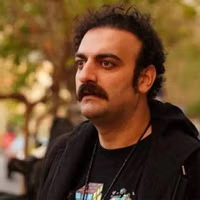
Speaking to Iran International, Zhao said Beijing shares Iran’s “common displeasure” with the United States and Western systems and values Iran’s geographic position for the Belt and Road Initiative.
Yet he described the partnership as driven by energy security, economic interests and longer-term geopolitical calculations rather than ideological solidarity.
“There is some long-term interest in there for sure,” Zhao said. “But it is a transactional relationship.”
China has become Iran's main economic lifeline under US sanctions, buying nearly all of its exported oil, while Tehran has increasingly looked to Beijing alongside Moscow for diplomatic support in the face of Western pressure.
Energy interests come first
Energy security has provided one of the clearest illustrations of the limits of that partnership.
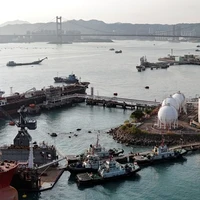
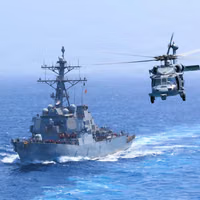
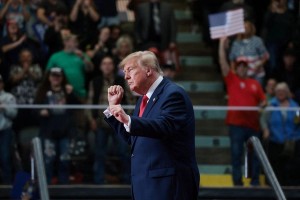
In a recent meeting between Presidents Xi Jinping and Donald Trump, both sides publicly underscored that the Strait of Hormuz should remain open without any toll system.
“China is protecting its own economic and energy interest first and foremost,” Zhao said. “We do see China’s position evolving when its own domestic calculations about energy and overall supply chain security change over time.”
The 25-year comprehensive strategic partnership signed by China and Iran in 2021 has also under-delivered. Reports at the time suggested Chinese investment of roughly $400 billion, or about $20 billion annually.
Actual flows have been “at least one order of magnitude smaller,” Zhao said, as Chinese banks and companies have sought to avoid US secondary sanctions.
Nuclear weapons, regime change
Zhao said Beijing has come to value nuclear non-proliferation more as its global influence has grown, in part because of its experience with North Korea.
“China doesn’t want Iran to have nuclear weapons, but China eventually is sympathetic to Iran’s cause,” he said. “It thinks that Iran’s need for deterrence, including nuclear deterrence, is ultimately driven by American hostile policy.”
Beijing does not see its role as changing Iran’s calculations and has been reluctant to threaten economic or military cutoffs, Zhao said. Instead, it has emphasized that the US and Israel should alter their policies to reduce Tehran’s incentives for nuclear deterrence.
Opposition to externally imposed regime change is a higher priority for Beijing than the nuclear file itself, he said.
“China’s primary security concern is its own regime security, so it doesn’t want to see the norm of allowing foreign countries interfering in other countries’ internal affairs and toppling governments that they don’t like.”
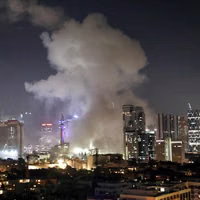
Beijing’s initial criticism of the US-Israeli war against Iran focused heavily on the killing of the supreme leader, which China viewed as a violation of international norms.
But Zhao suggested Beijing's opposition had limits and would depend in part on whether efforts to remove Iran's government violated what China regarded as established international norms.
Influence at the lowest cost
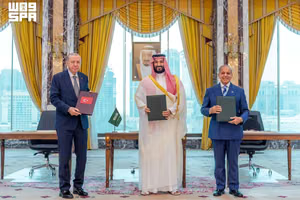
Beijing has cultivated ties with Saudi Arabia, including joint military exercises and involvement in its missile and nuclear programs, partly as a hedge against uncertainty elsewhere in the region.
China and Russia have meanwhile provided Tehran with diplomatic cover at the UN Security Council, disputing the reimposition of UN sanctions on Iran and most recently opposing efforts to restore international monitoring of their implementation.
Yet China has shown little appetite for becoming a security guarantor for Iran or other regional partners, Zhao said, including through proposals that Iran transfer enriched uranium to Chinese custody.
“China is keenly aware of the potential risks and burdens to play a greater security role,” he said. “Its approach is to develop relations, increasing Chinese influence at the lowest cost.”
That calculation could change as the conflict develops. Zhao said China and Russia could influence its trajectory by supplying air-defense systems or missile-related materials that would help Iran deter or survive future strikes.
But he declined to predict how the confrontation over Iran's nuclear program and the Strait of Hormuz would ultimately end.
“I generally don’t have good answers about how this war will end in the long run,” Zhao said.