• العربية
  • فارسی
BrandBrand
  • Iran Insight
  • Politics
  • Economy
  • Analysis
  • Special Report
  • Opinion
  • Podcast
  • Live TV
  • Iran Insight
  • Politics
  • Economy
  • Analysis
  • Special Report
  • Opinion
  • Podcast
  • Live TV
  • Theme
  • Language
    • العربية
    • فارسی
  • Iran Insight
  • Politics
  • Economy
  • Analysis
  • Special Report
  • Opinion
  • Podcast
  • Live TV
All rights reserved for Volant Media UK Limited
volant media logo

Yemen forces say failed Iran-backed Houthi missile killed family

Oct 23, 2026, 21:32 GMT+1

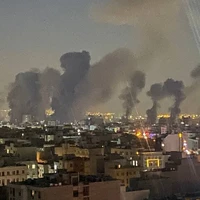
Yemen’s armed forces said Friday that a ballistic missile launched by the Iran-backed Houthis malfunctioned and crashed into a home in Nihm district, killing everyone inside.

“In recent days, our forces have monitored several cases in which ballistic missiles belonging to the terrorist Houthi militia failed during or after launch, veered off course and fell in populated areas,” military spokesperson Majed al-Nazili said in a post on X.

He said Friday’s missile was launched from the Ayal Sayad area and struck a home while a family was gathered inside, also damaging a neighboring house.

Most Viewed

US blockade leaves Iran with millions of tons of surplus LPG
1

US blockade leaves Iran with millions of tons of surplus LPG

2

Iran is running out of economic escape routes

3
INSIGHT

Iran’s trade squeeze spreads from sea to land

4

German regulator orders liquidation of Bank Saderat Iran’s Hamburg branch

5

US says it can sustain Iran blockade for ‘foreseeable future’

Spotlight

  • Salvation or tragedy? Iranians debate prospect of another war

    Salvation or tragedy? Iranians debate prospect of another war

  • More patrols, slower internet suggest Tehran is bracing for trouble
    VOICES FROM IRAN

    More patrols, slower internet suggest Tehran is bracing for trouble

  • Iran’s evasion network survives, but the crude feeding it has run dry

    Iran’s evasion network survives, but the crude feeding it has run dry

  • Once US blockaded Iran, China’s ‘Malaysian’ oil imports dried up
    ANALYSIS

    Once US blockaded Iran, China’s ‘Malaysian’ oil imports dried up

  • Istanbul meeting: A new division of labor in the Iran war?
    ANALYSIS

    Istanbul meeting: A new division of labor in the Iran war?

  • China values Iran but won't pay any price to defend it
    ONE-ON-ONE

    China values Iran but won't pay any price to defend it

Banner
Banner
Banner
Banner
Banner
•
•
•

More Stories

Salvation or tragedy? Iranians debate prospect of another war

Oct 23, 2026, 21:08 GMT+1
•
Maryam Sinaiee
100%

Escalating war rhetoric from Iran, the United States and Israel, coupled with military movements across the region, has heightened fears of another conflict, as Iranians debate online whether war could bring political change or deepen the country's crises.

Iranian social media users are closely following statements by US President Donald Trump and Israeli Prime Minister Benjamin Netanyahu, as well as diplomatic and military movements across the region.

Many view the developments as possible signs of an impending US-Israeli attack.

A central debate is whether another war could bring down the Islamic Republic or simply inflict further damage on Iran.

Those supporting military action describe war as a necessary evil to end the political system, arguing that previous attempts to bring about change have failed.

Opponents warn that another conflict could destroy energy infrastructure and refineries, deepen economic hardship and leave Iranian society in an even worse position.

“We are inside Iran and face all kinds of financial, security and social problems, but we are willing to pay the price to end this nightmare,” one user wrote.

Another user wrote: “This uncertainty is really a thousand times worse than war. We cannot even plan a trip, let alone make decisions about work, education or running a business.”

Others strongly rejected that view.

“War brings destruction, chaos, disease and so many other problems,” one user wrote. “The outcome will not necessarily be what you imagine. It could be much worse than things are now.”

Another highlighted the vulnerability of people without secure salaries, who could lose their livelihoods if fighting disrupted economic activity.

One user summed up the conflicting attitudes they had encountered.

“I have seen many people in Iran waiting for an attack so that things can finally be settled… and others who wanted an agreement to be reached,” the user wrote. “Feelings differ, but everyone is tired of this situation.”

Some are urging others to stock up on water, food and medicine and keep cash on hand. Others warn people living near military or government facilities to consider leaving.

Users have also expressed concern for elderly people, those with illnesses and people living alone.

Hardliners push for confrontation

Ultra-hardline voices have also expressed enthusiasm for military confrontation, but for very different reasons.

They argue that negotiations with Washington have merely given Iran's adversaries time to regroup and prepare for a stronger attack.

Some have sharply criticized officials who pursued diplomacy and called for Iran to launch a pre-emptive strike if war appears imminent.

“Why shouldn't Iran start the war this time instead of always waiting to be caught off guard?” one user wrote.

Another argued that Iran did not need nuclear weapons to inflict serious damage on its adversaries.

“We don't even need an atomic bomb to retaliate,” the user wrote, arguing instead for strikes on nuclear power plants in Israel and the United Arab Emirates.

The calls for confrontation reflect a very different political outlook from anti-government users hoping outside military action could bring down the Islamic Republic.

But both illustrate how repeated rounds of fighting and failed diplomacy have led some on opposing sides of Iran's political divide to see another war as preferable to the current uncertainty.

Parents prepare for the worst

Parents' concerns about children's safety have intensified following the deaths of more than 100 schoolchildren in a US attack on Minab at the beginning of the recent war.

Some are urging families to keep children home from school if the likelihood of an attack increases. Others are discussing plans to collect children from schools and move them to safer locations as quickly as possible if fighting resumes.

An Instagram post featuring a firefighter has attracted particular attention. The firefighter said that while inspecting safety arrangements at a girls' high school, a school official told them instructions had been issued to prepare identification tags for students.

On Friday, an Education Ministry spokesperson denied that such measures were being implemented and accused “enemies or ignorant individuals” of spreading fear.

One user said they had checked with relatives in Tehran and concluded that the reports were accurate, claiming families they contacted had requested identification tags and were awaiting their delivery.

Fear of another internet blackout

The prospect of another shutdown of international internet access is adding to the anxiety.

Users fear authorities could cut international connectivity immediately if hostilities resume. The prospect is particularly troubling after previous shutdowns made it difficult to contact relatives and access reliable information.

One user recalled that during the war in June last year, the internet was cut several days after fighting began. When war broke out again at the end of February, the shutdown came within hours.

“Now, instead of checking the news in the morning, I open Google's domain to see whether it loads,” the user wrote, “so I can find out whether the war has started.”
More patrols, slower internet suggest Tehran is bracing for trouble

Oct 23, 2026, 18:21 GMT+1
•
Saba Heidarkhani
100%
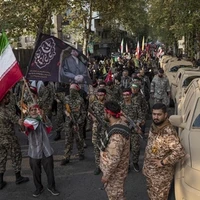
Armed men take part in a Janfada rally in Rasht, northern Iran, October 2026

Armed security forces and checkpoints have become more visible across Iran, according to witness reports sent to Iran International, while internet access has deteriorated amid fears of fresh unrest and another round of war.

Accounts from Tehran, Mashhad, Isfahan, Dezful, Hamedan and other cities over the past week describe armed Basij members and riot police at major intersections and public squares, new checkpoints and additional surveillance cameras.

Users in several provinces also say internet speeds have fallen sharply, circumvention tools have stopped working and access to social media has become increasingly difficult.

The individual reports cannot all be independently verified, but describe similar changes across widely separated parts of the country.

More armed forces on the streets

In Dezful in southwestern Iran, one resident said the city had become “heavily securitized,” particularly around the city center and Shariati Street.

The resident attributed the increased presence to government concern about possible protests around the anniversary of the November 2019 uprising, when demonstrations triggered by a sudden increase in fuel prices were met with a deadly crackdown.

In Tehran, a resident reported a Basij checkpoint on Khavaran Street from Thursday evening, while other accounts described increased security patrols elsewhere in the capital and neighboring Karaj.

Residents of Mashhad reported armed Basij members around Mellat Park.

In Isfahan, armed deployments were reported around major squares, while residents of Hamedan and Borujerd described increased security activity.

Iran International reported similar deployments in September around the fourth anniversary of the death in custody of Mahsa Jina Amini.

More cameras and surveillance

Residents have also reported an expansion of surveillance infrastructure.

A resident of Astara, a small city on the Caspian coast near the Azerbaijani border, said security cameras were being installed in squares and neighborhoods across the city.

“They are installing cameras neighborhood by neighborhood in a city this small,” the resident said. “Look how afraid they are of the people.”

Another resident reported more surveillance cameras around Tehran's Sadeghieh district.

Tehran municipality announced last year that it planned to install 15,000 surveillance cameras across the capital, while security agencies have used camera footage to identify protesters and enforce government restrictions.

Internet slowdown

Residents in Semnan, Shiraz, Tabriz, Kerman, Tehran and elsewhere told Iran International that connections had slowed markedly, VPNs had stopped functioning and social media platforms had become increasingly difficult to reach.

A Shiraz resident said internet access had been extremely slow for about six days, while in Kerman one user said even paid VPN services were failing.

A resident of Tonekabon on the Caspian coast said Irancell mobile internet was being cut at night. Other users reported disruption to both fixed and mobile connections.

The cause of the disruptions is unclear, and the accounts do not establish that the security deployments and deteriorating internet access are part of a coordinated operation.

But they come against the backdrop of Iran's extensive use of internet shutdowns during periods of political unrest and conflict.

Tech outlet Zooman reported this week that authorities had issued instructions for international internet access to be cut immediately in the event of another war.

When Israel and the US attacked Iran in February, authorities imposed a nationwide internet blackout that lasted about 88 days, the longest recorded in any country, according to NetBlocks.

The latest disruptions also coincide with sharp increases in the cost of getting online.

Iran's two largest mobile operators, Hamrah-e Aval and Irancell, raised prices for calls, text messages and internet packages by as much as 40% on Friday, citing higher equipment, maintenance and infrastructure costs.

“By making the internet more expensive, they have closed our last route to the free world,” one resident told Iran International. “For me, when the internet was my only comfort and source of income, even being present in this space is no longer possible.”

Iran’s evasion network survives, but the crude feeding it has run dry

Oct 23, 2026, 16:18 GMT+1
•
Umud Shokri
100%
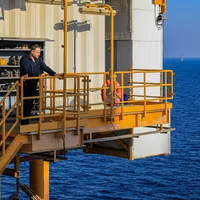
File photo: A worker stands on the Soroush offshore oil platform in Iran’s Persian Gulf

Iran still has the knowhow, middlemen and shadow-fleet infrastructure it spent years developing to sell sanctioned oil to China. But it has now run out of oil outside Iran to put through that system.

The US naval blockade has exposed a limitation in Tehran’s sanctions-evasion machinery: ship-to-ship transfers, false paperwork and steep discounts can disguise and sell crude once it is at sea, but they cannot get fresh cargoes out of Iranian ports.

For months, Iran was able to keep selling oil to China because millions of barrels had already left the country on tankers and were sitting in Asian waters. That reserve is now effectively exhausted.

Kpler analysts cited by The Wall Street Journal on Wednesday estimated Iran had about 135 million barrels in overseas storage when the war began in February. By October 5, that had fallen below one million barrels.

Vortexa gave a different figure, estimating Iranian stocks off Singapore at roughly six million barrels on October 9. The difference reflects varying tracking methods and locations, but both show that the offshore stocks that sustained Iranian exports have been largely depleted.

The Malaysia route dries up

Malaysia sits at the heart of how Iranian oil has reached China, serving mainly as a transfer point rather than the true source of much of the crude.

The Wall Street Journal reported in May on ship-to-ship transfers of Iranian crude off the Malaysian coast.

A sharp drop in China’s purchases recorded as Malaysian crude could therefore provide another indication that the flow of Iranian oil through the system has dried up.

But the figures are not a one-for-one measure of Iranian exports. Chinese customs data record the declared origin of cargoes, while ship tracking can miss transfers or vessels operating without transponders.

The timing nevertheless coincides with the depletion of the offshore stocks that had fed the trade. If no new Iranian crude is available for transfer near Malaysia, fewer cargoes would be expected to appear in Chinese data under a Malaysian origin.

China turns to other suppliers

China remains Iran’s most important potential buyer, but its independent refineries are already lining up alternatives.

Reuters reported on October 6 that Chinese “teapot” refineries had purchased at least 12 million barrels of Iraqi and Qatari crude for delivery in October and November. Traders suggested the total could reach 15 million to 20 million barrels.

Iranian oil had been attractive largely because of its steep discount. Iraqi and Qatari cargoes may cost more, but they arrive through normal channels and carry less risk of sanctions trouble or sudden interruptions.

Iran could offer deeper discounts or rely more heavily on intermediaries to retain Chinese customers. Neither solves the central obstacle: the oil still has to be loaded and shipped.

Reuters reported in August that offers of Iranian oil to Chinese buyers had already fallen as stored cargoes were sold.

Few alternatives to tankers

Jask, on the Gulf of Oman, is often cited as Iran’s alternative export outlet. The Goreh–Jask pipeline and terminal were built so oil could reach the sea without passing through the Strait of Hormuz.

So far, however, the facility has not shown it can replace Iran’s main export system.

The International Energy Agency’s February 2026 factsheet described Jask as effectively out of regular service. S&P Global later reported tanker activity there between March and July, indicating occasional use.

That suggests the route can handle some cargoes, not that it can support exports on the scale Iran needs. A port outside Hormuz is also not necessarily beyond the reach of a blockade aimed at Iranian ports.

Rail and trucking through neighboring countries offer still less capacity. They face high costs, limited infrastructure, border procedures and sanctions risks.

The pressure shifts onshore

If crude cannot be exported, Iran’s problem moves from the sea back to its oil fields.

Tehran can send more crude to domestic refineries, use available storage or cut production. Kpler estimated earlier in the blockade that Iran had already begun reducing output as inventories rose and usable storage space tightened.

Usable storage is not the same as total tank capacity: some tanks hold condensate, and not all can simply be switched to crude.

Further production cuts would mean less revenue and could make restarting output more difficult. But continuing to pump oil with nowhere to send it risks filling remaining storage and eventually forcing deeper cuts.

The financial impact will also emerge gradually because payments for cargoes already delivered can arrive weeks later.

The United States says the blockade has denied Iran at least $25 billion in oil revenue, a CENTCOM estimate cited by the Journal rather than an independently verified measure of Tehran’s net losses.

Iran has not forgotten how to evade sanctions or lost the network it built to sell oil despite them. But before Tehran can disguise a cargo, transfer it between ships or sell it at a discount, it first has to get the oil out of Iran.

US says it can sustain Iran blockade for ‘foreseeable future’

Oct 23, 2026, 12:32 GMT+1
100%
US President Donald Trump boards Air Force One for a trip to Sioux City, Iowa, at Joint Base Andrews, Maryland, US, October 22, 2026.

The United States is tightening economic pressure on Iran to bolster efforts to reach a diplomatic solution and can sustain its naval blockade for the foreseeable future, the US Ambassador to the UN said, as President Donald Trump weighs renewed strikes after midterm elections.

Mike Waltz told the Financial Times that Washington still wanted Tehran to return to negotiations and reach what he called a “meaningful agreement” on its nuclear program, but acknowledged the standoff could continue without a deal or a return to prewar shipping levels through the Strait of Hormuz.

“The president and the US Navy can maintain this blockade for the foreseeable future,” Waltz said, adding that the administration was continuing to tighten economic pressure.

He said the US would not consider its objectives achieved until Iran’s highly enriched nuclear material had been dealt with and an agreement reached over domestic uranium enrichment.

Trump considers renewed strikes after midterms

The comments come as Trump is considering several days of renewed strikes against Iran after the midterms, The Atlantic reported, citing officials and people familiar with the discussions.

Potential targets include Iran’s missile and drone arsenal, energy infrastructure and nuclear facilities, according to the report. One outside adviser told the magazine that US economic pressure was working and that additional strikes could push Iran closer to collapse.

An official and another person familiar with the talks said Trump had initially hoped Tehran would return to negotiations before the election, but that had not happened.

US officials stressed that no decision had been made on whether to resume strikes after November 3. The Atlantic said some officials also saw uncertainty over Washington’s next move as a way of keeping Tehran under pressure.

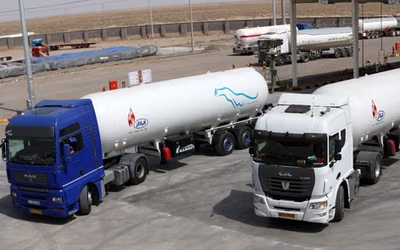
  • US blockade leaves Iran with millions of tons of surplus LPG

    US blockade leaves Iran with millions of tons of surplus LPG

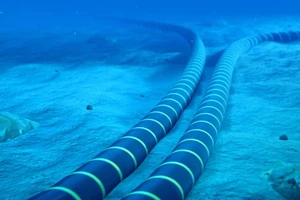
  • IRGC threatens undersea cables, but can it disrupt global internet?

    IRGC threatens undersea cables, but can it disrupt global internet?

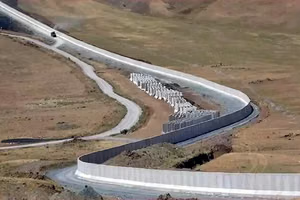
  • Iran’s trade squeeze spreads from sea to land

    Iran’s trade squeeze spreads from sea to land

Israeli Prime Minister Benjamin Netanyahu had pushed for another round of strikes before Israel’s election, according to the report, but Trump has so far declined to authorize a new attack before the US vote.

Washington and Tehran trade competing Hormuz messages

The military pressure is unfolding alongside sharply different accounts from Washington and Tehran over control of the Strait of Hormuz.

Trump said on Thursday that more oil had moved through the strait over the previous week than at any point before the war, attributing the increase to the US blockade.

“More oil came out of the Hormuz Strait over the last week than at any time previous, including before the war,” Trump told a campaign rally in Iowa. “That’s because of the blockade.”

He said the blockade had stopped Iran from exporting its own oil and again argued that US military action had destroyed Tehran’s nuclear enrichment capacity.

IRGC says US pushed away from the strait

Iran, however, presented a very different picture on Friday.

IRGC Navy commander Ali Ozmaei said US forces had been pushed hundreds of kilometers away from the Strait of Hormuz and no longer had a place there.

“Today, the Americans are not present in the Persian Gulf and have moved 600 to 700 kilometers away from the Strait of Hormuz,” Ozmaei said. “America no longer has a place in the Strait of Hormuz.”

The competing statements underscore how control of shipping and access through Hormuz have become central to both sides’ strategy, as Washington seeks to pressure Tehran economically while keeping open the possibility of renewed military action.

Reform UK donor had ties to Iran supreme leader-linked foundation - Guardian

Oct 23, 2026, 11:08 GMT+1
100%
Reform UK leader Nigel Farage

A billionaire donor to Britain’s Reform UK party was previously involved in a business venture with Astan Quds Razavi, a powerful Iranian religious foundation under the authority of the country’s supreme leader, the Guardian reported.

Hossein “Sasan” Ghandehari, an Iranian-born British businessman who has pledged millions of pounds to Reform UK, was the main investor behind a telecoms project in Iran between 2013 and 2016, according to a French arbitration ruling reviewed by the newspaper.

Ghandehari’s HP Trust ultimately owned Ori Group, which acquired a 49% stake in Omran Razavi International Co, a joint venture established to build and supply a fiber-optic network carrying telecommunications traffic across Iran.

Partnership with Astan Quds Razavi

The remaining 51% of the venture was owned by Astan Quds Razavi, or AQR, a multibillion-pound religious foundation based in Mashhad.

At the time, AQR was headed by Abbas Vaez Tabasi, who had been appointed by Islamic Republic founder Ruhollah Khomeini and remained in the post until his death in 2016.

AQR is one of Iran’s major bonyads, large quasi-public foundations with extensive economic interests. The United States sanctioned it in 2021, saying it controlled major parts of Iran’s economy and operated for the benefit of then-supreme leader Ali Khamenei and other senior officials.

Ghandehari’s lawyers told the Guardian that describing him simply as having worked with Iran would be misleading. They said the project was intended to expand access to information and promote political change, and that AQR was the only viable partner capable of enabling the project to proceed.

Venture collapsed in 2016

The joint venture ended around 2016 after Vaez Tabasi’s death and the appointment of a more hardline leadership at AQR, the Guardian reported.

  • UK Shi'ite camp with alleged Iran ties cancelled after right-wing outcry

    UK Shi'ite camp with alleged Iran ties cancelled after right-wing outcry

  • Iran-linked groups are exploiting Britain’s charity sector, UK lawmaker says

    Iran-linked groups are exploiting Britain’s charity sector, UK lawmaker says

AQR subsequently took full control of the project. Around the same period, project chairman Mohammed Reza Noory was imprisoned in Iran and later sentenced to 18 years.

Ghandehari’s lawyers said he himself was later targeted by Iran’s Supreme National Security Council with accusations that he had worked with hostile Western powers. They described those allegations as false.

Ghandehari has said he has not been to Iran for three decades and that his wealth has no connection to the country. His representatives also said family assets in Iran were confiscated in 2016.

Links to another Reform donor

The Guardian also reported that Ghandehari had business ties to another Reform UK donor, John Richard Simpson.

Ghandehari’s HP Trust had owned Orico General Trading LLC, a company contracted to supply telecommunications equipment from France’s Alcatel-Lucent and transport it from Dubai to Iran. After 2016, ownership of Orico was transferred to Simpson, who told the newspaper he had acquired the company to wind down its operations after the project ran into difficulties.

Simpson’s design firm, Interior Architecture Landscape, counts the Ghandehari family among its clients and donated £200,000 to Reform UK last year, according to the Guardian.

Farage has taken a hard line on Tehran

Ghandehari emerged as a major Reform donor this year, pledging to make regular contributions worth more than £1 million and donating £50,000 to party leader Nigel Farage for World Economic Forum passes.

Farage has taken a strongly critical position toward the Islamic Republic and has supported US pressure on Tehran.

The Guardian said Ghandehari’s past business relationship with AQR raises questions about the extent of his previous dealings with state-linked entities in Iran, although his lawyers said the project was approved by authorities in France and the United States and was intended to expand internet access rather than support the Iranian government.