• العربية
  • فارسی
BrandBrand
  • Iran Insight
  • Politics
  • Economy
  • Analysis
  • Special Report
  • Opinion
  • Podcast
  • Live TV
  • Iran Insight
  • Politics
  • Economy
  • Analysis
  • Special Report
  • Opinion
  • Podcast
  • Live TV
  • Theme
  • Language
    • العربية
    • فارسی
  • Iran Insight
  • Politics
  • Economy
  • Analysis
  • Special Report
  • Opinion
  • Podcast
  • Live TV
All rights reserved for Volant Media UK Limited
volant media logo

US military says it destroyed Iran-linked vessel targeting Navy ships

Oct 14, 2026, 20:56 GMT+1

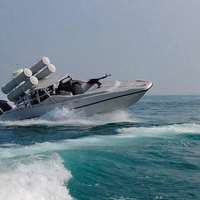
The United States destroyed an Iranian-affiliated vessel in the Gulf of Oman on October 6, accusing it of conducting surveillance and targeting US Navy ships, the military said on Wednesday.

Crew members aboard the dhow, a traditional wooden vessel commonly used for fishing and trade in the region, were safely removed before its destruction, the military said. Efforts to repatriate them were ongoing.

Most Viewed

Iran faces worse economic outlook than war-hit Mideast rivals, IMF says
1

Iran faces worse economic outlook than war-hit Mideast rivals, IMF says

2

Iran officials hinted at land incursions if US resumes strikes - WSJ

3
ANALYSIS

Tehran raises the stakes, betting Washington will blink

4

Iran hardliners back threats to strike Persian Gulf digital infrastructure

5

Houthi airport strikes carry echoes of Iran’s aviation threats, experts say

Spotlight

  • Zarif under fire for dismissing nuclear deterrence before war

    Zarif under fire for dismissing nuclear deterrence before war

  • Iran escalates Hormuz tanker attacks in gamble ahead of US midterms
    ANALYSIS

    Iran escalates Hormuz tanker attacks in gamble ahead of US midterms

  • Tehran raises the stakes, betting Washington will blink
    ANALYSIS

    Tehran raises the stakes, betting Washington will blink

  • Houthi airport strikes carry echoes of Iran’s aviation threats, experts say

    Houthi airport strikes carry echoes of Iran’s aviation threats, experts say

Banner
Banner
Banner
Banner
•
•
•

More Stories

Man in Iran International attack plot told police he was paid £2,000 to film

Oct 14, 2026, 20:52 GMT+1
100%
Court sketch from Woolwich Crown Court. Credit: SWNS/Julia Quenzler

A man accused of plotting an attack on Iran International journalists in Britain told police he had received £2,000 for filming, according to interview transcripts read at Woolwich Crown Court on Wednesday.

Mostafa Sepahvand, 41, made the statement during questioning on May 15, 2025, as investigators examined his communications with contacts in Iran and his alleged role in gathering information about potential targets.

Prosecutors allege Sepahvand was receiving payments from individuals directing the operation from Iran.

Sepahvand is on trial alongside Farhad Javadi Manesh, 46, and Shapoor Qalehali Khani Noori, 57. All three deny charges under Britain's National Security Act.

Prosecutors allege the men gathered information for Iranian intelligence in preparation for serious violence against at least one target in Britain, with Sepahvand expected to carry out an attack and the other two helping with preparations.

The alleged targets included Iran International journalists Mojtaba Pourmohsen and Kambiz Hosseini.

In an earlier hearing, jurors heard a March 20, 2025, voice recording in which Sepahvand said he had been promised £150,000 and help resolving a criminal case in Iran if he completed the task.

"They have sent me £3,500, and they keep sending me fifty addresses," he said in the recording, complaining about the costs of visiting locations.

During the police interviews that were read out by prosecutors on Wednesday, Sepahvand acknowledged having access to addresses but insisted he had not carried out violence.

"We could hit them. We had the address. But I swear to the God who is up there we did not do anything," he told investigators.

The addresses discussed in the case were not limited to locations associated with Iran International journalists.

Sepahvand repeatedly maintained that he had been threatened and pressured by people he linked to the Iranian government, while denying carrying out the actions demanded of him.

"They put pressure on me to do something. They threatened me but I did not do it. I didn't do it," he said.

Asked about photographs relating to Iran International journalists, Sepahvand told investigators: "There are only those pictures and I haven't done anything."

"They came to say do it, do it with your friends. I swear to God we didn't."

The questioning also examined Sepahvand's communications with Mostafa Ghorbani, including messages about addresses, payments and assurances concerning his legal difficulties in Iran.

In one exchange dated February 24, 2025, Ghorbani relayed a message from a contact named Amin saying certain addresses should not have been sent.

Sepahvand declined to comment when questioned about that exchange.

The court also examined transcripts of police interviews with Manesh, who denied gathering intelligence on Iran International or receiving instructions to target its journalists.

During an interview on May 3, 2025, Manesh acknowledged that he might have walked or driven past the broadcaster's offices and taken photographs, but said he could not remember the details.

He described the building as beautiful and said he had been curious about it. He also told investigators he had visited a nearby car wash to obtain medication for a sore throat.

"Not at all," Manesh replied when asked whether he had targeted Iran International journalists.

Investigators subsequently questioned him about a photograph of Iran International presenter Kambiz Hosseini sent to him by Sepahvand on December 24, 2024.

Manesh denied knowing Hosseini's name, despite police pointing out that the photograph displayed both the journalist's name and Iran International's branding.

He said he had been curious about whether the person pictured was a journalist who had been beaten up.

Police also asked about an Instagram link concerning Hosseini's program and Manesh's English response of "good good" to a link sent by Sepahvand.

Manesh said the expression was a catchphrase he had picked up from a YouTuber known as AB and that it meant "I don't care."

He maintained that the phrase carried no particular meaning.

Asked about Sepahvand's subsequent message, "This is it bro," Manesh said he was unsure what it meant but suggested it might refer to the reporter he believed had been beaten up.

Manesh described his relationship with Sepahvand as a casual friendship, saying the two spoke approximately every other day, often discussing cars and health matters.

He said Sepahvand had lent him money in amounts not exceeding £300 and denied that Sepahvand knew people who could threaten him or his family.

According to the prosecution's account of their defenses, Sepahvand accepts conducting surveillance for Iran but says he feared the consequences of refusing and deliberately did a poor job. Prosecutors reject that explanation.

Manesh and Noori acknowledge visiting locations and taking photographs and videos but maintain they did not know they were assisting Iranian intelligence.

The trial is scheduled to resume Thursday at 10:30 a.m.

Tehran signals escalation in conflict IRGC likens to a ‘world war’

Oct 14, 2026, 18:55 GMT+1
•
Behrouz Turani
100%
Iranian missile are displayed on the anniversary of the 1979 Revolution in Tehran, Iran, February 12, 2026

A senior Revolutionary Guards official has compared Iran’s conflict with the United States to a world war that could reshape the global order, reflecting a mindset in Tehran that appears increasingly resistant to backing down despite the risk of renewed US attacks.

IRGC political deputy Yadollah Javani said Wednesday that the conflict could have consequences comparable to the two world wars and alter the global balance of power.

His remarks capture a broader calculation among Iranian hardliners: if the confrontation is genuinely existential and its consequences historic, preserving Iran’s leverage may matter more than reducing the immediate risk of escalation.

That calculation is increasingly visible around the Strait of Hormuz, where the IRGC has intensified threats against US and commercial vessels even as officials warn that Washington may be preparing another attack.

President Donald Trump recently told an election campaign gathering in Alaska that he would call on Israel to prepare for a possible attack on Iran, while saying a decision on Iran would be announced “very soon.”

IRGC spokesman Hossein Mohebi said Washington could launch new attacks before the November midterm elections, arguing that Trump might seek a military achievement before voters go to the polls.

Pressure around Hormuz

A Singapore-flagged container ship sank near the strait after being hit by a projectile, Reuters reported Wednesday, citing maritime security sources.

IRGC Navy Rear Admiral Ali Azmaei said Iranian coastal defense and fast-attack units were “waiting for American warships to approach the Strait of Hormuz so they can be sunk.”

He also warned that commercial vessels operating under coalition naval escort should not assume they would be protected from Iranian action.

Iranian media also reported Wednesday that a small fishing boat had been attacked by an unidentified drone near the strait, killing those on board. The circumstances of the reported attack remained unclear.

Javani said Wednesday that Iran had moved beyond the danger of a surprise attack and that its armed forces were prepared to respond to further enemy action.

He said Iran's adversaries had expected the killing of former Supreme Leader Ali Khamenei to produce victory within 48 to 72 hours.

Tehran has meanwhile continued to distance itself from Houthi attacks on Saudi Arabia. Whatever their origin, attacks threatening Saudi energy infrastructure add to pressure on oil markets, increasing the economic cost of the wider confrontation.

The appeal of the grey zone

Despite the growing economic cost to Iran itself, hardline outlets including Kayhan, Javan and state television continue to champion the “neither war nor negotiation” strategy associated with former Supreme Leader Ali Khamenei.

A comprehensive agreement with Washington could require Tehran to surrender some of its nuclear and regional leverage, while another full-scale war could impose far greater costs on the country and threaten the political system itself.

Remaining between the two, hardliners argue, allows Iran to preserve its nuclear capabilities and regional influence without making irreversible concessions.

They also frequently cite the US withdrawal from the 2015 nuclear agreement, known as the Joint Comprehensive Plan of Action, as evidence that American commitments cannot be trusted and that any agreement reached today could be abandoned by a future administration.

But the escalating confrontation around Hormuz illustrates the danger inherent in that strategy. Maintaining such a grey zone requires Tehran to create enough risk to generate leverage without pushing the United States or Israel into another major attack.

Where the factions agree

Moderate, pragmatist and reformist-aligned media outlets close to President Masoud Pezeshkian and his foreign policy team have generally argued that Tehran should take advantage of diplomatic opportunities before conditions change.

Their disagreement with hardliners is substantial but does not necessarily extend to Iran's fundamental objectives.

Both sides seek to preserve the Islamic Republic and as much of its nuclear and regional leverage as possible. They differ over whether diplomacy or continued pressure offers the safer route.

For now, Tehran appears to be testing the hardline proposition that it can raise the cost of confrontation enough to make Washington compromise without pushing Trump toward war instead.

Seen from that perspective, Javani's invocation of a world war is more than bellicose rhetoric. It reflects a view of the confrontation as consequential enough that backing down carries risks of its own.

The increasingly dangerous contest around the Strait of Hormuz may determine how much room remains between compromise and another war.

Iranians report months-long waits for unemployment benefits

Oct 14, 2026, 16:42 GMT+1
•
Saba Heidarkhani
100%
People wait for service at a post office in Iran, October 8, 2026

Iranians receiving unemployment benefits say payments have been delayed by up to two months, leaving some struggling to pay for food and service debts, according to messages sent to Iran International.

Recipients described repeated delays of several weeks and said banks and Social Security offices had provided little clarity over when the money would arrive, as inflation above 70% and the rial’s steep decline further squeeze household finances.

“Unemployment benefits are our only lifeline. I’m struggling to cover expenses for myself, my spouse and children,” one recipient said. “Every day the money doesn’t arrive, we’re left with an empty table and a sense of shame.”

Payments ‘weeks late’

Several recipients reported recurring delays of 20 to 25 days, while others said they had gone without benefits for as long as two months.

One person whose payment was more than a month overdue said people depended on the modest allowances to put food on the table and service debts.

The person said Bank Melli and Refah Bank had refused to accept responsibility for the delay, while the Social Security Organization said it had issued the payment check and the matter was now in the banks’ hands.

Another recipient reported a 25-day delay in receiving a monthly allowance of 160 million rials, saying Branch 15 of the Social Security Organization routinely made late payments.

A person with 22 years of employment history who had been unemployed for six months said the organization’s Shemiran branch in northern Tehran had failed to pay their benefits.

Others described receiving vague promises from local offices.

“The payment was supposed to arrive by the 15th of the month, but there’s been nothing. Some branches told us to wait until the 30th because it might be paid then,” one person said.

Under Iranian law, workers who involuntarily lose their jobs may qualify for unemployment benefits if they meet employment and insurance requirements.

For many recipients, the payments are their primary source of income while looking for work.

Social Security under strain

The delays come amid wider concerns about the finances of the Social Security Organization (SSO), Iran’s main social insurance institution responsible for unemployment benefits and pensions.

SSO chief Mostafa Salari said on July 27 that the organization faced a monthly pension shortfall of at least 170 trillion rials even if it collected all current insurance contributions. He put its debt to the central bank at 750 trillion rials.

Pensioners have also protested over delayed payments in recent months. On Sept. 20, retirees gathered in Tehran, Ahvaz, Rasht, Shush and Kermanshah to demand outstanding payments, including delayed pension adjustments.

The complaints come alongside broader reports of unpaid wages and insurance contributions across Iran.

Iran International reported last month that workers in several sectors, including factories and healthcare facilities, were facing delayed salaries and insurance contributions.

Workers laid off from Rajaee Port in Bandar Abbas have also reported unpaid wages and difficulties accessing unemployment benefits.

For those waiting for payments, however, the immediate problem is making ends meet.

“They haven’t deposited my unemployment benefits. I have countless loan repayments and debts, and I’m desperate,” one recipient said. “Social Security treats us so badly, as though we’re the ones who owe them money.”

Iran police killed brothers celebrating Khamenei’s death, source says

Oct 14, 2026, 16:32 GMT+1
•
Farnoosh Faraji
100%
Ahmadreza Feyzi (15) and Amirhossein Feyzi (19).

Iranian police fired 36 rounds at a car during a seven-minute chase near Tehran, killing two brothers aged 15 and 19 after its occupants honked their horn while celebrating the death of then-supreme leader Ali Khamenei, a source close to the family told Iran International.

Khamenei, 86, was killed on February 28 when US and Israeli forces struck his compound in central Tehran in the opening attacks of the war. His death prompted celebrations in parts of the country.

The brothers, Ahmadreza Feyzi, 15, and Amirhossein Feyzi, 19, were traveling with their father, several of his colleagues and one colleague's wife from Mehrshahr to nearby Fardis, according to the source.

Police first confronted the group at Fardis's second roundabout after hearing them honk the car horn along many more who were doing so in celebration, the source said.

Following a verbal altercation, officers alerted colleagues by radio and the vehicle was stopped at the next roundabout.

One officer confronted a colleague of the boys' father, while another smashed the car's rear windows with the stock of his rifle despite seeing the two brothers in the back seat, according to the source.

Their father drove away to get his children away from the confrontation, prompting officers to call for backup. A police emergency response unit subsequently joined the pursuit.

During a chase lasting roughly seven minutes, officers fired 36 rounds at the vehicle, the source said.

At one point, Amirhossein realized his younger brother had been shot and tried to revive him in the back seat, but Ahmadreza was unresponsive.

Their father continued driving in an attempt to get his sons to safety as officers pursued and fired at the vehicle, according to the source.

The source said officers opened sustained fire along a less congested stretch of road and fired two additional shots after the vehicle had come to a complete stop near a fire station.

Delayed medical treatment

Ahmadreza was shot in the heart, while Amirhossein suffered a gunshot wound to his side, according to the source.

Officers beat the vehicle's occupants and forced them out after the car stopped, the source said. The father realized both his sons had been shot when neither emerged.

Officers refused his request to take the brothers to Shohadaye Salamat Hospital and instead transported them to Resalat Clinic in Fardis, saying the facility fell within their jurisdiction.

The source said the clinic lacked the equipment needed to treat gunshot wounds and blamed the delay in receiving appropriate medical care for Amirhossein's death.

Plainclothes security personnel later beat family members who protested the killings, according to the source.

The brothers' bodies were subsequently placed in black body bags and taken to an undisclosed location.

Bodies withheld for four days

Security authorities withheld the brothers' bodies from their family for four days, according to the source.

During that period, the family was pressured to bury them at the remote Behesht-e Ali cemetery.

The source said the family eventually agreed so they could recover the bodies and bury the brothers as soon as possible.

Iran International could not independently verify all details of the source's account. Iranian authorities have not publicly commented on the brothers' deaths.

Zarif under fire for dismissing nuclear deterrence before war

Oct 14, 2026, 15:16 GMT+1
•
Maryam Sinaiee
100%
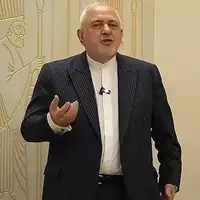
Former foreign minister Mohammad-Javad Zarif. Screengrab of resurfaced video of speech in April or May 2025.

A resurfaced video of former foreign minister Mohammad Javad Zarif saying Iran lacked enough enriched uranium to produce a nuclear weapon has ignited a fierce debate after successive wars with Israel and the United States.

The speech appears to have been delivered in late April or May 2025, shortly before the 12-day war with Israel.

Zarif argued that the balance of power had changed and that nuclear weapons no longer provided effective deterrence, pointing to Israel's experience and the collapse of the Soviet Union to argue that possessing them neither prevented attack nor guaranteed a state's survival.

He dismissed acquiring an atomic bomb as “the paradigm promoted by a few ignorant demagogues.”

More than a year and two wars later, the remarks collide with a growing hardline argument that Tehran's failure to possess a nuclear weapon deprived it of the deterrent that might have prevented those attacks.

The video's renewed circulation has therefore fed directly into a growing debate over whether the wars vindicated Zarif's skepticism about military deterrence or proved his critics right.

Calls for a change in nuclear doctrine

Some officials and media outlets have openly raised the possibility of changing the country's nuclear doctrine.

Hassan Ghashghavi, a member of parliament, claimed in recent days that support for such a change was growing among the public, experts and officials.

The conservative newspaper Vatan-e Emrooz put the issue prominently on its front page Monday with the headline “Iran Should Build a Bomb.”

An accompanying report argued that Iran should develop a “deterrent” nuclear weapon to prevent future attacks by Israel and the United States.

The argument contrasts sharply with Zarif's contention that nuclear weapons cannot guarantee security and that Iran should place greater emphasis on diplomacy and economic cooperation.

Ahmad Bakhshayesh Ardestani, a member of parliament's National Security and Foreign Policy Committee, told Khabar Online on Tuesday that threats from Israel and the United States could strengthen arguments inside Iran for acquiring a bomb.

Journalist Seyed Sadegh Hosseini, writing on Sadegh Media, defended Zarif's argument, saying attacks on Iran's nuclear facilities and the assassinations of its nuclear scientists had demonstrated the failure of the assumption that uranium enrichment and stockpiling nuclear material would deter attacks or force Washington to make concessions.

Hardliners turn on Zarif

The video's renewed circulation has also prompted attacks on Zarif at pro-government and pro-war gatherings in several parts of Iran, including Isfahan and Borujerd, where demonstrators chanted slogans against him and former president Hassan Rouhani.

In Isfahan, protesters called Zarif a “spy” and an American “mercenary.”

The conservative newspaper Kayhan also attacked Zarif in an article titled “Mr Zarif! Why do you carry out a suicide operation whenever America is in trouble?!”

Kayhan accused the former foreign minister of making statements at sensitive moments that damaged Iran's national security capabilities and gave its adversaries “an opportunity to breathe.”

It also criticized Zarif's record in the negotiations that produced the 2015 nuclear agreement, accusing him of seeking to “whitewash the enemy and blame our own side.”

Two visions of Iranian power

But Zarif's speech went beyond the question of whether Iran should possess a nuclear weapon, challenging the security-oriented approach that has shaped much of the Islamic Republic's regional policy.

He drew a distinction between what he called a “threat-oriented” and an “opportunity-oriented” view of Iran's neighbors, arguing that Tehran's conception of the region determined the kind of relationship it built with surrounding states.

“If Iran's view of the region is threat-oriented, its ambassador should be a representative of the Quds Force. If its view is opportunity-oriented, the ambassador should be chosen from among businesspeople and diplomats,” Zarif said.

He argued that the dominance of security considerations in foreign policy had prevented Iran from taking full advantage of economic relations with neighboring countries.

“Why are our ambassadors in Afghanistan, Syria and Iraq representatives of the Quds Force?” he asked. “Because we see them as threats.”

Zarif's critics say the wars demonstrated the danger of entering a confrontation without the ultimate deterrent and strengthened the case for greater military capability. His argument points in the opposite direction, that Iran has placed too much faith in military deterrence and treated economic ties and diplomacy as secondary sources of national power.

More than a year after he made it, that argument is being tested against a reality Zarif could not then have known.

Iran was subsequently attacked by both Israel and the United States, and the question of what might have prevented those attacks has become one of the most consequential debates in Tehran.