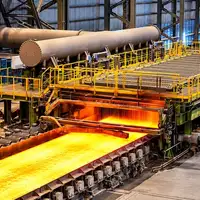
Half of Iran’s damaged South Pars capacity restored
Around 50% of the damaged capacity at Iran’s South Pars gas field had returned to service by September 22 and production had resumed, the deputy oil minister for planning said, according to state media.
The official said restoration targets had been met and all remaining planned work would be completed before winter.
Iran formally set out its conditions for ending the war as indirect talks with the United States intensified in New York on Tuesday, with the Strait of Hormuz and Washington’s naval blockade emerging as central points in efforts to turn renewed contacts into an agreement.
Foreign Ministry spokesman Esmail Baghaei said Iran conveyed its conditions to the United States through a Qatari mediator in New York. They included an end to the war on all fronts, a halt to what Tehran described as US “acts of aggression,” an end to the naval blockade and economic warfare, and the release of Iranian assets.
The Iranian account gave the clearest official description yet of what Tehran had put before Washington during a day of indirect contacts at the UN General Assembly. US special envoy Steve Witkoff said mediators shuttled between American and Iranian delegations throughout the day and that the two sides completed a round of discussions he hoped would prove “constructive and promising.”
The talks coincided with Iranian President Masoud Pezeshkian’s arrival in New York for the General Assembly. Before his trip, Iran’s Armed Forces General Staff and Khatam al-Anbiya Central Headquarters said they hoped he would convey the message of the Iranian people and armed forces to the international community.
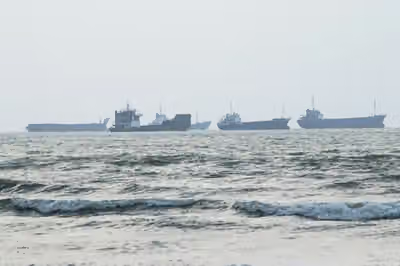
The conditions outlined by Baghaei also showed why the Strait of Hormuz has become central to the negotiations. Tehran has linked an easing of restrictions on the waterway to US steps on military pressure and the blockade, while Western and regional governments have increasingly focused on restoring normal navigation through the strait. Reuters reported that a senior Iranian official said Tehran could reopen Hormuz within seven days if Washington eased military pressure and lifted its blockade on Iranian ports.
European diplomacy in New York was converging on the same issue. EU foreign policy chief Kaja Kallas said she and Foreign Minister Abbas Araghchi discussed ending the war and fully reopening Hormuz, arguing that navigation should be free and unimpeded and that there should be no tolls or fees after the war.
French President Emmanuel Macron also said reopening the strait was the “main objective” of his Monday talks with US President Donald Trump. Macron said the situation in Hormuz had been “probably underestimated” and that France was prepared to become more involved in enabling transit while avoiding a direct confrontation.
Those efforts, however, have not removed the core disagreement over Tehran’s demands. Al Arabiya reported, citing a US source who attended a meeting with the Iranian delegation, that Washington had rejected Iran’s request to lift the blockade and that major obstacles to an agreement remained.
That leaves the New York diplomacy with a clearer negotiating framework than before — Iran has publicly set out its conditions and Washington has confirmed sustained indirect talks — but also with the blockade and access through Hormuz still at the center of the gap between the two sides.
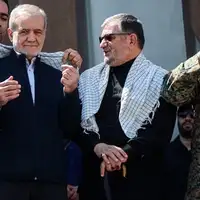
Iranian President Masoud Pezeshkian attends the Janfada mobilisation rally in Tehran, September 20, 2026
Iran’s President Masoud Pezeshkian is facing competing pressure at home over whether to use his UN visit for direct diplomacy with US President Donald Trump or strike a more defiant tone as the two countries remain at war.
Conservative and hardline figures have warned Pezeshkian against conciliatory gestures, while moderates have urged him to go as far as meeting Trump.
The debate comes as direct contacts between the two sides were already under way before Pezeshkian landed in New York.
Trump said Tuesday there was “a lot of momentum” toward a deal after US envoy Steve Witkoff and adviser Jared Kushner held a three-hour meeting with Iranian Foreign Minister Abbas Araghchi. Trump called the meeting “very good” and said he believed a settlement would be reached.
The hardline Kayhan newspaper warned Pezeshkian that “New York is not a place for smiles and negotiations,” arguing instead that the UN General Assembly should be turned into “a court for US crimes.”
“Care must be taken that no signal is given during the New York trip that could be interpreted by the enemy as weakness on the Iranian side,” it wrote.
Kayhan also called on Pezeshkian to criticize regional countries that have made their territory and military bases available to the United States.
Fars news agency, which is affiliated with the Revolutionary Guards (IRGC), went further, arguing that Pezeshkian should not have travelled to New York at all.
“Last year, after the 12-day war, we should not have attended, and this year we should absolutely not attend,” Fars wrote, citing attacks on Iran’s nuclear facilities, civilian deaths and the blockade.
Conservative politician Hossein Kanani-Moghadam argued that even an incidental encounter with US officials could be exploited by Washington to ease pressure on energy markets.
“Trump is seeking to use the Iranian president’s visit to lower oil prices on the global market,” he said.
Calls for a meeting with Trump
Trump has said he is prepared for a possible meeting with Pezeshkian, prompting some reformist politicians and media outlets to urge the Iranian president to use his visit for direct talks.
Moderate daily Etemad pointed to missed opportunities for meetings between former Iranian President Mohammad Khatami and President Bill Clinton in 2000 and between Hassan Rouhani and President Barack Obama in 2013.
“The history of Iran-US relations has for years been written not by the meetings that took place, but by the meetings that did not take place, and New York is once again waiting for the next page of this history,” it wrote.
Heshmatollah Falahatpisheh, a former chairman of parliament’s National Security and Foreign Policy Committee, told Donya-e Eqtesad that Pezeshkian should not limit himself to a UN address and should “conduct serious negotiations.”
“If the president does not have the authority to resolve diplomatic deadlocks, his presence in New York will only be a waste of national resources,” he said.
Former parliament speaker Mehdi Karroubi, one of the leaders of the 2009 protests who spent 15 years under house arrest, also urged Pezeshkian to meet Trump and discuss achieving lasting peace.
Karroubi called on Pezeshkian to move beyond “taboos” that had prevented Iran from securing its national interests and not remain passive in the face of domestic opponents of talks with Washington.
Reformist journalist Ahmad Zeidabadi said Pezeshkian would need “explicit and official authorization from all the highest levels of the establishment” to meet Trump.
“Such an event seems very unlikely, but politics at moments of crisis always has thousands of unexpected tricks up its sleeve,” he wrote.
Pezeshkian’s UN agenda
Pezeshkian is scheduled to address the UN General Assembly on Wednesday. His five-day visit also includes meetings with foreign officials, discussions with US academics and think tanks, and a meeting with Iranians living in the United States, according to official reports.
Before leaving Tehran, Pezeshkian struck a more confrontational public tone, saying he would use the UN gathering to speak about “the crimes of the enemies and the distrust they have created.”
“We have sat at the negotiating table several times and signed an agreement. Despite the negotiations and understanding, they acted [against it],” he said. “The world has seen and sees that they easily violate understandings.”
US President Donald Trump speaks next to Jordan's King Abdullah II and Qatar's Emir Sheikh Tamim bin Hamad Al Thani during a multilateral meeting with leaders from the Persian Gulf Cooperation Council, which includes the United Arab Emirates (UAE), Qatar, Bahrain, Kuwait, and Oman, during the 81st United Nations General Assembly (UNGA) in New York City, US, September 22, 2026.
US President Donald Trump said Tuesday there was “a lot of momentum” toward a deal with Tehran after his envoys met regional mediators and Iran’s top diplomat, as contacts in New York put the Strait of Hormuz at the center of efforts to end the war.
Trump said Steve Witkoff and Jared Kushner held a “very good” three-hour meeting with an Iranian delegation and predicted that “a settlement is going to be reached.”
Iranian state television later confirmed that Foreign Minister Abbas Araghchi met Witkoff “at the insistence of the American side” and conveyed Tehran’s conditions.
The diplomatic activity continued into Trump’s meeting with Persian Gulf Arab and other regional leaders, where he said Witkoff and Jared Kushner had also held a “very productive” meeting with mediators working on Iran.
“I think there’s a lot of momentum for them to make a deal,” Trump said, adding that his envoys had respect on both sides and that he believed they would “get this thing ended.”
The contacts marked the clearest movement toward direct negotiations in New York after days of proposals passed through Qatar and other regional mediators. But both Washington and Tehran continued to accompany the diplomacy with military threats, leaving Hormuz — where Iran has offered to ease restrictions in return for US concessions — at the heart of both the talks and the confrontation.
Hormuz moves to center of negotiations
In the meeting with Witkoff, Araghchi presented Iran’s conditions for reopening the Strait of Hormuz, including lifting the US naval blockade, releasing frozen Iranian assets and ending the war across all “resistance” fronts, according to state media.
A senior Iranian official separately told Reuters that Tehran could reopen the strait within seven days if Washington eased military pressure and lifted the blockade on Iranian ports. The proposal was conveyed to the United States through mediators last week, the official said, adding that Iran’s delegation in New York had authority to pursue renewed diplomacy.
Iranian officials also made clear that Tehran still sees the waterway as leverage. Parliament deputy speaker Ali Nikzad said negotiations were now tied to Hormuz and that Iran would “not back down” over the strait.
A parliamentary committee, meanwhile, advanced provisions allowing authorities to seize 20% of the cargo or its value from ships found to have violated Iranian passage rules. Regional push gathers pace
Qatar said Tuesday it was working with Pakistan to open a path for dialogue and facilitate an agreement between Tehran and Washington, including a possible short-term deal that could allow wider negotiations to resume.
Araghchi met Qatari Prime Minister and Foreign Minister Mohammed bin Abdulrahman Al Thani in New York on Tuesday.
Saudi Arabia, Egypt, Pakistan and Turkey also called for dialogue and diplomacy and backed implementation of the Islamabad memorandum between Iran and the United States. Arab mediators were separately pressing for a high-level US-Iran meeting during the General Assembly.
Trump’s meeting with Persian Gulf and other regional leaders later Tuesday put those efforts directly before the US president. He said Washington was “hearing from everybody” and compared the gathering with a similar meeting last year that preceded the Gaza agreement.
Threats remain around diplomacy
Neither side, however, eased its military rhetoric. Trump used his UN address to urge other countries to join Washington’s campaign to isolate Iran and later warned Tehran to act “fast” before it was too late.
During his meeting with GCC leaders, he also threatened another strike on Pickaxe Mountain if the United States detected renewed activity there.
“We may have to blow up another one, Pickaxe Mountain. We’re not seeing a lot of activity there, but if we do, we’ll blow it up immediately,” he said.
IRGC spokesperson Hossein Mohebbi said the force did not reject diplomacy but viewed negotiations as a way to impose Iran’s conditions. Iran’s top military commands separately warned of “more severe, crushing and unpredictable” strikes if the United States or Israel attacked again.
Trump nevertheless suggested the timetable for a deal could be shortening. After saying at the UN that an agreement might come after the US midterm elections, he told regional leaders it could happen “maybe before.”
Prospects of Pezeshkian-Trump meeting
President Masoud Pezeshkian is in New York for the General Assembly, but no meeting with Trump has been announced yet. The possibility has already drawn criticism from hardline figures in Iran who describe Trump as the “killer” of Iran’s late leader.
Questions over what Pezeshkian could deliver in such a meeting have also been raised outside Iran. Exiled crown prince Reza Pahlavi cast doubt on whether talks involving Pezeshkian and Trump could produce meaningful change, telling Fox News that Iran is ultimately controlled by the Revolutionary Guards.
“I don’t expect anything otherwise coming out, especially [from] someone like Pezeshkian, because when the country is de facto run by the IRGC, anybody with the slightest moderate tone would be internally accused of betraying the system,” Pahlavi said.
File photo: A Mahan Air Airbus a300 series at Tehran's Mehrabad airport
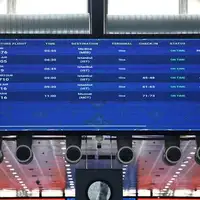
Iran has canceled flights from Tehran to Baghdad and Muscat from midnight Wednesday as regional airports begin restricting Iranian carriers under mounting US pressure aimed at cutting the country’s airlines off from international operations.
Iran’s Civil Aviation Organization said flights to the Iraqi and Omani capitals would be canceled from 12 a.m. local time on September 23, the semi-official Tasnim news agency reported Tuesday. Iranian authorities are working to divert Baghdad-bound flights to Najaf, it added.
The remaining international flights, including services to Istanbul, will operate according to schedule, Tasnim said.
Two sources at Iraq’s Civil Aviation Authority separately told Reuters that the Iraqi government had ordered authorities to suspend Iranian flights to Baghdad beginning at midnight Wednesday.
Two other sources familiar with the matter said Baghdad was discussing whether flights operated by Iranian airlines could instead be diverted to Najaf.
Majid Akhavan, spokesperson for Iran’s Civil Aviation Organization, also said Muscat airport would no longer accept Iranian passengers and that Tehran was holding talks with Omani authorities over the restrictions.
The cancellations are among the first visible consequences of Washington’s intensified campaign against Iran’s aviation sector.
US Treasury Secretary Scott Bessent said Monday that Iranian airlines would effectively be shut out of international operations from September 23, warning airports, fuel suppliers, ground-handling firms and other companies that providing services to sanctioned Iranian carriers could expose them to US penalties.
Iraq is particularly important for Iranian travelers because millions visit the country’s Shiite holy sites, especially Najaf and Karbala. Travel between the two countries increases sharply around religious occasions including the annual Arbaeen pilgrimage.
Iran’s international travel options were already narrowing before the latest restrictions.
Turkish Airlines, long one of the most widely used foreign carriers for Iranians traveling for tourism, business or onward connections, told Iran International on Monday that it had suspended all of its flights to Iran until at least March 2027, with no guarantee that services would resume then.
Tasnim’s statement that Istanbul flights remain scheduled refers to flights operated from Iran and does not mean Turkish Airlines has resumed its own Iran routes.
The US push threatens to further isolate Iranian aviation by targeting not only the airlines themselves but the foreign airports and companies needed to keep their international routes running.
Montenegro will extradite Iranian-Turkish hacker Amir Barati to the United States, where he faces charges over a sweeping cyber campaign that US prosecutors say stole research and data for Iran’s Revolutionary Guards and other entities.
The High Court in Podgorica approved Barati’s extradition under a simplified procedure and notified Montenegro’s Justice Ministry, local newspaper Vijesti reported Tuesday.
“The Ministry of Justice has informed the US Department of Justice,” Justice Minister Bojan Božović told the newspaper, adding that the remaining procedures would be carried out with police.
Barati, 39, was arrested on June 25 while visiting the coastal Montenegrin town of Kotor, in an operation involving local police and the FBI. He holds both Iranian and Turkish citizenship.
His extradition brings US authorities closer to putting on trial a man whose hacking career Iran International previously traced from underground cyber groups to alleged work for Iran’s Intelligence Ministry.
US prosecutors last month named Barati among 17 people charged over their alleged work with the Tehran-based Mabna Institute, which the Justice Department says conducted hacking operations for Iranian government entities, including the IRGC.
The Justice Department alleges the group targeted more than 100,000 professors and compromised about 8,000 accounts at 144 US universities and 178 universities abroad between 2013 and 2017. More than 31 terabytes of academic data and intellectual property were stolen, according to prosecutors.
Barati specifically helped track spearphishing campaigns, exchange credentials from compromised accounts, prepare lists of targets, conduct network reconnaissance and craft phishing messages, prosecutors said.
He faces seven counts, including conspiracy to commit computer intrusions and wire fraud, computer fraud, wire fraud and aggravated identity theft. The indictment remains allegations, and Barati is presumed innocent unless convicted.
‘Kinglet’
An Iran International investigation published after his arrest traced Barati’s hacking career much further back.
Born in Mashhad in 1986, Barati founded the Iran Black Hats Team in his early twenties and later co-founded Digital Boys Underground Team, operating online under the alias “Kinglet.”
Archived records reviewed by Iran International linked the groups to hundreds of attacks on academic, commercial and government websites, including systems associated with NASA, Microsoft, MIT and the US military.
His relationship with Iran’s security establishment appears to have shifted after his arrest by the Intelligence Ministry in 2010.
Multiple sources familiar with his activities told Iran International that authorities subsequently recruited Barati rather than pursuing him, turning him into an intelligence asset.
Court records reviewed by Iran International showed that a one-year prison sentence against him was never enforced despite reaching the enforcement stage. Iran International could not independently verify claims that the Intelligence Ministry intervened to protect him.
Barati left Iran for Turkey in 2021. He later obtained Turkish citizenship and changed both his first and last names through a Turkish court.
Sources told Iran International he subsequently avoided travelling to Europe until June, when he was arrested while on holiday in Montenegro despite travelling under his new identity.
The Justice Department’s August indictment later publicly confirmed Barati’s alleged role in the Mabna network for the first time, resolving a question raised after his arrest over how his case was connected to the long-running IRGC-linked university hacking campaign.