• العربية
  • فارسی
Brand
  • Iran Insight
  • Politics
  • Economy
  • Analysis
  • Special Report
  • Opinion
  • Podcast
  • Live TV
  • Iran Insight
  • Politics
  • Economy
  • Analysis
  • Special Report
  • Opinion
  • Podcast
  • Live TV
  • Theme
  • Language
    • العربية
    • فارسی
  • Iran Insight
  • Politics
  • Economy
  • Analysis
  • Special Report
  • Opinion
  • Podcast
  • Live TV
All rights reserved for Volant Media UK Limited
volant media logo

Qatar rejects Iran’s account of attacks, cites UN records

Sep 4, 2026, 21:30 GMT+1

Qatar’s foreign ministry spokesperson rejected Iran’s characterization of attacks on the Persian Gulf state, saying official submissions to the United Nations documented Iranian missile strikes on civilian, commercial and residential areas.

The spokesperson said Qatar’s March 1 letter to the UN recorded damage and injuries to 16 people, while a July 20 submission documented further attacks that wounded three people, including a child.

He said an Iranian-cited security assessment was prepared for operational purposes and was not “a comprehensive record of events or a legal assessment,” adding that selectively quoting from it was misleading.

Qatar also rejected describing the March 18 attack on Ras Laffan gas facilities as “alleged,” saying it had been formally documented.

“Qatar is not a party to this conflict,” the spokesperson said, adding that attacks on its territory and civilian infrastructure could not be justified as “legitimate responses.”

Most Viewed

Iran’s economy is a powder keg. Tehran is preparing for the spark
1
ANALYSIS

Iran’s economy is a powder keg. Tehran is preparing for the spark

2
INSIGHT

Xi snub reignites Iran’s doubts about China

3
INSIGHT

Five years ago, Iran’s planners put today’s crisis on paper

4
INSIGHT

US strikes deepen Tehran debate over compromise or confrontation

5

Iran drug shortages hit 800 medicines as costs could triple

Banner
Banner

Spotlight

  • If Britain backs US plan, Iran's London bank shuts down on October 22
    ANALYSIS

    If Britain backs US plan, Iran's London bank shuts down on October 22

  • US strikes deepen Tehran debate over compromise or confrontation
    INSIGHT

    US strikes deepen Tehran debate over compromise or confrontation

  • Xi snub reignites Iran’s doubts about China
    INSIGHT

    Xi snub reignites Iran’s doubts about China

  • Trump’s call for an Iranian uprising runs into a trust problem
    ANALYSIS

    Trump’s call for an Iranian uprising runs into a trust problem

  • Five years ago, Iran’s planners put today’s crisis on paper
    INSIGHT

    Five years ago, Iran’s planners put today’s crisis on paper

  • Women footballers came home under pressure. Now Iran wants them on camera
    ANALYSIS

    Women footballers came home under pressure. Now Iran wants them on camera

Banner
•
•
•

More Stories

US sanctions Turkish bank as Iran financial crackdown widens

Sep 4, 2026, 20:58 GMT+1
100%
File Photo: Signage is seen at the United States Department of the Treasury headquarters in Washington

The United States on Friday sanctioned Turkey’s Golden Global Bank and two subsidiaries over alleged financial dealings with Iran, escalating a campaign targeting foreign institutions accused of helping Tehran move money around sanctions.

The Treasury Department said Golden Global Yatirim Bankasi and its asset-management and leasing subsidiaries had facilitated tens of millions of dollars in transactions for the Islamic Revolutionary Guard Corps-Quds Force and provided Iranian institutions with access to international banking channels.

The action was taken under Operation Economic Outcast, a campaign launched on August 24 to target financial networks and foreign institutions that Washington says help sustain the Islamic Republic’s economy and circumvent sanctions.

Treasury alleged that the Istanbul-based bank was established to help Iran’s shadow-banking network transfer oil revenues from China to Turkey, where money exchangers could convert the proceeds into cash and gold. It also accused Golden Global of knowingly offering correspondent banking services that enabled transactions through accounts controlled by the IRGC-QF and its proxies.

Golden Global rejected the allegations, saying it had complied with domestic and international banking and compliance requirements and had no direct or indirect dealings with the individuals and entities named in the US sanctions decision. The bank said it would pursue its legal rights over what it called unfounded allegations.

Iran International also contacted Golden Global for comment on the Treasury allegations and whether it planned to challenge the designation, but had not received a response at the time of publication.

The three entities were added to the Treasury’s Specially Designated Nationals list, blocking property and interests in property under US jurisdiction and generally barring US persons from transactions involving them. Treasury also issued a general license allowing transactions necessary to wind down dealings with the sanctioned entities.

Treasury Secretary Scott Bessent described the designation in an interview with America’s Voice News as “code for you are out of business” and said another bank could be sanctioned as soon as next week.

“We know who you are, you know who you are, it’s over,” Bessent said, adding that US allies were assisting the campaign.

The move comes a week after Washington targeted the UAE operations of Banque Misr, Egypt’s second-largest bank, using a different legal mechanism.

Rather than imposing a full OFAC designation, the Treasury’s Financial Crimes Enforcement Network proposed a rule under Section 311 of the USA Patriot Act that would prohibit US financial institutions from opening or maintaining correspondent accounts for Banque Misr UAE. The proposal is subject to a public comment process before it can be finalized.

Treasury estimated that Banque Misr UAE processed about $1.8 billion between January 2024 and June 2026 for 103 companies potentially linked to Iranian shadow-banking networks.

  • US crackdown leaves much of Iran’s shadow banking untouched

    US crackdown leaves much of Iran’s shadow banking untouched

An Iran International investigation subsequently found that funds originating from Iran’s central bank were being directed to accounts at Banque Misr’s UAE operations as early as November 2022, based on leaked correspondence and transaction records from sanctioned Iranian lender Bank Parsian. The investigation found no evidence that the foreign banks involved knowingly facilitated sanctions evasion.

The Golden Global designation represents a further escalation from the Banque Misr action. Bessent told Reuters last week that Treasury expected to announce new secondary sanctions roughly every week, initially focusing on banks.

“You’re going to see a lot more of these every week,” he said. “We’re starting with the banks, and we’re telling the banks it’s not okay to have Iranian money and to aid the regime.”

The campaign marks an effort by Washington to move beyond already-sanctioned Iranian institutions and target the foreign financial infrastructure that US officials say allows Tehran to turn overseas revenues into money it can use.

When launching Operation Economic Outcast on August 24, Bessent said Washington’s objective was to “sever every economic lifeline” sustaining the Islamic Republic. He also appealed directly to Iranian soldiers facing economic hardship and invoked the fall of the Berlin Wall, when East German forces ultimately declined to fire on civilians.

Friday’s action also marked the first time a bank in a NATO member state had been targeted under the new campaign, according to Reuters, underscoring the widening reach of Washington’s effort as Treasury signals that further action against foreign banks is likely to follow.

Could Hormuz offer a way out of the US-Iran war?

Sep 4, 2026, 20:09 GMT+1
•
Behrouz Turani
100%
File Photo: Vessels in the Strait of Hormuz

The Strait of Hormuz has become one of the most dangerous points of leverage in the US-Iran war, but it may also offer Tehran and Washington their clearest route back to negotiations.

Reports on Friday, including by the Financial Times, indicated that mediators were working to establish a framework for possible fresh talks.

Iranian and Omani foreign ministers have already discussed creating a temporary shipping corridor as a step toward a more permanent arrangement.

Such a deal offers something increasingly scarce after six months of war: a face-saving compromise. Tehran could present it as recognition of its role in securing the strait, while Washington could claim it had restored freedom of navigation.

The possibility comes after months of strikes, economic pressure and intermittent diplomacy have failed to break the deadlock.

Iran’s restrictions on maritime traffic through Hormuz have meanwhile turned the vital energy corridor into one of Tehran’s most important bargaining chips.

A route back to talks

The moderate Fararu website quoted Andreas Krieg, a Middle East security expert at King’s College London, as describing an agreement over Hormuz as the most plausible route from direct confrontation toward broader negotiations.

A limited shipping agreement would not resolve disputes over Iran’s nuclear program, sanctions or regional security. But it could provide a confidence-building measure without requiring either side to publicly concede defeat.

The alternative paths being discussed in Iranian media are considerably darker.

Economic escalation

One is an intensification of the economic confrontation already underway.

Washington has shifted increasingly toward aggressive economic pressure through secondary sanctions under “Operation Economic Exclusion,” alongside its maritime blockade and the threat of further strikes.

Iran’s counter-strategy is to make that pressure costly for others. By restricting shipping and threatening regional energy infrastructure and trade routes, Tehran can force Persian Gulf states and other international actors to bear some of the economic consequences.

The US strategy has its own limitation: China. Enforcing secondary sanctions against major Chinese financial institutions would carry considerably greater economic and geopolitical risks than targeting smaller intermediaries.

Back to military action

Another possibility is renewed large-scale military confrontation.

A collapse in diplomacy, failure of economic pressure or a high-casualty Iranian attack on US forces could trigger further American and Israeli strikes, followed by Iranian retaliation.

Recent attacks on southern Iran have already shown how quickly economic and maritime confrontation can return to the battlefield.

Civilian casualties, including those from a strike on a residential building hosting a wedding, have further raised the costs of escalation, although responsibility for that attack remains under investigation.

A war without an end

Perhaps the bleakest scenario is also the least dramatic: neither diplomacy nor escalation produces a breakthrough.

Instead, the conflict settles into prolonged attrition involving intermittent strikes, maritime disruption, cyber operations, sanctions, covert economic measures and nuclear pressure.

That prospect helps explain the significance of the tentative diplomacy around Hormuz.

The strait has become one of Iran’s most powerful instruments of pressure, imposing costs far beyond the battlefield. Yet that same leverage may now provide the basis for an agreement neither side has to describe as capitulation.

After six months in which war, economic pressure and diplomacy have all failed to break the deadlock, the waterway at the center of the confrontation may also offer the narrowest route out of it.

If Britain backs US plan, Iran's London bank shuts down on October 22

Sep 4, 2026, 14:40 GMT+1
•
Mohamad Machine-Chian
100%

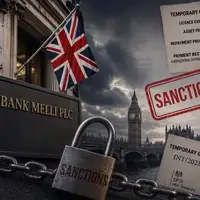
A bank owned by the Iranian state is still open in London, operating on a temporary permission from the British Treasury that expires on October 22. Renewing it, or letting it lapse, is Britain's answer to Washington's campaign to shut Iran's banks for good.

On Monday, August 24, Treasury Secretary Scott Bessent announced Washington's new campaign against Iran's regime: Operation Economic Outcast. The objective, in his words, is "to sever every economic lifeline that sustains this tyrannical regime until Tehran stands alone."

More than 60 entities, individuals and vessels were designated in the first round. But among all the institutions Bessent named, one stood out: Bank Melli, one of the Iranian state's largest banks, was the only one whose every foreign branch, he said, "must be shuttered and dark."

Bessent also issued a warning to anyone tempted to help: "Any entity that facilitates money laundering on behalf of Iran will be removed from the U.S. dollar system. The clock just started ticking."

Britain has made a narrower accusation. It designated Bank Melli's London subsidiary under its Iran nuclear sanctions regime, and nothing in the bank's UK filings alleges money laundering. Two governments reached the same bank by different legal routes.

Eleven months after Britain sanctioned it, Melli Bank plc still holds a British banking license. It still seats a board, still meets a payroll in London, still files audited accounts. Every asset frozen, every new customer barred, and it remains a bank. Shuttering it is a separate act, and Britain is the only government that can perform it.

  • Iran or the dollar? US makes an example of Banque Misr

    Iran or the dollar? US makes an example of Banque Misr

A British bank, owned by the Islamic Republic

Bank Melli operates branches and subsidiaries in about ten countries and territories, from the United Arab Emirates to Germany. Its London operation is a company in its own right: Melli Bank plc is registered in England, with a full banking license from Britain's financial regulators, the same authorities that supervise Barclays and HSBC.

Every share of it belongs to Bank Melli Iran, which belongs to the Iranian state. Until April 2026, the chairman of its London board was simultaneously the chief executive of the parent bank in Tehran.

Being a British company comes with a British obligation: publishing audited financial statements for anyone to read. The latest set, 54 pages covering 2025, was filed with the UK corporate registry in June. It amounts to something rare: an inside view of a regime-owned bank as the walls close in.

The accounts also leave no doubt about what the bank was for. Its core business for four decades was financing trade between Iran and Europe, mainly through letters of credit, the standard instrument that guarantees payment in cross-border trade.

The bank's own filings call Iran its "niche market" and say about 92% of its revenue was earned in euros, in what it calls the Eurozone–Iran trade corridor. A €363 million institution, with €258.8 million in capital that ultimately belongs to the Iranian state, existed inside the British financial system to keep money flowing between Iran and Europe.

And business was good, right up to the end. In 2024 the bank recorded its best profit since 2014, €2.4 million. In 2025 its fee income from trade finance surged another 71%, a boom cut short in late September, when the sanctions arrived.

What a severed lifeline looks like

In August 2025, Britain, France and Germany triggered the UN "snapback." The restored sanctions took effect on September 28. The next day, Britain and the European Union sanctioned Melli Bank plc itself.

Since then, the bank has been forbidden from writing a new loan or taking a new customer. Its own accounts describe what remains as the "orderly management" of existing assets and liabilities in a controlled, non-trading environment.

The numbers show what that means in practice:

  • The bank holds about €98 million in deposits that it is not licensed to repay, even as €88 million of them come due. Most of that money belongs to Iranian financial institutions that are themselves under sanctions. Sanctioned depositors, sanctioned bank: the money is simply locked between them.
  • €71 million of the bank's own money is stuck at other banks that hold its accounts, unavailable "due to external restrictions." What the bank can actually reach is about €30 million.
  • Iranian banks owe it €36.5 million in payments that fell overdue during 2025. A year earlier, that figure was zero.
  • Nearly three-quarters of its assets, €259.9 million, are claims on Iran, mostly money owed by Iranian banks. These are the assets that have to go somewhere if the bank stops existing.

The bank's British auditor has formally warned of "material uncertainty" over whether it can continue as a going concern. Its Hong Kong staff left in January when a payment license for their salaries failed to arrive in time. Layoffs began in London in December.

The Tehran representative office is closing. Four board members have departed in little over a year; three remain. Yet seniority still pays: total board compensation rose to €905,000 in 2025, and the highest-paid director received a €615,000 package including rented housing, a company car and private health insurance, in the same year the bank booked €1.26 million in severance costs.

What keeps the lights on at all is a permission slip. A general license from the UK Treasury, issued three and a half weeks after the designation, allows exactly four kinds of payments: wages and severance for its UK-based staff and directors, their pensions, IT bills, and the accountant's fee.

Every month the bank must report every payment it makes, line by line, to the Treasury. Even its lawyers require a separate license; legal and professional costs jumped 57% last year to just over €1 million, more than five times the bank's entire 2025 profit of €181,000, itself down 92% from the year before.

Britain's decision

On August 25, the day after Bessent spoke, Britain's Chancellor John Healey welcomed Operation Economic Outcast, noting that Britain has imposed more than 240 sanctions on Iran since Labour took office in 2024 and pledging to work with Washington on economic pressure.

Britain had sanctioned Melli Bank plc eleven months earlier on grounds of its own, under a nuclear regime unrelated to the money laundering Bessent alleges. The endorsement answers a different question: on the objective, Britain is with Washington.

That question has been open since the war began, with American officials making little secret of their view that British cooperation has run behind Washington's expectations. Melli Bank plc offers a cheap way to close the gap. The bank has been barred from trading since September. Its depositors are overwhelmingly sanctioned Iranian institutions. Its staff is already leaving. Letting the license expire hands Washington a closed bank at almost no cost to Britain.

Britain sanctioned the bank in September 2025, and weeks later the Treasury granted it Interim Necessities General Licence INT/2025/7628424. Renewal followed in April 2026. Every British and European sanction on Melli Bank plc that is in force today was in force then. Washington announced Operation Economic Outcast four months later, on August 24. The license expires on October 22.

The bank expected the signature to come again. Citing legal advice, its accounts say it anticipated renewal, and it behaved accordingly: it had added a new board member weeks before snapback, signed a new Hong Kong office lease a month after being sanctioned, and planned to rehire staff there by this summer.

Its report contains no wind-down plan, no closure scenario, and not a word about what happens to the €98 million in deposits or the €258.8 million in capital if the license lapses.

If the license lapses, the bank cannot lawfully pay its staff or its auditors, and an English company that cannot pay its auditors does not remain a going concern. Insolvency would put Melli Bank plc in front of a British court, which would have to decide what becomes of €98 million owed mostly to sanctioned Iranian banks and €258.8 million of capital belonging to the Iranian state.

Neither the bank nor the Treasury has said what that process would look like. The difficulty of it is the best reason the Treasury has to sign again. Insolvency would release nothing, though: sanctioned money stays frozen whoever administers it.

A freeze is a pause, and this bank has lived through one. The European Union sanctioned Melli Bank plc in 2008. The nuclear agreement lifted those sanctions in 2016, and the bank went back to financing Iranian trade, on its way to its best year since 2014. Everything imposed on it since 2025 could come off the same way, in a deal. Closure ends that.

A surrendered license, distributed capital and a dispersed staff leave nothing to restart, and any future British government minded to have this bank back would have to authorize an Iranian state-owned bank from the beginning.

That is what makes this obscure bank in London worth watching. Operation Economic Outcast rests on a claim that a regime's financial lifelines can be cut in practice. Melli Bank plc shows the machinery running end to end: international snapback, allied designations, a frozen balance sheet, a departing staff, and one administrative decision standing between a regime-owned bank and closure.

On October 22 the Treasury has two options. It can sign the license again and keep Melli Bank plc alive, or let it lapse and close a British bank owned by the Iranian state. Bessent said the clock just started ticking. In London, it already has an alarm set.

---

This report is based on Melli Bank plc's Annual Report and Financial Statements for 2025 and prior years, filed at the UK's Companies House (company no. 04152338); the Companies House register of directors; the UK Sanctions List entry for Melli Bank plc under the Iran (Sanctions) (Nuclear) (EU Exit) Regulations 2019; the UK Treasury's Interim Necessities General Licence INT/2025/7628424 and its Legal Services General Licence INT/2025/7323088, both published on gov.uk; Council Decision 2008/475/EC, which first listed the bank in the European Union, and the delistings of January 2016 under the nuclear agreement; Treasury Secretary Scott Bessent's remarks of August 24, 2026, announcing Operation Economic Outcast; the UK Chancellor's statement of August 25, 2026; and Iranian press reporting on the removal of Abolfazl Najarzadeh as chief executive of Bank Melli Iran.

'If I'm not happy, they'll execute me': Iran's new grammar of dissent

Sep 4, 2026, 14:35 GMT+1
•
Arash Sohrabi
100%
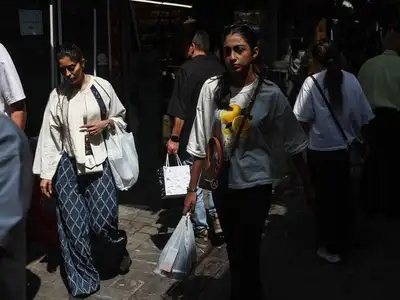
An AI-enhanced and reframed screengrab from a video shows a man dancing while holding a bag of chips and a bottle of soda.

Iranians have found a way to complain about prices that no prosecutor can touch: they film themselves dancing beside the groceries, insist they are delighted, and explain that if they were not, they would be executed.

The format barely varies. A person holds up what they bought and names what it cost. Four eggs and a single sausage, 5 million rials, about $2.30. A soda and a packet of crisps, 3.5 million rials. Three small bags of shopping, 75 million rials, roughly $34, which is close to half a month at Iran's minimum wage of about $75. Then the line, in one version or another: I am very happy, because if I were not, they would execute me. And then they dance.

One man films his phone showing a bank balance of 2 million rials, under a dollar, and dances through the list of what it will not cover: the bounced cheques, the unpaid shop rent, the apartment rent, his wife's clothes.

A veiled woman holds up a few tomatoes, onions and potatoes and explains that she can no longer buy by the kilo, only a handful at a time, "but I am happy, because otherwise they call me a rioter or a traitor." She thanks the authorities and signs off warmly. Another woman does the same with six eggs and a tin of tuna.

Another man dances while captions scroll over him: the dollar at 200,000 tomans, no electricity, deep in debt, and a signed undertaking to the authorities not to engage in politics. The threat varies with the week's official vocabulary: some dancers say they would otherwise be branded a mercenary, a traitor, or a Mossad agent.

It reads, at first, as one more instance of a familiar thing, humor as a pressure valve under repression. That reading is not wrong, but it is not what is new here, and it misses what the videos are actually doing.

  • Iran’s economy is a powder keg. Tehran is preparing for the spark

    Iran’s economy is a powder keg. Tehran is preparing for the spark

Painting things white

The Islamic Republic has a specific charge for describing the country's problems: siah-namai, "painting things black." It is used against journalists, economists and ordinary complainers to mean the deliberate darkening of a reality that is, officials insist, fine. The dance videos answer it precisely. They paint things white, so luridly that the whiteness itself becomes the accusation.

A man delighted by four eggs is not praising the government. He is holding its own demand up to the light.

To see why this is a break rather than a joke, it helps to recall Vaclav Havel's greengrocer, the shopkeeper in communist Czechoslovakia who puts the slogan "Workers of the world, unite!" in his window. He does not believe it. What the sign really says, Havel wrote, is: I am obedient and therefore have the right to be left in peace. The system did not need people to believe. It needed each of them to see everyone else pretending, so that pretending felt like the only choice. Its one requirement was silence about what the pretending was for.

The Iranian dancer is Havel's greengrocer saying the quiet part aloud while still holding up the sign. The compliance is performed, the smile is wide, the gratitude is offered. And in the same breath the coercion behind it is named: I am doing this because the alternative is a noose.

Coerced performance works only while the coercion stays deniable. Havel's greengrocer kept the system standing by leaving the reason unsaid. The dancer says the reason into the camera, and the sign in the window stops working.

A state that can no longer read its own people

Follow that to its end and the videos are doing something sharper than mockery. They are exposing a problem the state has made for itself.

When a government criminalizes complaint, it also empties praise of meaning. If unhappiness can be prosecuted, a happy citizen and a frightened one become impossible to tell apart.

The dancers are demonstrating this to the state's face: you can no longer know whether we are content, because you have made discontent a crime, and so our contentment tells you nothing.

This is the deeper significance of a format built entirely from the state's own words. Every accusation the dancers voice, siah-namai, rioter, mercenary, Mossad agent, traitor, is lifted from official language. The videos are assembled from nothing but the vocabulary the government uses to police speech, and turned into an instrument of it.

Linguists distinguish the message from the metamessage: what a statement says, and what it conveys about the relationship between the people speaking. Every one of these videos carries the same metamessage. I cannot tell you the truth, you know I cannot, and I know that you know.

The gap between "I am delighted" and "I am forbidden to say otherwise" is the entire content. Iranians read it without effort. The state pretends to read only the surface.

From refusing the frame to hollowing the words

The videos are the latest move in a shift that has been accelerating, and each stage has done something different to the relationship between a sign and its meaning.

During the January protests, demonstrators in the western town of Abdanan scattered rice into the air, pouring away a staple that had grown scarce and dear. The gesture refused the frame the state wanted to impose on the unrest.

  • A grain too far: Iranian rice becomes too dear for many

    A grain too far: Iranian rice becomes too dear for many

By throwing away the very thing they could barely afford, protesters were saying the anger was never really about the price of rice. The economy had triggered something larger: a rejection of the whole arrangement.

Then came the funerals. After the January massacre, families burying the dead replaced the state's mourning language, the Quranic recitation, the lamentation, the word shahid, "martyr," with another vocabulary entirely: wedding music, folk dance, verses from the Shahnameh, and a new word for their dead, javid-nam, "whose name will endure."

  • Dancing for the dead: How protest massacre is rewriting Iran’s mourning rituals

    Dancing for the dead: How protest massacre is rewriting Iran’s mourning rituals

  • Iranians burying slain protest youths mourn with dancing and defiance

    Iranians burying slain protest youths mourn with dancing and defiance

  • Iran’s 40-day memorials for protesters spill beyond cemeteries into streets

    Iran’s 40-day memorials for protesters spill beyond cemeteries into streets

That was an act of authorship. The grief was real, and out of it people built a rival ritual language, deliberately cleansed of the religious symbolism the state relies on.

The price videos are the third move, and they are not the same as the funeral dances, even though both use the body and both use music. The funeral dance builds; it replaces the state's grammar with a sincere one of its own. The price video hollows; it takes the state's grammar and performs it as a corpse. One is about the dead and constructs a new language. The other is about the living and empties an existing one. A society that first refused the state's frame, and then authored its own, is now wearing the state's words as a mask.

It is worth remembering how far this has travelled. Dance is not merely frowned upon in Iran; it is effectively illegal, and the word itself is so freighted that the state, when staging its own approved versions, avoids it and reaches instead for the bloodless euphemism harakat-e mozoun, "rhythmic movements," a coinage that was itself widely mocked when it appeared.

  • Dancing Is The New Protest In Iran

    Dancing Is The New Protest In Iran

  • Iranians Dance In Streets As Civil Disobedience To Clerical Rule

    Iranians Dance In Streets As Civil Disobedience To Clerical Rule

  • Iran’s Crackdown On ‘Happiness’ Draws More Criticism

    Iran’s Crackdown On ‘Happiness’ Draws More Criticism

During the 2022 Woman, Life, Freedom protests, teenage girls were detained and pushed into filmed confessions for dancing in a Tehran neighborhood. The same act now circulates in its hundreds, filmed openly by people using their own names and faces, among them veiled women from households where dancing would once have been unthinkable on its own terms, never mind the law's. That is its own measure of how fast the ground is moving.

The trigger, as ever, is money. The rial has been setting records, passing 2,200,000 to the dollar, and on August 31 the judiciary chief Gholamhossein Mohseni-Ejei called protesters "mercenaries" and promised a firmer hand. But the videos are not really about eggs, any more than the rice was about rice.

They are about a population that has run out of permitted ways to say no, and has started saying yes in a way that unmistakably means it.

The phenomenon has acquired a name, taken from the line the dancers keep repeating: "If I'm not happy, they'll execute me." It is a joke a foreign viewer can laugh at and an Iranian cannot, quite. The Islamic Republic built a machine designed to hear only yes. It is now discovering that yes is what no has learned to sound like.

Iran’s ‘axis of resistance’ splinters as allies pursue their own agendas - Economist

Sep 4, 2026, 11:54 GMT+1
100%
People carrying photos of Iranian and Hezbollah leaders during a rally in Beirut (2026)

Iran’s so-called “axis of resistance” is unlikely to disappear, but years of war have left its members weakened, increasingly independent and less capable of acting as a coordinated network under Tehran’s direction, The Economist reported.

Iran began backing Arab armed groups in the 1980s, when the Revolutionary Guards trained Hezbollah in Lebanon. The strategy was meant to compensate for Iran’s weak conventional military by projecting power abroad and keeping conflict away from Iranian territory.

That model has suffered major setbacks. The wars triggered after the Hamas-led October 7, 2023 attack ultimately brought direct attacks on Iran. Hezbollah and Hamas have been badly weakened, Bashar al-Assad’s government in Syria has fallen, and Iraq has ordered militias to disarm by October.

The Economist said the network is more likely to fragment than collapse, with some groups becoming more dependent on Tehran, others more autonomous and some looking toward alternative patrons.

Hezbollah represents the first category. Before 2023 it purportedly had more than 100,000 rockets and missiles and an experienced fighting force. Hassan Nasrallah, killed by Israel in 2024, was ideologically close to Iran but retained considerable autonomy.

His successor Naim Qassem has less authority, while Israeli strikes have killed many senior commanders and Lebanon is demanding Hezbollah surrender its remaining arsenal. The Economist said the IRGC sent personnel to Lebanon to exercise more direct control, leaving Hezbollah little choice but to enter another war with Israel in March. Its domestic popularity has also fallen, leaving Iran with an incentive to preserve the group partly because of what its collapse would symbolize.

The Houthis are at the opposite end. Iran’s support transformed them from a local Yemeni insurgency into a force capable of using anti-ship missiles and downing US Reaper drones, but they increasingly act according to their own interests. They are producing more of their own weapons, have developed ties with al-Shabab in Somalia, and have held contacts with Russia and China. Tehran and the Houthis still share enemies, but that does not mean the group takes orders from Iran.

  • Houthis more effective Iran ally than Hezbollah, Yemen expert says

    Houthis more effective Iran ally than Hezbollah, Yemen expert says

Iraqi Shiite militias fall somewhere in between. Iran remains an ally, but their main patron is now the Iraqi state, which pays more than 200,000 militiamen. Some attacked US bases earlier this year, but larger groups have been reluctant to risk their domestic position. T

he Economist said the IRGC was reported to have created smaller cells in Iraq to attack Persian Gulf states because bigger militias were unwilling to do so.

Hamas has always been an awkward fit in the largely Shiite network. Its new leader Khalil al-Hayya is considered close to Iran, but other officials favor stronger ties with Turkey and Persian Gulf countries.

In March, Hamas urged Tehran to stop attacking Persian Gulf states. Iran is unlikely to abandon Hamas, but its support may become more rhetorical than material.

Tehran also has fewer resources to rebuild the network. The war has caused hundreds of billions of dollars in damage, the United States is blockading Iranian ports and tightening sanctions, and Assad’s fall has severed Iran’s land route to Lebanon.

The Economist compared the situation, with caveats, to Soviet client states in the 1980s, when Moscow could no longer afford to sustain all its allies. Its conclusion: Iran’s regional network may survive, but increasingly as separate actors rather than a single functioning “axis.”