• العربية
  • فارسی
Brand
  • Iran Insight
  • Politics
  • Economy
  • Analysis
  • Special Report
  • Opinion
  • Podcast
  • Iran Insight
  • Politics
  • Economy
  • Analysis
  • Special Report
  • Opinion
  • Podcast
  • Theme
  • Language
    • العربية
    • فارسی
  • Iran Insight
  • Politics
  • Economy
  • Analysis
  • Special Report
  • Opinion
  • Podcast
All rights reserved for Volant Media UK Limited
volant media logo

Javad Larijani raps Ghalibaf's Islamabad trip as costly mistake

Jun 6, 2026, 20:40 GMT+1

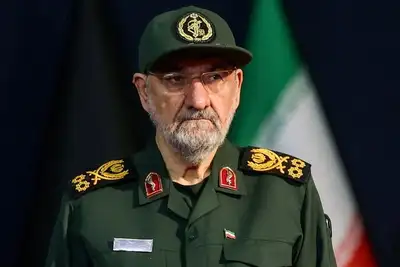
Iran does not need Pakistan to mediate with the United States, and Parliament Speaker Mohammad Bagher Ghalibaf's trip to Islamabad was a mistake that carried a major cost, said Mohammad Javad Larijani, once an advisor to Iran's slain supreme leader.

"Pakistan's prime minister is a good person, but there is no need for him to bring us and the Americans together in order to negotiate; he should know how to mediate. If we want to talk to the United States ourselves, we do so. We do not need a mediator," Larijani said.

Larijani, who is currently the head of Iran's Institute for Research in Fundamental Sciences, also said people should rest assured that Iran "will under no circumstances give up its nuclear program."

Most Viewed

Explained: Iran's frozen assets around the world
1

Explained: Iran's frozen assets around the world

2
EXCLUSIVE

Iran turns to Iraq’s Umm Qasr as new hub to bypass US blockade

3
OPINION

Arab states can no longer pretend Tehran’s threat is manageable

4

Iran student protests widen over final exams and university entrance rules

5
PODCAST

Can Trump crack Iran's negotiating playbook?

Banner
Banner

Spotlight

  • Can Trump crack Iran's negotiating playbook?
    PODCAST

    Can Trump crack Iran's negotiating playbook?

  • Explained: Iran's frozen assets around the world

    Explained: Iran's frozen assets around the world

  • Iran turns to Iraq’s Umm Qasr as new hub to bypass US blockade
    EXCLUSIVE

    Iran turns to Iraq’s Umm Qasr as new hub to bypass US blockade

  • As US talks stall, Iran moderates warn of renewed unrest
    INSIGHT

    As US talks stall, Iran moderates warn of renewed unrest

  • Iran's services imports surge as goods trade slumps
    ANALYSIS

    Iran's services imports surge as goods trade slumps

  • Citizens report growing use of children in Iran security activities
    VOICES FROM IRAN

    Citizens report growing use of children in Iran security activities

•
•
•

More Stories

From banks to blockchains: US opens new front in Iran sanctions

Jun 6, 2026, 19:48 GMT+1
•
Umud Shokri
From banks to blockchains: US opens new front in Iran sanctions
100%
Representations of cryptocurrency Binance are seen in front of displayed Nobitex logo in this illustration taken November 3, 2022.

The Trump administration's sanctions on Iran's largest cryptocurrency exchange mark an escalation in Washington's effort to disrupt the financial infrastructure Tehran uses to operate outside the formal banking system.

The US Treasury designated Nobitex alongside Wallex, Bitpin and Ramzinex and sanctioned senior figures connected to Nobitex, including chairman, co-founder and former chief executive Amir Hossein Rad.

According to the Treasury, Nobitex processed more than half of all Iranian digital asset inflows in 2025. Washington also accused it of facilitating transactions linked to the Islamic Revolutionary Guard Corps (IRGC), sanctions evasion, ransomware activity and the Central Bank of Iran's access to hundreds of millions of dollars in stablecoins.

The sanctions therefore struck at part of the infrastructure that has allowed Iranian individuals, companies and state-linked actors to access international digital asset markets despite years of financial restrictions.

Crypto vs sanctions

Iran's interest in cryptocurrency is not difficult to explain. Sanctions have sharply limited access to international banking networks, dollar transactions, trade finance and oil revenues. Digital assets do not eliminate these constraints but can provide alternative channels for moving value across borders.

Cryptocurrencies and stablecoins can help facilitate transactions, preserve value and maintain access to foreign markets. Stablecoins are particularly attractive because they reduce exposure to price volatility while still operating outside traditional correspondent banking networks.

Crypto mining has also become part of Iran's sanctions-evasion toolkit. By using subsidized electricity to mine Bitcoin, Iran can effectively convert domestic energy resources into a globally transferable digital asset.

The strategy comes with costs. Mining places additional strain on Iran's electricity grid and has been linked to power shortages and public frustration. Yet for a sanctioned economy, the logic remains compelling: when access to conventional finance is restricted, any mechanism capable of transforming local resources into internationally usable value becomes strategically important.

Hormuz and crypto

Cryptocurrency has also emerged in discussions surrounding the Strait of Hormuz, one of the world's most important energy chokepoints.

Chainalysis reported recently that Iran intended to demand cryptocurrency payments from oil tankers seeking safe passage through the strait during periods of heightened tension. Whether such plans were fully implemented is less important than what they reveal about the potential role of digital assets in future geopolitical confrontations.

For Tehran, cryptocurrency offers several advantages in such scenarios. Payments can move rapidly across borders, avoid some traditional banking restrictions and reduce exposure to frozen accounts or conventional financial controls.

The prospect of crypto-based payments linked to maritime security demonstrates how digital assets could potentially be used not only to move money quietly but also to generate revenue during periods of geopolitical crisis.

The US Treasury has warned of sanctions risks associated with Iranian demands for transit-related payments through the Strait of Hormuz, including payments made through digital assets, fiat currency, offsets, swaps or other arrangements.

Blockchain evasion limits

Despite its advantages, cryptocurrency is not a magic shield against sanctions.

Blockchain transactions often leave traces that can be analyzed by firms such as Chainalysis and Elliptic or by government financial-intelligence agencies.

Once the United States designates a platform such as Nobitex, international exchanges, liquidity providers and counterparties face increased risks if they continue interacting with Iranian-linked wallets. This pushes activity toward smaller, less liquid and often riskier channels.

The sanctions also highlight another vulnerability. Treasury officials noted that Nobitex suffered a major hack in June 2025, underscoring the risks associated with relying on digital financial infrastructure.

Another area of interest is the role of the IRGC, which under Iran's previous budget law was tasked with exporting roughly 700,000 barrels of crude oil per day—about half of the country's exports at the time. The organization is also one of Iran's largest infrastructure contractors.

While available data do not reveal where imported services originated or who ultimately benefited from them, the overlap illustrates the growing importance of non-traditional financial channels within Iran's sanctioned economy.

Iran is likely to adapt. Activity may shift toward peer-to-peer trading, decentralized platforms, foreign intermediaries, stablecoin networks or new domestic exchanges. Yet each alternative carries costs, whether through reduced liquidity, greater compliance risks or increased exposure to future sanctions.

For Washington, the challenge is sustained enforcement. Sanctioning Nobitex will matter most if it is accompanied by international cooperation, improved blockchain intelligence, pressure on foreign exchanges and clear guidance for shipping firms, insurers and commodity traders.

The United States does not need to stop every Iranian crypto transaction to have an effect. It only needs to make the system more expensive, more traceable, riskier and less attractive for counterparties.

The Nobitex case illustrates how financial warfare has moved from banks to blockchains. Digital assets have given Tehran greater flexibility under sanctions, but they have also created new vulnerabilities.

The more Iran relies on crypto infrastructure, the more that infrastructure becomes part of the sanctions battlefield.

US intelligence raised concerns over alleged Israeli spying on Iran talks - NYT

Jun 6, 2026, 18:56 GMT+1

Recent US intelligence reports raised concerns that Israeli spy agencies were allegedly eavesdropping on American officials involved in negotiations with Iran, The New York Times reported, citing US officials familiar with the assessments.

The report said Israel had allegedly intensified efforts to gather information on US positions in the talks, including by targeting senior officials such as President Donald Trump's top negotiator Steve Witkoff, the Pentagon's top policy official Elbridge Colby, and deputy assistant secretary Michael DiMino.

The report said a Defense Intelligence Agency assessment increased the counterintelligence threat level posed by Israel from "high" to "critical" in recent weeks, citing concerns over alleged efforts to spy on US military personnel and government officials. The report said American defense personnel in Israel had detected software installed on their phones that could intercept communications.

A White House official disputed the account and said it was false, while a spokesperson for the Israeli embassy in Washington denied that Israel spies on American officials or entities, the newspaper said.

Iran political prisoner thanks exiled princess for rights advocacy

Jun 6, 2026, 18:15 GMT+1
Iran political prisoner thanks exiled princess for rights advocacy
100%

Reza Mohammadhosseini, a monarchist political prisoner held in Ghezel Hesar Prison in Iran’s Alborz province, thanked exiled Iranian princess Noor Pahlavi for her human rights advocacy and for carrying Iranians’ voices to the world.

“From behind the cold, high walls of Ghezel Hesar Prison — where for years I have watched the sky through the bars — the words of Princess Noor Pahlavi reached me from thousands of kilometers away; yet they were so bound to the pain, the suffering, and the aspirations of the people of Iran that it was as if they had risen from these very cells,” Mohammadhosseini wrote, according to the statement by exiled Prince Reza Pahlavi’s office.

Mohammadhosseini cited Noor Pahlavi’s speech in Oslo as a reminder that “the voice of the people of Iran is still being heard” and said the struggle for freedom, justice and human rights had no borders.

He called for the release of political prisoners and said many people in Iran were held “solely for the crime of thinking, writing, protesting, and demanding their human rights.”

"Today, more than ever, Iran needs global solidarity in defense of human dignity,” he wrote.

Five political prisoners in southwest Iran face execution, rights group says

Jun 6, 2026, 17:08 GMT+1

Iran’s Supreme Court has upheld death sentences against five political prisoners held in Sheiban Prison in Ahvaz, in southwest Iran, the Karun Human Rights Organization said.

The rights group said the five prisoners were at imminent risk of execution after trials it said were marked by denial of access to independent lawyers, violations of defendants’ rights and reliance on “forced confessions.”

The group named the prisoners as Masoud Jamei, Alireza Mordasi, also known as Hamidavi, Farshad Etemadi-Far, Hassan Mosallavi (Torfi), and Reza Abdali, also known as Daghaghleh.

It said Jamei, Mordasi and Etemadi-Far were tried last year on charges including “corruption on earth,” “membership in rebel groups opposed to the Islamic Republic,” “propaganda against the system” and “assembly and collusion.”

Mosallavi, a 38-year-old Arab civil and cultural activist detained since 2022, was sentenced to death in absentia on charges of “waging war against God” and “membership in Arab groups opposed to the Islamic Republic,” the organization said.

Abdali, a 35-year-old political prisoner, was given a death sentence and a 15-year prison term on a charge of “contact with organizations outside the country,” the group said.

The Karun Human Rights Organization called for urgent international action to stop the executions.

British couple jailed in Iran remain on hunger strike as health fears grow

Jun 6, 2026, 15:28 GMT+1
British couple jailed in Iran remain on hunger strike as health fears grow
100%
Lindsay and Craig Foreman

A British couple imprisoned in Tehran’s Evin prison remain on hunger strike over access restrictions, raising health concerns as one of them is now barely able to walk, sources familiar with the matter told Iran International.

Lindsay Foreman and Craig Foreman were arrested in January 2025 while traveling through Iran during an around-the-world motorcycle trip.

They were later sentenced to 10 years in prison on espionage charges after Iranian authorities accused them of gathering information in several parts of the country, allegations they deny.

The couple lost their appeal against the sentence earlier this week, Reuters reported, citing their family.

The Foremans are being held in separate wings of Tehran’s Evin prison, which rights groups have long criticized over alleged torture and inhumane conditions.

The couple began a strike after being denied phone calls, visits with each other and meetings with their lawyer following an interview with the BBC World Service.

Health concerns grow as hunger strike continues

Prison officials have exerted various forms of pressure on the two detainees in recent weeks to force them to end their hunger strike, a source familiar with their condition told Iran International.

The source said both prisoners had lost a significant amount of weight and that the prison deputy had visited their wards only once during that period.

Lindsay Foreman is now barely able to walk after nearly three weeks on hunger strike, the source added.

The head of Evin prison has stopped nurses from entering the women’s ward, where nurses had previously been present regularly, the source said. As a result, Lindsay Foreman’s blood pressure has not been measured or recorded for about a week.

In recent days, Lindsay Foreman’s cellmates obtained a blood pressure monitor from the guard officer after protesting and following up on her condition, and measured her blood pressure at 8 over 5, according to the source, who is familiar with the situation of political prisoners in Evin.

Her transfer to the infirmary was also difficult because she had to be carried up about 30 steps to reach it, the source said. Despite her condition, prison officials refused to record her medical status or provide the necessary care and returned her to the ward.

The source also said officials had refused in recent weeks to allow Lindsay Foreman to receive glasses, vitamin tablets and some hygiene items she needed, measures the source said are usually approved after some time even in similar cases.

A source close to the family of one prisoner held in Evin told Iran International that one of Lindsay Foreman’s cellmates quoted her as saying: “We only spoke about the conditions we live in; about the executions we see and hear about, and the names of those announced every day. This is the reality of our lives. Now, because we said what is happening, we have been denied phone calls and visits, while we are far from our families and children. We did not say anything new; we only recounted what is happening every day in Iran.”

The source added that Craig Foreman, explaining the reasons for his hunger strike to his cellmates, said: “In addition to being denied calls and visits, many of my cellmates have been taken away in recent months for their execution sentences to be carried out and never returned. Five people have been executed from the room where I am being held alone.”