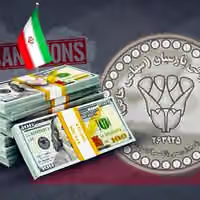
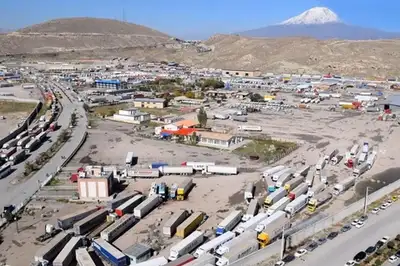
Netanyahu says Iran regime change ‘possible, not guaranteed’


Israeli Prime Minister Benjamin Netanyahu said on Sunday it was possible Iran’s leadership could eventually be toppled, though he stopped short of predicting such an outcome
“Is it possible? Yes. Is it guaranteed? No,” Netanyahu said in an interview with CBS’s 60 Minutes aired Sunday.
His remarks came as US President Donald Trump dismissed Iran’s latest response to a US proposal as “totally unacceptable,” while Iranian state media said Tehran rejected what it described as Washington’s “excessive demands.”
Netanyahu acknowledged that Israeli planners only fully grasped the scale of the risk posed by Iran’s ability to disrupt shipping through the Strait of Hormuz after the war began.
Read the full story here.


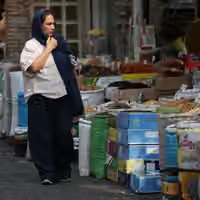
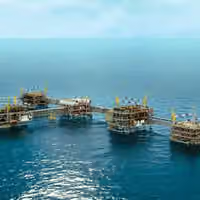
The CEO of Tehran’s Imam Khomeini Airport City said foreign airlines are in talks to resume flights to Iran after weeks of disruption linked to regional tensions and conflict.
Speaking to ILNA, Ramin Kashef Azar said several foreign carriers had expressed readiness to restart flights to Iran, while domestic airlines were already operating international routes according to schedule.
He added that conditions at Imam Khomeini Airport were currently “normal.”
nvestment giant PIMCO warned that the Iran war and disruption in the Strait of Hormuz could force the US Federal Reserve to raise interest rates instead of cutting them as energy prices drive inflation higher.
Speaking to the Financial Times on Sunday, Pimco chief investment officer Dan Ivascyn said the conflict had significantly increased inflation risks for the US economy.
Rights activists have raised renewed concerns over the health of prominent female political prisoners after Nobel Prize laureate Narges Mohammadi was transferred to a hospital in Tehran and reports emerged of worsening conditions for jailed activist Fatemeh Sepehri.
Mohammadi was moved to Tehran on Sunday after days of worsening health in prison prompted concern from her family and supporters.
The move came after 10 days of hospitalization in the northwestern city of Zanjan, where Mohammadi had reportedly suffered severe chest, back and arm pain.
According to a statement from her family-run Narges Foundation, authorities temporarily suspended her sentence after setting heavy bail before transferring her to Tehran Pars Hospital.
Mohammadi, one of Iran’s most prominent political prisoners and a longtime critic of the Islamic Republic, won the Nobel Peace Prize in 2023 for her activism in support of women’s rights and democracy. She has spent much of the past two decades in and out of prison on charges linked to her activism.
Her husband, Taghi Rahmani, who lives in France, said the transfer was insufficient given the extent of her medical condition.
“Narges Mohammadi’s life hangs in the balance,” Rahmani posted on X. “While she is currently hospitalized following a catastrophic health failure, a temporary transfer is not enough. Narges must never be returned to the conditions that broke her health.”
Mohammadi has long faced health complications during detention, including multiple heart attacks in prison. In 2022, she underwent emergency surgery after officials delayed treatment despite worsening symptoms.
Attention has also focused on Sepehri, another jailed government critic who rights groups say is suffering serious health problems while serving her sentence in Vakilabad prison in the northeastern city of Mashhad.
The 61-year-old activist, who previously underwent open-heart surgery, has spent more than 1,000 days in prison, according to rights activists, with limited access to specialized medical care during that time.
Human rights sources say she has suffered severe drops in blood pressure, irregular heartbeats and chronic pain in her chest and arms. Reports say Sepehri was returned to prison before completing treatment after several short hospitalizations.
Sepehri was first arrested in 2019 after signing a statement known as the “14-person declaration,” which called on then-Supreme Leader Ali Khamenei to step down. She was arrested again during the nationwide protests of 2022 and later sentenced to 18 years in prison by a Revolutionary Court in Mashhad.
In recent days, social media users have circulated a graphic bearing the slogan “Be the voice of Fatemeh Sepehri,” calling for her immediate access to medical care and release from prison.
The relationship between the Taliban and Iran, once marked by military confrontation and nearly pushed to war, is now defined by caution and quiet engagement.
The Taliban, who present themselves as representatives of a hardline Sunni Islamist movement, and the Iranian system, one of the main centers of Shiite political power, now maintain relations in which practical politics and mutual necessity have largely replaced deep-rooted sectarian hostility.
In the past two decades, the regional landscape has changed, enemies have shifted and one principle has again proven true: in the Middle East and across Central and South Asia, religion is often expressed rhetorically while decisions are driven by political interests.
Read full article here.
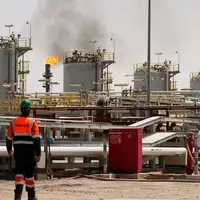
Asian share futures fell and the dollar strengthened on Monday after Iran delivered its response to a US proposal and Donald Trump dismissed it as “totally unacceptable,” fueling fears of prolonged disruption in the Strait of Hormuz and sending oil prices sharply higher.
Brent crude futures climbed 2.8% in early trade to $104.06 a barrel, while US crude rose 2.7% to $97.97.
The dollar also gained as investors sought liquidity during market volatility, rising 0.2% against the Japanese yen to 156.88 yen, while the euro slipped 0.2% to $1.1760.