Iran lawmaker says delegation sought US ‘surrender’ in Islamabad


Iran’s delegation to Pakistan was not sent for negotiations but to pursue diplomatic pressure on the United States, a senior lawmaker said on Sunday.
“There is no negotiating team,” Hamidreza Haji Babai said, adding those dispatched aimed to advance what he described as US “surrender” at the United Nations.
Haji Babai said “our negotiation is our battle,” adding the confrontation would continue until the United States is “brought to its knees.”



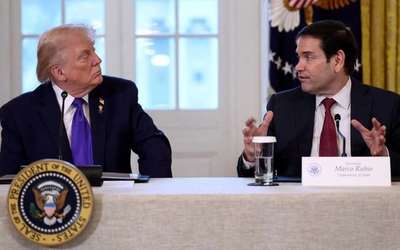

US President Donald Trump shared an article suggesting he could impose a naval blockade on Iran after talks in Islamabad ended without agreement.
The article titled “The Trump card the president holds if Iran won’t bend: a naval blockade,” from pro-Trump outlet Just the News, said a blockade could pressure Iran’s economy and its oil buyers, including China and India.
The article says such a move would echo what it described as a previous US blockade strategy against Venezuela.
Iran said talks with the United States ended without agreement after some progress but persistent gaps on key issues.
“We reached understanding on some issues, but on two or three important ones there was distance,” Foreign Ministry Spokesman Esmail Baghaei said following the discussions on Sunday, adding the talks “did not lead to an agreement.”
Baghaei said diplomacy would continue, with further contacts involving Iran, Pakistan and regional partners.
Pakistan called on Iran and the United States to maintain a ceasefire after direct talks ended without agreement on Sunday.
“It is imperative that the parties continue to uphold their commitment to ceasefire,” Foreign Minister Ishaq Dar said, according to a statement from his office.
Dar said Pakistan would continue efforts to facilitate dialogue between the two sides in the coming days.
CNN National Security Analyst Alex Plitsas said Iran’s refusal to accept US policy red lines on nuclear issues reflects Tehran’s belief it is winning and can wait the US out.
“We won’t see a change in behavior until we see a change in perception,” he posted on X.
US Vice President JD Vance said any deal with Iran requires a clear commitment that Tehran will not pursue nuclear weapons or the means to rapidly develop them.
“We need to see an affirmative commitment that they will not seek a nuclear weapon, and they will not seek the tools that would enable them to quickly achieve a nuclear weapon," Vance said. “That is the core goal of the president of the United States, and that's what we've tried to achieve through these negotiations.”

