In Pictures: Iran delegation meets Pakistan PM in Islamabad
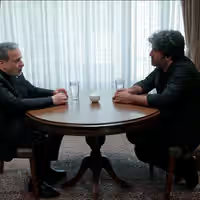
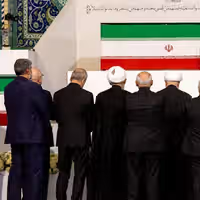
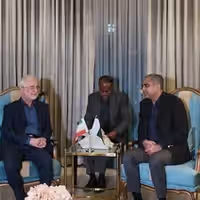
Images released by Iranian state media showed the Iranian delegation meeting Pakistan’s prime minister in Islamabad ahead of expected talks with the United States.
Pakistan’s prime minister met JD Vance on Saturday ahead of expected talks between Iran and the United States in Islamabad, the government said in a post on X.
Vance was accompanied by Steve Witkoff and Jared Kushner, while Pakistan’s delegation included Foreign Minister Ishaq Dar and Interior Minister Mohsin Naqvi.
Prime Minister Shehbaz Sharif said he welcomed both delegations’ commitment to engage constructively and expressed hope the talks would serve as a “stepping stone toward durable peace,” adding Pakistan would continue to facilitate dialogue between the two sides.
Iranian officials said on Saturday that the country’s armed forces remained ready to act amid talks with the United States, stressing deep distrust of Washington.
MP Rouhollah Motefakker Azad said Iran did not trust the United States and was ready to impose "the nation’s will on the battlefield".
Fadahossein Maleki, a member of parliament’s national security and foreign policy committee, also said the armed forces had their “hand on the trigger” in case of any “strategic mistake” in the negotiations.
Earlier, Mehdi Tabatabaei, deputy for communications to President Masoud Pezeshkian, wrote on X that the armed forces were ready as the talks began.
Iran’s first vice president said a deal with the United States is possible if negotiations are led by what he described as an “America First” approach, but warned there would be no agreement otherwise.
“If we negotiate … an agreement beneficial to both sides and the world is probable,” Mohammad Reza Aref said in a post on X.
“However, if we face representatives of ‘Israel First,’ there will be no deal … we will inevitably continue our defense even more vigorously,” he added.
Iran’s new supreme leader Mojtaba Khamenei is engaged in decision-making on major issues including the war despite serious injuries, three people close to his inner circle told Reuters.
They said Khamenei was taking part in meetings with senior officials via audio conferencing and remained “mentally sharp” as he recovers.
He suffered severe facial and leg injuries in an airstrike that killed his father earlier in the conflict, with one source saying his face was disfigured.
Khamenei’s condition and whereabouts have not been publicly confirmed since the attack.