The truce that emerged after six weeks of war remains fragile, even as diplomatic signals from Washington, Tehran and Islamabad suggest the meeting is likely to go ahead.
Amid the uncertainties and the mistrust, it was perhaps unsurprising that Iran’s ambassador to China, Abdolreza Rahmani Fazli, publicly expressed hope that Beijing could act as a guarantor of the process. The suggestion followed reports that China maintained contact with both Washington and Tehran during the diplomatic push that helped produce the ceasefire.
Yet when asked directly about such a role, China’s foreign ministry avoided any commitment, saying only that Beijing hopes “all parties can properly resolve disputes through dialogue and negotiation” and will maintain communication with those involved.
This episode reflects a broader pattern in China’s response to the war: exerting influence while avoiding commitment.
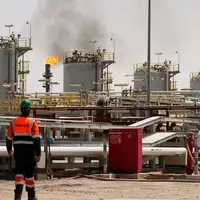
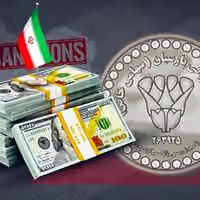
Beijing is engaged, but only up to a point. It maintains economic ties with Iran, continues to purchase its oil, and provides forms of support that help sustain the Iranian economy under pressure. Yet none of this amounts to the kind of backing Tehran would need in an existential conflict. There are no security guarantees, no military involvement, and no willingness to absorb significant strategic risks.
China’s limited readiness to intervene reflects both its capabilities and its priorities. Its actions are ultimately directed toward ensuring that the conflict does not disrupt its broader strategic agenda at minimal cost. Contributing to de-escalation can serve that objective, but only insofar as it advances clearly defined interests.
When the conflict began on February 28, Beijing was relatively well positioned to absorb the initial shock with the strategic reserves it had built up throughout 2025, the increasing electrification of its economy, and its vast domestic coal resources. It also soon became clear that Tehran could withstand the initial decapitation strikes.
At the same time, China’s regional strategy has increasingly shifted toward the monarchies across the Persian Gulf, reinforcing its preference for a balanced and non-committal posture.
The conflict also presents certain strategic opportunities. As the United States diverts military resources and political attention to the Middle East, pressure on China in the Indo-Pacific decreases. The war also offers insights into US military capabilities and operational patterns.
These advantages, however, depend on the conflict remaining limited. A prolonged war—such as the one that loomed when President Donald Trump warned that a “whole civilization will die”—poses significant risks.
China is poorly positioned to weather a global recession with ease. Exports remain essential for sustaining industrial output, growth and employment. A decline in external demand, combined with disruptions to key industrial and agricultural inputs, would therefore undermine a critical pillar of its economy.
Beijing wants stable relations with Washington, not least to buy time to strengthen its economy against future US pressure. In addition, the question of how to protect or evacuate the hundreds of thousands of Chinese nationals in the region would become increasingly urgent if the conflict escalated further.
It was under these conditions that China chose to act. On the one hand, it vetoed a Bahrain-sponsored resolution at the UN Security Council that—even in revised form—could have provided legal cover for further attacks against Iran. On the other, it helped create a diplomatic off-ramp to a US president in clear need of one.
China’s role in the crisis thus highlights both the reach and the limits of its influence. Beijing has demonstrated an ability to shape outcomes at critical junctures, but it remains unwilling to assume the responsibilities of a security provider. Its actions are highly context-dependent: had Washington shown no interest in de-escalation, or had diplomatic openings not emerged, China’s ability to intervene would likely have been far more limited.
The Chinese leadership, in other words, is not seeking to resolve the conflict as much as to manage its consequences. It intervenes not to build a lasting order, but to prevent outcomes that would damage its broader strategic agenda.
As long as that calculation holds, Beijing will remain an influential—but ultimately cautious and constrained—actor in Middle Eastern security.