Iran’s wartime messaging targets its own citizens

Behrouz Turani
Iran International

Iran’s state broadcaster has adopted a noticeably harsher tone toward dissent, increasingly framing domestic protests as part of a war waged by “enemies.”
Iran International
Iran’s state broadcaster has adopted a noticeably harsher tone toward dissent, increasingly framing domestic protests as part of a war waged by “enemies.”
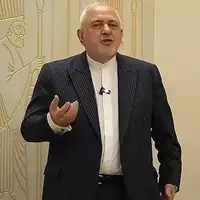
One of the clearest examples came on March 10, when Police Commander Ahmad-Reza Radan addressed the possibility of protests during the conflict.
Speaking on state television, he warned that anyone who took to the streets “at the will of the enemy” would no longer be treated as a protester but as an “enemy combatant.”
The wording marked a significant escalation. By invoking the language of combat, the state effectively framed domestic dissent as participation in the war itself.
Such framing has appeared repeatedly in recent broadcasts. Commentators and officials frequently describe protests not as political grievances but as extensions of foreign military pressure.
The same rhetorical shift is evident in the way foreign adversaries are described. Television hosts increasingly employ dehumanizing metaphors to portray Western and Israeli leaders.
Israeli officials have been repeatedly referred to as “rabid dogs” on talk shows, imagery that casts them as biological threats rather than political opponents.
Foreign-based Persian-language media outlets are portrayed in similarly extreme terms. Iran International TV, for example, has been described on state television as a “satanic network,” while presenters have warned that its regional offices could be considered legitimate targets.
The tone is often even more unrestrained online, where state television presenters engage in public taunts and insults with Israeli officials and journalists on social media.
The language echoes wartime propaganda seen in many conflicts, where demonization of the enemy is used to mobilize domestic support. But the Iranian broadcasts go further by combining this rhetoric with arguments that dismiss international norms governing warfare.
On several television panel discussions in March, state-aligned analysts suggested that international humanitarian law and institutions such as the United Nations serve merely as tools of Western power.
Some commentators declared bluntly that “the age of diplomacy is dead” and that the West understands only “the language of missiles.”
In this atmosphere, messaging increasingly serves not only to condemn foreign adversaries but also to warn domestic audiences about the consequences of dissent.
When protests are described as actions carried out “at the will of the enemy,” the implication is that political opposition itself becomes a form of collaboration with hostile powers.
Wars have always reshaped political language. Governments under military pressure tend to simplify narratives, divide the world into allies and enemies, and suppress ambiguity. Iran’s state television now appears to be moving decisively in that direction.
When state television begins speaking about its own citizens in the language of the battlefield, it signals that the war is no longer being presented as something happening only beyond the country’s borders.




Tehran’s unveiling of a towering statue depicting the Roman Emperor Valerian kneeling before pre-Islamic Persian King Shapur I has renewed criticism of the Islamic Republic’s appeal to nationalist sentiment following the June war with Israel.
For over forty years, the theocracy purged ancient Persian history from schoolbooks, replacing it with post-Islamic narratives. But after the 12-day conflict with Israel, officials have turned to the distant pre-Islamic past to rally a divided society.
From murals of ancient kings and soldiers to patriotic songs added to Shi’ite mourning ceremonies performed before Supreme Leader Ali Khamenei, Tehran now embraces imagery once deemed heretical by its own revolutionary ethos.
'Kneel before Iran' campaign
Tehran’s Revolution (Enghelab) Square was the scene of an unusual spectacle on Friday as officials unveiled a massive bronze statue depicting Roman Emperor Valerian kneeling in submission before Sassanid King Shapur I, commemorating Iran’s victory at the Battle of Edessa (260 AD).
The event was held under the slogan “Kneel before Iran,” part of what authorities describe as a campaign to project “national unity and historical pride” following the June war with Israel.
Tehran Mayor Alireza Zakani, a staunch ultraconservative, said on X: “Enmity with Great Iran can only end in kneeling before this historic nation.”
Municipal official Davood Goodarzi said the installation would be accompanied by visual displays depicting “other victories of Iranians over foreign aggressors,” including the defeat of British forces by local commander Rais-Ali Delvari, Mirza Kuchak Khan’s resistance against Russian troops, and Surena’s triumph over Rome at the Battle of Carrhae in 53 BCE.
The goal, Goodarzi said, is “strengthening concepts such as national dignity, social unity, and Iranian identity.”
The statue, he said, would remain temporarily at Revolution Square before being moved to a city gateway “where it will stand as the first emblem of Iran before diplomats and foreign visitors.”
Unveiled women were allowed to attend the unveiling ceremony—an uncommon scene at events organized by Tehran’s ultra-hardline municipality.
The turn to the pre-Islamic past
The sharp reversal also recalls remarks once made by Khamenei. In a 2011 speech, he asserted that “all the great military victories of this nation came after Islam,” dismissing pre-Islamic accounts as “things that are not documented.”
In 1987, he had said that prophets triumphed over kings such as Cyrus and that “nothing remains of these monarchs in history but names remembered with derision.”
Nevertheless, pro-government social media accounts have now gone so far as to circulate posters equating Khamenei himself with Shapur, showing him standing with a staff as Benjamin Netanyahu and Donald Trump kneel before him. The caption reads: “You will kneel before Iran.”
'Hypocrisy'
Pro-government figures have hailed the move as a patriotic success. Conservative political reporter Hossein Saremi posted: “Today’s grand Iranian gathering showed that people and the state share one essence: Iran itself. Nothing can take our homeland away.”
Others, however, called the spectacle “hypocrisy.” Journalist Gholamhossein Pashaei wrote on X: “Every year you close Pasargadae to stop people from celebrating Cyrus Day, yet you unveil Shapur’s statue in Enghelab Square with drums and fireworks during Fatimiyya (mourning period)!”
Dissident commentator Hamid Asafi called the ceremony “a perfect snapshot of the Islamic Republic’s contradictions.”
On Telegram he wrote: “A week ago they closed Cyrus’s tomb out of fear of the crowds, and now they glorify Shapur in the same breath. The Islamic Republic fears living history but poses for selfies with its corpse.”
He added: “They know people no longer respond to rosaries and sermons. That’s why they’ve brought history back to the stage—in a controlled costume. If they can’t erase the past, they’ll try to own it.”
The irony deepened as UNESCO formally recognized Cyrus’s Charter as one of the earliest human-rights documents.
President Masoud Pezeshkian wrote on X: “Iran, the cradle of dialogue, justice, and coexistence, can still inspire peace today.”
Users swiftly replied, questioning how such pride could coexist with a government that blocks access to Cyrus’s tomb each year to those wishing to visit it on his birthday.