President Donald Trump said Monday that recent exchanges with Iran had been “very, very good,” and announced a five-day postponement of threatened strikes on Iranian power plants and energy infrastructure.
He later said both sides wanted to “make a deal" and that Iran had agreed to "zero" enrichment of uranium.
Reuters quoted a senior Iranian official on Monday saying that US had requested a meeting with Iran's parliament speaker Mohammad-Bagher Ghalibaf, but Tehran has yet to respond. Trump, however, said he was already speaking with "a top person" in Iran.
“They called, I didn’t call. They want to make a deal, and we are very willing to make a deal," he told reporters.
Tehran denied any talks had taken place. Markets nevertheless reacted sharply: US stocks surged while oil prices fell after Trump’s comments.
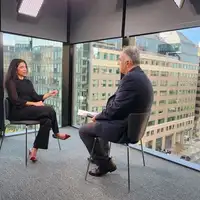
For Joel Rubin, former Deputy Assistant Secretary of State in the Obama administration, any apparent outreach should be viewed as one front in a broader conflict.
“There’s two wars underway,” Rubin told Iran International. “There’s the physical war … [and] it’s also fought on social media, I guess, influencing global opinion.”
Rubin said Trump’s move looked like “a tactical maneuver,” aimed in part at steadying jittery oil markets while buying time to build broader international backing.
“Trump’s move here with a little patience, the tactical maneuver is a very smart one if you want to try to build up more international backing for this effort, which quite frankly would be in our national security interests to do so,” Rubin told Iran International.
At the same time, Rubin cautioned against reading too much into reports of a US-Iran channel, especially when Tehran is publicly denying any engagement.
“Ever since the war began, [Iran] has basically said they don’t want to talk,” Rubin said. “But that doesn’t mean they aren’t talking.”
If messages are being passed, he said, they do not appear to be part of any formal negotiation.
“I think if there is any information sharing between the sides or through third parties, it is not very structured,” Rubin said. “I would say people need to view this as part of the dance because there will ultimately be some kind of endgame.”
Internal retaliation, external assassination
The very act of naming Ghalibaf as a potential interlocutor could itself carry serious consequences inside Iran’s power structure. In a system already shaken by precision strikes on senior figures — including Ali Larijani — publicly linking an official to backchannel contacts with Washington risks casting suspicion on his loyalty and exposing him to internal retaliation or even making him a target for external actors.
Behnam Ben Taleblu, senior director of the Foundation for Defense of Democracies’ Iran program, said Ghalibaf’s name surfacing in these reports is not far-fetched.
“Ghalibaf is a deep state insider who the value he offers this regime is much more than his civilian title leads on,” Taleblu told Iran International.
Still, Taleblu warned that the picture remains deeply unclear.
“We are still very much in the fog of war,” he said. Even if some coordination is happening behind the scenes, he argued, it is far more likely to be about deconfliction than diplomacy.
“These conversations, if they’re true, are not about a deal,” Taleblu said. “Likely would it be about de-confliction and an off-ramp and how to phase in the ceasefire. It’s hard to see how folks could be talking about a deal right now rather than a way to end the conflict.”
Taleblu also said Trump’s temporary pause on energy strikes appeared aimed at preventing the war from spilling more decisively into the global economic arena.
“I think it’s absolutely a way to calm the markets,” he said. “The conflict is continuing. The regime continues to fire missiles and drones.”
In his view, the White House is trying to stop the war’s political and security rationale from sliding into a full-blown energy and economic crisis.
“The framing for the conflict is evolving very quickly from something that is political and security related to something that is about energy and economics,” Taleblu said.
'Tehran buying time'
Dr. Eric Mandel, founder of the Middle East Political Information Network, said the regime’s core strategy "is all about delaying and outweighing the Americans, not the Israelis."
Drawing on his experience around the 2015 nuclear deal debate, Mandel argued Tehran is using intermediaries to buy time and test Trump’s resolve.
“The Iranians are using the intermediaries, Turkey, Egypt, Oman, for this delay,” he told Iran International.
Mandel said Washington should be wary of mistaking tactical messaging for a genuine shift in the regime’s intentions.
“We cannot be fooled by this,” he said. “As long as the regime [is] there, the spots are the same, even if they try to paint them over.”
Taken together, the analysts said Monday’s mixed signals do not point to a clear diplomatic breakthrough. Instead, they reflect a fast-moving conflict in which military pressure, market shock, psychological warfare and backchannel messaging are all unfolding at once.
As Taleblu put it, this is a moment to see the conflict not as “a snapshot but as a video.”