US may ease restrictions on Iranian oil stranded on water, Bessent says


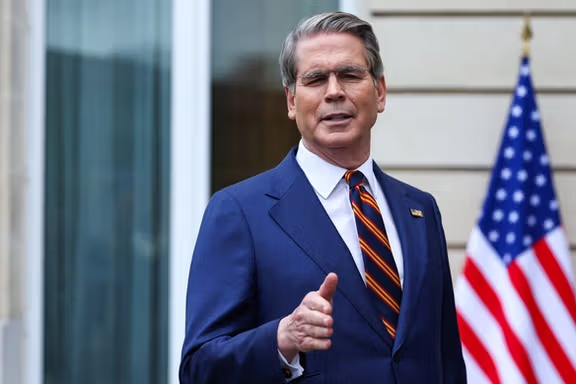
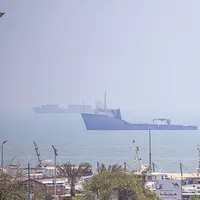
US Treasury Secretary Scott Bessent said on Thursday that Washington could in the coming days remove restrictions on Iranian oil already at sea and put the volume at about 140 million barrels.
"In the coming days, we may unsanction the Iranian oil that's on the water. It's about 140 million barrels," he said in an interview with Fox Business.
He added that the United States was not attacking Iran’s energy infrastructure and had allowed Iranian oil exports to continue flowing out of the Persian Gulf.
Bessent also said that the United States still had “plenty more” it could do on oil supply.


British Prime Minister Keir Starmer on Thursday condemned an Iranian strike on a Qatari gas facility.
“I condemn in the strongest terms the overnight Iranian strike,” Starmer said on social media.
He said Britain was working toward a swift end to the conflict, adding that ending the war would help ease cost-of-living pressures.
Two men have been charged with spying for Iran after allegedly carrying out surveillance of sites linked to London’s Jewish community, British police said on Wednesday.
Nematollah Shahsavani, 40, a dual British-Iranian national, and Alireza Farasati, 22, an Iranian national, were charged under the National Security Act with assisting a foreign intelligence service.
The Crown Prosecution Service said the charges relate to activities including “reconnaissance of targets” between July and August 2025.
Counter Terrorism Policing said the investigation focused on alleged surveillance of locations and individuals linked to the Jewish community in London.
Deputy Assistant Commissioner Vicki Evans described the charges as “extremely serious” and said police would be “relentless” in pursuing those who threaten public safety.
“We fully recognise that the public - and in particular the Jewish community - will be concerned, but I hope this investigation reassures them that we will not hesitate to take action,” she said.
The two men are due to appear at Westminster Magistrates’ Court on Thursday.
Iran’s intelligence ministry said it had arrested 97 individuals it described as “soldiers of Israel,” state media reported on Thursday.
The ministry said the suspects were planning unrest with backing from what it called “US-Zionist” actors.
It also said several armed cells were dismantled in Khuzestan province and that weapons, including firearms and explosives, were seized.
Iranian officials frequently accuse opposition groups and detainees of links to Israel and foreign powers, though such claims are often rejected by human rights organizations.
ADNOC Chief Executive Sultan Al Jaber said on Thursday that energy infrastructure across the region, including ADNOC facilities in the United Arab Emirates, has been targeted in attacks.
“This is an unjustified, unprovoked and illegal attack on a peaceful nation,” Al Jaber said in a LinkedIn post.
He said the situation was “not just a regional issue” but amounted to “global economic warfare,” adding that energy flows were being weaponised.
Iran is considering charging transit fees on ships passing through the Strait of Hormuz, a lawmaker said on Thursday, as officials in Tehran stepped up rhetoric over the strategic waterway after this week’s attacks on energy sites in the Persian Gulf.
Somayeh Rafiei said lawmakers are pursuing a bill under which countries using the strait for shipping, energy transit and food supplies would be required to pay tolls and taxes to Iran, framing it as compensation for providing security along the route.
“In the event that the Strait of Hormuz is used as a secure route for ship traffic, energy transit and food supply, countries will be required to pay tolls and taxes to the Islamic Republic of Iran,” Rafiei said.
She also said countries should pay what she described as a security tax in return for Iran maintaining regional security.
The proposal came as senior Iranian officials suggested the war could be used to redefine Tehran’s position in the waterway after the conflict ends.
Mohammad Mokhber said one of the most important opportunities created by the war was the possibility of reshaping Iran’s role in the Strait of Hormuz.
“After the imposed war, by defining a new regime for the Strait of Hormuz, Iran will move from being under sanctions to a powerful position in the region and the world,” Mokhber said.
He added: “By using the strategic position of the Strait of Hormuz, we can sanction them and not allow their ships to pass through this waterway.”
The comments followed a sharp escalation earlier this week when Israel struck Iran’s South Pars gas field, one of the country’s most important energy sites, in an attack that pushed oil and gas prices higher.
Iran retaliated by targeting energy infrastructure across the Persian Gulf, including strikes on facilities in Qatar and Saudi Arabia, widening concerns that the conflict could spread further across the region’s oil and gas network.
That escalation also triggered a stronger response from Arab states. Saudi Foreign Minister Prince Faisal bin Farhan said pressure from Iran would “backfire politically and morally” and added that Riyadh reserved the right to take military action if needed.