US agrees to Iran’s request to move venue of talks to Oman - Axios
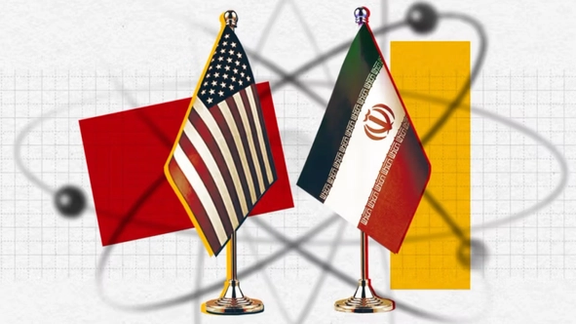
The United States has agreed to move the venue of upcoming negotiations with Iran from Turkey to Oman, Axios reported on Tuesday citing an Arab source.
The talks are expected to be held on Friday in Oman, the report said.
“Negotiations are still ongoing about whether Arab and Muslim countries from the region will join the talks in Oman.”







The Munich Security Conference has invited Iranian exiled Crown Prince Reza Pahlavi as a guest, the German daily Bild reported on Tuesday.
A police officer told Bild: “Based on current information, we expect him to also appear as a speaker at the demonstrations. Global public attention that weekend will be fully focused on Munich.”
Prince Reza Pahlavi has named February 14 as a global day of action and solidarity with the “Lion and Sun” uprising of the Iranian people, calling on Iranians abroad, especially those in Munich, Los Angeles and Toronto to take to the streets and press the international community for immediate, practical support for the people of Iran.
The Munich Police estimate the rally called by the exiled prince could be one of the largest demonstrations in recent years.
The Islamic Republic was bad news in 1979 and it is bad news in 2026, sending security forces to beat and murder peaceful protesters. Deporting Iranians to a country gripped by violent repression is hardly the ‘help’ the United States promised.
Over four decades ago, we spent 444 days as prisoners in Iran for the crime of being American diplomats. One of us, Barry Rosen, was compelled at gunpoint to provide a “confession.” The captors kept John Limbert in solitary confinement for nine months and threatened him with a trial before a revolutionary kangaroo court.
We know firsthand how a terrified regime mistreats human beings it brands as “terrorists,” “enemies,” or “foreign agents,” in a never-ending effort to hold on to power at all costs. We witness daily tragedy for our Iranian friends and recall our own experience forty-seven years ago with Iran’s self-serving rulers.
Can the American government help Iranians face down the thousands of armed forces on the streets? Can we help without repeating the costly tragedies of Iraq and Afghanistan?
The president has promised Iranians that “help is on the way.” What help? What form of American support would allow Iranians to breathe after forty-seven years of theocratic authoritarianism? And what help would keep the country from descending into anarchy, as happened in Iraq in 2003, or falling victim to a new and more brutal regime, as happened in Iran after 1979?
As Americans, we should be proud of our record of providing a haven to those fleeing persecution. We have seen how Iranian-American friends and relatives were forced to flee their beloved homeland and become refugees in search of safety. Many of these same Iranian refugees have become outstanding scientists, physicians, lawyers, teachers, artists, and entrepreneurs in their adopted country.
We are alarmed by reports that the Trump administration is now deporting Iranian asylum seekers and other vulnerable Iranian nationals in ways that evade scrutiny, placing them on charter flights from the United States to Qatar or Kuwait and then sent onward to Tehran.
This dubious action is a strategic and moral blunder of the highest order. If we want to help, we must stop the deportations and show that we support those brave Iranians confronting their brutal rulers.
For decades, the United States has recognized a core principle of refugee protection rooted in both domestic law and the post-World War II international order it helped build: we do not return people to countries where they face persecution, torture, or death. When the destination is the Islamic Republic of Iran, the risk is not theoretical. It is profound and well documented.
The US State Department has designated Iran a state sponsor of terrorism. The Islamic Republic has a long record of arbitrary detention, coerced confessions, and political punishment of ethnic and religious minorities, journalists, lawyers, writers, musicians, students, filmmakers, women’s rights activists, and anyone else who asks inconvenient questions.
Returning people to that system does not send help to those fighting a murderous regime. It hands Tehran an unearned victory, supplying leverage, propaganda, and human capital to a government that has perfected the use of hostages and forced confessions as instruments of state power.
Supporters of these removals argue that deportation is simply the execution of US immigration law. But asylum seekers are, by definition, telling US authorities that they fear their own government. In Iran, an asylum claim can be interpreted as collaboration with foreign enemies, propaganda against the state, spying, apostasy, acting against national security, or the catch-all charge of “making war against God.”
Iranians have been imprisoned, tortured, or killed for all these accusations—and often for nothing at all.
History offers sobering parallels. In the 1980s, the United States returned Salvadoran and Guatemalan asylum seekers to governments engaged in widespread political violence and death-squad activity. Many deportees were later killed or disappeared. Officials at the time rationalized these deportations as “lawful and necessary.” They were neither and are now broadly recognized as grave moral and strategic failures that damaged US credibility.
The United Kingdom made a similar mistake in the early 2000s when it cooperated with Muammar Gaddafi’s Libya to deport dissidents. British officials relied on diplomatic assurances that returnees would be treated humanely. Instead, some were imprisoned and tortured. Years later, British courts ruled the practice unlawful, and the government was forced to reckon publicly with the consequences of secrecy and misplaced trust in an authoritarian regime.
The scale of the current situation also matters. Initial reporting referenced roughly 400 individuals identified for removal; subsequent reporting suggests the number at risk could be significantly higher.
Meanwhile, independent estimates indicate that thousands have been killed in Iran in recent months. Whatever the precise number of deportees, the precedent being set is appalling. Normalizing indirect removals to Tehran through US allies in the region signals that the United States is willing to look away from what happens next.
Most troubling is how little information is available. Basic questions remain unanswered, including who, precisely, our government is deporting, what screening standards are being applied, what access to legal counsel exists, and what assurances, if any, have been received from Iran or third countries.
That organizations such as the Iranian American Legal Defense Fund have had to resort to Freedom of Information Act requests simply to understand the contours of this policy underscores the secrecy involved. And secrecy is where abuse takes root.
Our argument is for moral clarity and strategic seriousness.
A government that encourages Iranian protesters and warns Americans about Iran’s hostage-taking and coercion cannot, at the same time, deliver vulnerable people into the machinery of repression. A nation that still remembers 1979 and what followed should not supply the Islamic Republic with a new pool of captives, especially people who came here believing their search for safety would be handled with care and compassion.
Congress should demand immediate answers, and the administration should halt removals to Iran and allow transparent review. Our government must keep its promises, observe both law and morality, and guarantee meaningful access to asylum and withholding protections. What appears to be an arbitrary and cruel process should be subject to immediate, independent oversight.
The United States is strongest when it refuses to outsource its conscience to regimes that have none.
Female protestors, including three minors, detained during with the nationwide protests on January 8 and January 9, were raped and sexually assaulted while in custody, local sources with knowledge of the matter told Iran International.
Two teenage girls, aged 15 and 17, who were arrested during protests on January 8, were raped by on duty soldiers at a detention facility, according to the sources.
Following their arrest at the site of the gathering, their families were denied any information regarding their whereabouts or their physical and mental state for nearly three weeks.
Sources close to the victims said the harm inflicted during their disappearance was not limited to physical violence.
In a separate account, sources detailed the experience of a young woman and another 17-year-old teenager.
According to the sources, the two were held in an informal detention center which they both described as belonging to the Revolutionary Guards (IRGC).
Sources said the victims were raped by individuals at the site during their detention.
According to sources, the severity of the trauma has led some of these victims to attempt suicide.
Monday’s cautious optimism about renewed US–Iran diplomacy took several blows on Tuesday, as Tehran reportedly signaled fresh conditions for talks and Iranian and American forces clashed at sea.
US officials said American forces shot down an Iranian drone after it approached a US Navy aircraft carrier in the Arabian Sea, and later intervened when armed Iranian boats harassed a US-flagged merchant vessel transiting the Strait of Hormuz.
The incidents underscored the fragility of a diplomatic process that Washington and Tehran had suggested was back on track only a day earlier.
Iran’s foreign ministry sought to downplay growing uncertainty around talks expected later this week, saying discussions over the venue and timing were ongoing and should not be “turned into a media issue.”
Esmail Baghaei, the ministry’s spokesman, said Turkey, Oman and other regional countries had offered to host the talks, and thanked “friendly countries” for helping create conditions for diplomacy.
“In principle, the venue and timing of talks are not complicated issues and should not be used as a pretext for media games,” Baghaei said, adding that details would be announced once finalized.
Behind the scenes, however, Iranian officials appeared to be revisiting earlier understandings. Reuters and Axios reported that Tehran was seeking to move the talks from Istanbul to Oman and to limit discussions strictly to the nuclear file, excluding missiles and support for regional armed groups—issues that Washington and regional allies have said must be addressed.
Axios cited informed sources saying Iran was “walking back” agreements reached in recent days after other countries had already been invited to participate.
The Wall Street Journal reported that Iranian officials had also threatened to pull out of talks altogether, though it was not immediately clear what prompted the warning.
At sea, the confrontations continued. US Central Command said Iranian Revolutionary Guard forces harassed a US-flagged, US-crewed merchant vessel in the Strait of Hormuz, while a US fighter jet downed an Iranian drone that had approached a carrier strike group.
Iranian state-linked media said the drone was conducting a “routine and lawful mission” in international waters and that data had been transmitted successfully before contact was lost.
White House press secretary Karoline Leavitt said talks with US envoy Steve Witkoff were still scheduled, but stressed that military options remained on the table. “For diplomacy to work, of course, it takes two to tango,” she said.
Israeli Prime Minister Benjamin Netanyahu struck a harsher note, saying Iran “has repeatedly proven it cannot be trusted to keep its promises.”
Iran’s foreign ministry said on Tuesday the location and timing of talks with the United States are not complicated matters and should not be turned into a media issue, adding that consultations about the venue are ongoing and details will be announced once finalized.
Foreign Ministry spokesman Esmail Baghaei thanked all "friendly countries that, out of concern and goodwill, have worked to help create the conditions for a diplomatic process."
“In principle, the venue and timing of talks are not complicated issues and should not be used as a pretext for media games," Baghaei said.
"Turkey and Oman, as well as some other countries in the region, have declared their readiness to host the talks, which we consider highly valuable."
"Consultations to determine the venue are also ongoing, and information will be announced as soon as a final decision is made," he added.