A deadly crackdown may have quieted Iran’s streets for now, but the state appears increasingly brittle, with no clear answer to a deepening economic crisis that is eroding living standards and confidence.
External pressures are also likely to intensify after Tehran’s crackdown on protesters, narrowing revenue channels and shrinking the government’s economic room to maneuver.
Left unresolved, those pressures are likely to generate further unrest and, in time, a political transition that seeks normalization with the world.
A normalized Iran—able to trade, borrow, insure cargoes and receive investment like other upper-middle-income economies—would likely enjoy a large upside, given how much of its economy has been operating below potential.
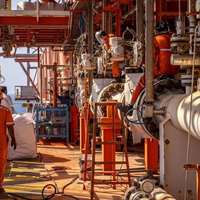
Its advantages are straightforward: scale, in the form of a large domestic consumer market; a relatively diversified industrial base by regional standards; deep energy and petrochemical capacity; and a geographic position that could turn the country into a natural junction linking the Persian Gulf, the Caucasus, Central Asia and Turkey.
The most immediate gains would come from energy exports unleashed from sanctions and sharply lower transaction costs. Over time, however, the larger prize would be productivity. Access to global supply chains and affordable capital, combined with Iran’s labor force, could lift output across all sectors.
None of this would be automatic. The payoff would depend on restoring basic economic credibility: stable money, predictable regulation and a solid banking system.
Turkey stands out as the clearest short-term beneficiary of such a shift in Iran. Proximity, road links and established distribution networks would allow Turkish firms to move quickly, while airlines and tourism operators would likely benefit from a surge in outbound Iranian travel.
Iraq would gain from formal payment channels and more predictable energy trade, easing pressure on the dinar and reducing transaction costs.
Pakistan’s upside would lie in infrastructure: if sanctions risk were removed, long-stalled energy links could become commercially viable, easing power constraints and lowering industrial costs.
The United Arab Emirates would likely lose some of the high margins associated with sanctions-bypass trade but gain as a platform where Iran-bound capital is raised, structured and eventually deployed.
Azerbaijan could benefit if Iran became a reliable bridge to Russia and Eurasia through freight, swaps and grid connections.
Israel could also emerge as a beneficiary. A normalized Iran would lower the region’s risk premium and potentially reduce energy costs, while Israeli firms—particularly in technology and water and agricultural solutions—could potentially compete for contracts in a large, untapped market.
The clearest losers would be producers and hubs that have quietly benefited from Iran’s isolation.
In energy markets, a sanctions-free Iran re-entering at scale would intensify competition between price and market share, leaving oil-dependent exporters such as Saudi Arabia and Kuwait more exposed to revenue volatility and fiscal trade-offs.
In gas, Qatar’s dominance in Asian LNG contracting could face pressure as investment and technology return to Iran’s side of South Pars, potentially narrowing bargaining power and affecting pricing over time.
Iran’s reintegration would also challenge business models built on being indispensable detours. Kuwait, for example, could find that costly hub ambitions become less compelling if Iraq–Iran rail and port combinations offered cheaper trade routes.
More subtly, some early beneficiaries could face second-round competition once Iran begins producing and exporting at scale.
Turkey may initially sell heavily into the Iranian market, but over time a revitalized Iranian manufacturing sector could begin displacing Turkish goods in nearby markets.
For Pakistan, cheaper Iranian energy would be an opportunity, but a fully functional Chabahar and Iran-centered transit corridors could divert trade away from Gwadar unless Pakistan integrates its infrastructure into those routes.
If Iran were to return as a normal economic actor, regional debates would shift from ideology to competition. The central question may no longer be who can contain Tehran, but who can compete with it.
In that environment, the advantage would likely accrue to states that adapt fastest, moving away from protected niches and easy rents toward productivity, technology and integration.
A reopened Iran would not simply add another participant to the regional economy; it would change the structure of the marketplace itself.