Araghchi urges Trump to reopen talks, says Iran cannot be defeated
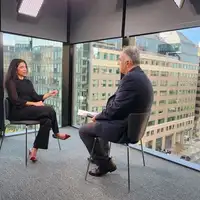
Iran’s foreign minister Abbas Araghchi (right) and US President Donald Trump
Iran’s foreign minister appealed directly to Donald Trump in a Guardian op-ed on Tuesday, urging him to reopen negotiations with Tehran, reconsider Washington’s alignment with Israel and acknowledge what he described as Iran’s invincibility.
“For those willing to go where no one has gone before, there is a brief window of opportunity,” Abbas Araghchi wrote.
Standing beside Netanyahu, Trump warned that renewed Iranian missile expansion or nuclear advances would trigger a US response.
"We’ll knock the hell out of them," said Trump. “Now I hear that Iran is trying to build up again, and if they are, we’re going to have to knock them down."
In June, Israel and the US carried out coordinated strikes on Iran that severely damaged several key nuclear facilities. Iran retaliated with missile attacks on a US base in Qatar and on Israeli targets. After 12 days of escalation, a ceasefire was reached under US pressure.
Israeli officials say Iran is quietly rebuilding systems damaged during the conflict.
Trump on Monday expressed his support for possible Israeli attacks on Iran if Tehran continues to develop its ballistic missile program.
Israel shaped US policy through 'myths'
Araghchi argued that what he called a “manufactured crisis” over Iran’s nuclear program has long been driven by Israeli narratives, misleading Washington into abandoning the 2015 nuclear deal and adopting a “maximum pressure” strategy that produced only resistance, according to the foreign minister.
“Those myths encouraged Washington to abandon a functional diplomatic framework in favor of ‘maximum pressure’ that only produced ‘maximum resistance’,” he wrote.
He also pointed to what he described as shifting opinion among Trump supporters, saying Israel is increasingly seen as a liability rather than an ally.
“A growing number of Americans – particularly those who want a focus on rebuilding the US – are publicly acknowledging what has been taboo: that uncritical acceptance of Israel’s narratives has drained American resources, undermined American credibility, and entangled the US in conflicts that do not serve American interests,” Araghchi wrote.
Araghchi also said recent conflicts across Gaza, Lebanon, Syria, Iran, Yemen and Qatar have led regional governments to view Israel’s actions as “a threat to us all,” opening space for new diplomatic alignments.
Iran open to negotiations
Araghchi said “mutual friends of Iran and the US” are prepared to help facilitate talks and guarantee implementation of any future agreement, without naming those mediators.
Iran, Araghchi insisted, remains open to negotiations but not to surrender.
“Despite Israel’s attack on diplomacy amid Iran-US nuclear negotiations, Iran remains open to an agreement that is built on mutual respect and mutual interest,” he wrote, warning that Iran’s restraint should not be mistaken for weakness.
Araghchi reiterated that Iran will not give up what it regards as its rights under the Nuclear Non-Proliferation Treaty, including domestic enrichment for civilian use, and said any future deal must include “tangible and verifiable sanctions lifting.”
The unrest, driven by the plunging rial and surging prices, is widening in scope against the leadership and some analysts warn it could threaten the Islamic Republic itself.