Iran blocks families of 1980s execution victims from memorial gathering
A file photo of Khavaran Cemetery
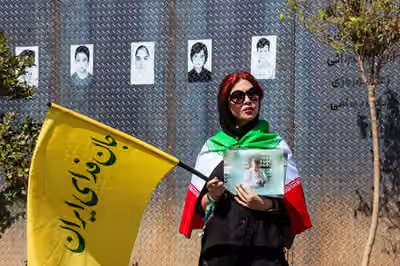
Iranian security and law enforcement forces prevented families of political prisoners executed in the 1980s, including during the mass killings of summer 1988, from entering Tehran’s Khavaran cemetery on Friday to commemorate their relatives, according to activists and witnesses.
Security and police forces were deployed at the site from early Friday morning and, as in previous years, sealed the cemetery gates to block families from entering, a Telegram channel called Charter of Freedom, Welfare and Equality reported. The forces also prevented relatives from gathering outside the entrance, displaying photographs of their loved ones or laying flowers.
Despite the restrictions, some families marked the anniversary by scattering flowers along the road leading to the cemetery or throwing bouquets over the walls into Khavaran, the report said.
Khavaran is widely known as the main burial site for victims of mass executions carried out in the 1980s, particularly during the summer of 1988, when thousands of political prisoners were executed following orders issued by Ruhollah Khomeini. Special tribunals later referred to by survivors as “death commissions” ordered the executions while many prisoners were already serving sentences.
Exact figures remain unknown due to official secrecy, but rights groups estimate that around 5,000 political prisoners – mainly supporters of the People's Mojahedin Organization of Iran, also known as Mojahedin-e-Khalq, and leftist movements – were executed in 1988 alone.
Unanswered appeals to the president
The restrictions come despite repeated appeals by families. In January 2024, dozens of relatives of those executed in the 1980s wrote an open letter to President Masoud Pezeshkian, saying they had been barred from Khavaran for more than 11 months and subjected to humiliating treatment by officials in charge of the site. They demanded an end to other burials at the cemetery and the removal of all obstacles to mourning and remembrance.
No public response from Pezeshkian has been reported, and access restrictions have continued.
Erasing evidence
The Telegram channel also said burials of deceased Baha’i citizens continue in mass graves at Khavaran, despite longstanding objections from families and the Baha’i community. In March 2024, the Baha'i International Community reported the destruction of more than 30 Baha’i graves at the site.
Families have repeatedly warned that such actions amount to desecration and an attempt to erase evidence of past crimes. “Commemorating loved ones and collective mourning is the most basic human right,” the group said, adding that preventing memorials denies the dignity of the victims and seeks to silence demands for justice.