The report, published on the Bank’s website, puts the capital account balance in the first quarter of the fiscal year (beginning March 21) at around minus $9 billion, the highest outflow ever recorded.
Last year, capital flight totaled about $20.7 billion, triple the figure in 2020. If this year’s pace continues, outflows could reach $36 billion by March 2026, roughly 10 percent of Iran’s GDP.
It remains unclear how much of the current exodus reflects ordinary citizens moving savings abroad versus businessmen or individuals close to power.
Earlier this year, Hossein Samsami, a member of parliament’s Economic Committee, said that from 2018 to mid-2025, $95 billion in non-oil export revenues never returned to Iran.
Declining foreign trade
Central Bank data show around $80 billion in capital flight between 2018 and 2024, suggesting much of the outflow is tied to foreign trade channels. Yet Iran’s economy minister recently insisted that the private sector accounts for only 15 percent of the country’s foreign trade.
That gap points to individuals with government links or ties to quasi-state institutions, including the Revolutionary Guards, as key drivers of tens of billions of dollars leaving the country.
The report also shows a sharp drop in export revenues. Oil income, including crude, petroleum products, and gas, fell by $3 billion in the spring compared to the same period last year, totaling $15 billion. Non-oil exports slipped by another $1 billion to under $11 billion.
Imports declined by about $800 million to $17.2 billion, while the services trade balance turned negative at minus $2.8 billion.
Overall, Iran exported $6 billion more in goods and services than it imported this spring. Yet $9 billion left the country during the same period through capital flight, erasing the surplus on paper.
Worse to come?
The deficit may rise if oil prices or exports drop—as seems to be the case according to most recent information.
Tanker-tracking data from Kpler show Iranian oil offloading at Chinese ports has fallen in recent months to about 1.2 million barrels per day, down from an average of 1.44 million earlier in the year.
Amid the tightening squeeze, officials continue to warn of severe foreign-currency shortages and the Central Bank’s inability to finance imports or investment.
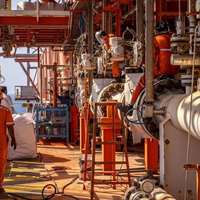
Meysam Zohoorian, a member of parliament’s Economic Committee, reported this week that the Planning and Budget Organization has told lawmakers it is “stuck with three billion dollars” needed for investment in oil fields.
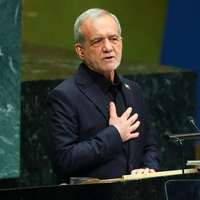
President Masoud Pezeshkian painted an even darker picture, asserting that his administration can hardly source a third of that amount for development projects.
“We are negotiating over one billion dollars to figure out where to find it,” he said.