Lecturer in International Relations, University of Exeter
China's President Xi Jinping meets Iranian counterpart Masoud Pezeshkian
The return of UN sanctions has deepened Tehran’s isolation and tested Beijing’s pragmatic balancing act in a region shaken by Donald Trump’s new peace plan and the 12-day war between Iran and Israel.
The current state of China–Iran relations is unusually difficult to assess. Both governments continue to affirm their “strategic partnership,” but beyond the rhetoric the reality is less clear.
On paper, the two countries are bound by a 25-year cooperation agreement signed in 2021, covering trade, infrastructure, energy and security.
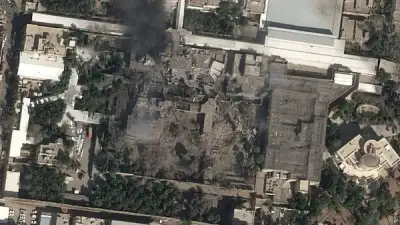
Yet China has remained notably cautious during Iran’s recent crises. Despite being Tehran’s largest oil customer and a key diplomatic partner, Beijing largely stayed on the sidelines as Israeli strikes hit Iranian territory.
In practice, the partnership operates within strict limits. While Sino-Iranian economic relations have been stagnating, China’s ties with Saudi Arabia and other Gulf monarchies have expanded dramatically.
Expectations meet caution
During the 12-day confrontation with Israel, some Chinese analysts urged a more proactive role—mediation, public condemnation of Israeli strikes or closer military cooperation.
But Beijing did little, triggering accusations in Tehran that it failed to grasp the Islamic Republic’s strategic value in its rivalry with the United States.
China should have done more, many asserted, rarely elaborating on what that more could look like.
Direct military or political backing, however, would have risked confrontation with Washington and jeopardized China’s broader regional network.
Oil and gas tanks are seen at an oil warehouse at a port in Zhuhai, China October 22, 2018.
Oil as quiet support
Where China’s support has been most tangible is in energy trade. The world's top importer of oil is Iran's main, almost sole, customer.
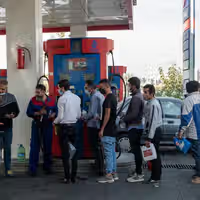
Despite sanctions, imports of Iranian crude have continued to grow in 2025, with tankers often re-flagged or disguised to evade detection. This provides Tehran with a crucial lifeline.
For Beijing, the motive is less political than practical: discounted Iranian oil fits its strategy of stockpiling reserves and securing cheap energy while global prices remain low.
Dependence by default
With UN sanctions back in force, Iran faces renewed isolation from global finance, trade, and technology. That leaves Tehran even more dependent on a handful of partners—above all, China.
A recent review of Iranian media published by the ChinaMed Project confirms this.Iran’s leaders—or at least parts of the elite—prize strategic autonomy and resent reliance on any single power, yet options are scarce.
Russia, itself sanctioned and weakened, offers little beyond rhetoric. China, by contrast, provides trade, energy purchases, and a degree of diplomatic cover, making it Iran’s indispensable partner whether Tehran likes it or not.
The trajectory of Iran-Saudi relations will be decisive. If détente holds, Tehran may find limited room to maneuver; if it collapses, dependence on Beijing will only deepen.
Looking ahead
The return of UN sanctions on Iran coincides with Donald Trump’s unveiling of a new peace plan.
Beijing’s official line is that it “welcomes all efforts” toward peace based on a two-state solution. Chinese experts, however, are skeptical, arguing that peace will be impossible without recognizing Palestinian statehood—a position long enshrined in Chinese diplomacy.
Many Chinese commentators also see Trump’s plan as a US bid to reassert dominance, protect Israel’s interests, and strengthen Arab-Israeli ties.
Beijing opposes none of these in principle, but grows wary when they appear designed to isolate Tehran further, potentially undermining China’s own mediation between Iran and Saudi Arabia.
Beijing’s challenge is to sustain its balancing act: maintaining economic ties with Tehran, preserving partnerships with Iran’s Arab neighbors, and avoiding direct confrontation with Washington.
For Tehran, choices are narrowing. The more isolated it becomes, the more it must rely on China, even if that means accepting a subordinate position in the relationship.
China’s support for Iran remains significant but measured, rooted more in calculation than ideology. As sanctions bite and isolation deepens, Beijing’s role may grow—but within limits that protect China’s own interests above all.