Without leadership change, Iranian threat to US remains – WSJ
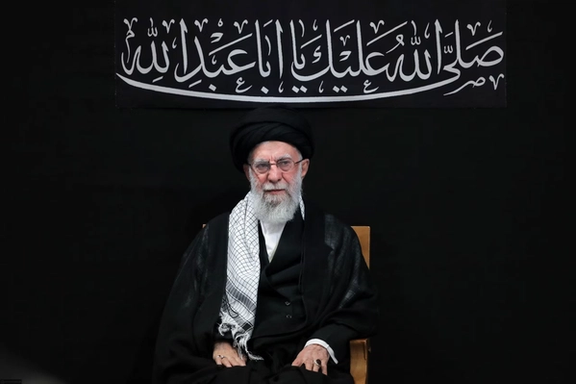
Iran will remain a threat to the United States as long as its current leaders stay in power, the Wall Street Journal wrote Tuesday, calling for the elimination of the country's Supreme Leader to prevent a far more dangerous conflict in the future.
“If Trump leaves the clerics in charge, the US will eventually have to deal with an even worse conflict—as it did in Iraq,” the outlet wrote in an opinion piece titled The Perfect Time for Regime Change in Iran just weeks after the ceasefire to end the Iran-Israel war, in which the US carried out strikes on Iran's nuclear facilities.
The paper referenced past American experiences in Afghanistan and Iraq to argue that strategic hesitancy has repeatedly led to prolonged wars and lost opportunities.
The commentary argued that Iran’s threat goes beyond its nuclear program. “Iran’s support for its terrorist proxies endangers regional stability and US lives,” it said, the US listing Iran as a state sponsor of terrorism in 1984.
“Iranian assistance with Russia’s illegal oil exports reduces America’s ability to pressure Moscow on the Ukraine war," it added.
Citing a July 3 interview with Iran’s deputy foreign minister, who told NBC News that Iran’s enrichment policy “has not changed,” the paper said Tehran remains committed to advancing its nuclear capabilities despite the strikes carried out by the US, which President Donald Trump said had 'obliterated' Tehran's nuclear ambitions.
The newspaper described the strikes as a tactical success but warned that failure to follow through strategically would repeat the mistake of the 1991 Persian Gulf War.
“The Iranian regime will remain a threat to America until different leaders occupy Tehran,” it wrote.
The piece concluded that the current moment, following heavy blows to Iran’s nuclear infrastructure and its regional allies, offers a rare opportunity to “eliminate the ideological source” of the threat by targeting Iran’s Supreme Leader, Ali Khamenei. “History suggests the time to act is now.”
Twenty-four Tehran lawmakers issued a public letter Wednesday criticizing President Masoud Pezeshkian over remarks made in a recent interview with American media, accusing him of undermining national unity and signaling weakness during wartime.
Citing Pezeshkian’s comments to US political commentator Tucker Carlson, the letter said the president’s openness to renewed negotiations with the United States and cooperation with the IAEA sent the wrong signal to adversaries after the recent conflict involving US and Israeli strikes on Iranian targets.
“From a national security standpoint, such messaging risks inviting further aggression,” the MPs wrote.
“If before June 12 there were diverse views on resisting American overreach, this war generated rare unity around the necessity of confronting the United States and its proxy, the Zionist regime."
In the interview published Monday, Pezeshkian told Carlson: “We see no problem in reentering the negotiations. But how are we going to trust the United States again?” He added, “They totally ruined and destroyed diplomacy.”
The MPs also condemned Pezeshkian’s attempt to separate Israel’s actions from US responsibility.
“The Zionist regime is America’s military outpost in the region and could not have launched a war without Washington’s backing,” they wrote.
Iranian President Masoud Pezeshkian told Carlson that Israel was seeking to embroil the United States in a regional "forever war," in his first international interview since US and Israeli attacks on Iran following Israel's surprise attacks of June 13.
Referring to the Supreme Leader’s speech on February 17, the letter reminded Pezeshkian that “a sense of weakness encourages the enemy to attack,” and urged him to adopt the “language of power” when addressing Western media.
The president’s effort to explain the meaning of “Death to America” was also rebuked. In his interview, Pezeshkian said the slogan refers to “death to crime, death to killing and carnage,” rather than targeting Americans directly.
Lawmakers called this a deviation from the position of the late founder of the Islamic Republic, Ruhollah Khomeini.
A satellite view shows an overview of Fordow underground complex, after the US struck the underground nuclear facility, near Qom, Iran June 22, 2025.
Iran did not move its highly enriched uranium stockpile before US airstrikes last month hit its key nuclear sites at Fordo, Natanz, and Isfahan, an Israeli official told Reuters.
A senior Israeli official told Reuters the stockpile — estimated at 400 kilograms enriched to 60 percent — “was not removed and has not been moved since,” suggesting Iran made no attempt to safeguard the material before or after the strikes.
The official, who was not named, added that Iran may still be able to access the stockpile at Isfahan, but moving it would be very difficult.
“The Iranians might still be able to gain access to Isfahan but it would be hard to remove any of the material there,” wrote Reuters, citing the official.
The International Atomic Energy Agency (IAEA) had assessed before the war that most of the 60 percent enriched uranium was being stored at the Isfahan site.
Satellite imagery taken before US strikes on three key Iranian nuclear sites showed “unusual” activity near the entrance to Iran’s Fordow enrichment facility.16 cargo trucks were seen Thursday on the access road to the tunnel entrance, but by Friday most had relocated to an area about one kilometer northwest, Maxar Technologies said.
International Atomic Energy Agency (IAEA) inspectors have not publicly confirmed the condition of the stockpile since the strikes, and Iran has not allowed independent verification of the facilities since the war began.
The IAEA said on Friday that its team of inspectors had safely departed Iran to return to its headquarters in Vienna, after a new law barred cooperation with the UN body.
Tehran has accused the IAEA of sharing sensitive data with Israel and the US, and of failing to condemn last month’s airstrikes on Iranian nuclear sites.
While Iran has denied ending cooperation entirely, Foreign Minister Abbas Araghchi said coordination with the agency would now be managed through Iran’s Supreme National Security Council.
Israel must prevent Iran from restoring its prewar capabilities, Israeli Defense Minister Israel Katz said on Wednesday.
“We need to formulate an enforcement program to prevent Iran from reviving the capabilities it had before,” Katz said. “The Iranians will try in every possible way to learn their lessons and recover. The enemy is learning and preparing — and our challenge is to step up our abilities so that we are not taken by surprise.”
US President Donald Trump says the airstrikes obliterated the sites, but nuclear experts have expressed caution over the full extent of the damage, raising the possibility that some nuclear assets may have been hidden.
France’s top intelligence official, Nicolas Lerner, said Tuesday that the strikes had “very seriously affected” all stages of Iran’s nuclear program but acknowledged, a small part of Iran’s highly-enriched uranium stockpile had been destroyed, but the rest remained in the hands of the authorities.
"Today we have indications (on where it is), but we cannot say with certainty as long as the IAEA does not restart its work. It's very important. We won't have the capacity to trace it (the stocks)," Lerner said.
US President Donald Trump speaks at a White House press conference on July 9, 2025.
US President Donald Trump on Wednesday laughed off a threat by an Iranian official suggesting he could be attacked with drones while sunning himself at his Florida mansion, telling a bemused press corps he had not sunbathed since childhood.
“Trump has done something so that he can no longer sunbathe in Mar-a-Lago," Mohammad-Javad Larijani, a former senior advisor to Iran’s Supreme Leader had told Iranian state TV in remarks first reported in the English language media by Iran International.
"As he lies there with his stomach to the sun, a small drone might hit him in the navel. It’s very simple,” added Larijani, whose two brothers are among the Islamic Republic’s most powerful political figures.
Fox News reporter Peter Doocy read the comments to Trump at a press conference, adding, "Do you think that's a real threat? And when is the last time you went sunbathing anyway?"
Trump, smiling, retorted: "It's been a long time. I don't know, maybe I was around seven or so. I'm not too big into it. Yeah, I guess it's a threat. I'm not sure it's a threat actually, but perhaps it is."
US forces attacked three Iranian nuclear sites in a bid to disable Tehran's disputed program days after Trump said Washington was well aware of where Khamenei was sheltering during the war.
Larijani's comments came after an online platform calling itself "blood pact" began raising funds for what it calls “retribution against those who mock and threaten the Supreme Leader Ali Khamenei.” The site says to have collected over $40 million to date.
It was not immediately possible to verify the authenticity of the figure.
Bounty for Trump’s head
“We pledge to award the bounty to anyone who can bring the enemies of God and those who threaten the life of Ali Khamenei to justice,” a statement on the site said.
The campaign's stated aim is to raise $100 million for the killing of Donald Trump. It remains unclear who operates the site.
However, Fars News Agency, affiliated with the Revolutionary Guards, reported the launch of the Blood Pact initiative and called on religious groups in Iran and abroad to rally in front of Western embassies and central squares to express support for Khamenei.
The outlet also urged the application of “Islamic rulings on moharebeh” against both Trump and Israeli Prime Minister Benjamin Netanyahu.
In the Iranian legal system, moharebeh—literally “waging war against God”—is punishable by death.
President Masoud Pezeshkian sought to distance his government from the campaign, telling US commentator Tucker Carlson on Monday that “the fatwa of warfare has nothing to do with the Iranian government or the Supreme Leader.”
But Kayhan newspaper, overseen by a representative of Khamenei, dismissed the president's remark.
“This is not an academic opinion. It is a clear religious ruling in defense of faith, sanctities and especially the guardianship of the jurist,” it wrote in a Tuesday editorial, referring to Iran's system of clerical rule.
Any future “fire-starter” would face retaliation, the newspaper added concluding that “The Islamic Republic will drown Israel in blood.”
Former lawmaker Gholamali Jafarzadeh Imenabadi earlier condemned Kayhan’s position, saying: “I can’t believe Kayhan’s editor-in-chief Hossein Shariatmadari is Iranian ... saying Trump should be assassinated will bring the cost down on the people.”
In response, Kayhan wrote: “Today, avenging Trump is nearly a national demand. It is Imenabadi’s words that are out of step with Iranian values."
Trump has been a target for assassination threats since he ordered the 2020 killing of Islamic Revolutionary Guard Corps (IRGC) General Qassem Soleimani in Iraq.
Last year, US law enforcement accused the IRGC of organizing a plot to kill Trump in retaliation for his order to assassinate Soleimani.
Iran's president Masoud Pezeshkian attending a funeral of the IRGC top brass killed in Israeli strikes, July 8, 2025
When Masoud Pezeshkian was elected Iran’s president last July, jokes circulated that he wouldn’t last six months. He did, but the road ahead looks even more rocky now than it did then.
Tepid support from the hardline establishment and deepening economic woes defined his first year, in which the Iranian currency lost a full half of its value.
Now after an Israeli-American military drubbing dealt the Islamic Republic its greatest ever challenge, his problems may only deepen.
His election was celebrated by Iran’s moderates, but rejected by some hardliners and many dissidents who had boycotted the election.
Pezeshkian narrowly secured victory in an election that saw the lowest voter turnout in the Islamic Republic’s 46-year history. Yet, the series of crises that unfolded over the following year may have rendered him the unluckiest president Iran has seen.
The night after his inauguration, senior Hamas leader Ismail Haniyeh was assassinated in Tehran in a strike attributed to Israel.
The attack, which took place at an Revolutionary Guards-provided residence, deeply unnerved Tehran. A year on, the details remain murky.
The year that followed was dominated by an escalating cycle of threats, counter-threats, and the direct attacks traded between Iran and Israel.
Simultaneously, Pezeshkian faced relentless efforts by ultraconservatives to unseat him. Discussions about impeaching his cabinet ministers and ousting his vice presidents persisted throughout the year.
Enemies within and without
So far, his rivals have successfully removed Vice President Mohammad Javad Zarif—the former foreign minister whose experience and charisma were key assets in forming Pezeshkian’s cabinet.
Pezeshkian's Economy Minister, Abdolnasser Hemmati, was impeached and removed, leaving his post vacant for nearly four months.
Eventually, one of Pezeshkian’s candidates, Ali Madanizadeh, was approved by the parliament—perhaps thanks to Supreme Leader Ali Khamenei who spoke against intra-regime infighting during the war with Israel.
Throughout the year, voices from across the political divide—including many ordinary citizens—insisted that Pezeshkian honor the promises he made during his campaign.
Chief among them was a pledge to improve Iran’s worsening economic conditions, marked by rampant inflation, high unemployment, and widespread financial hardship.
These crises were deeply entrenched well before the war with Israel, and following the conflict, the administration seems poised to use the war as justification for its failures.
Campaign rhetoric meets wartime reality
Another key promise—especially significant to women—was to dismantle the compulsory hijab patrols. This was not achieved, though a draconian new enforcement law lapsed amid broad public objections.
The patrols returned to the streets weeks before the war, once again harassing women. Their more recent absence owes more to women’s defiance and the outbreak of war than to any government action. Pezeshkian can claim little—if any—credit here.
A third major demand was the removal of censorship on social media platforms essential to the livelihoods of some 400,000 online businesses, according to government and Chamber of Commerce figures.
Despite an extensive publicity campaign, only WhatsApp saw its ban lifted. Yet as the war erupted, the state once again clamped down on digital freedoms, including renewed restrictions on WhatsApp.
The government blamed social media for enabling Israel’s apparent access to sensitive information about Iranian officials, sparking widespread ridicule from the public.
Roughly a week after the Tehran–Tel Aviv ceasefire, a slight easing of media restrictions allowed pro-reform outlets such as Etemad to resurface. They warned that ignoring campaign promises would only deepen public discontent.
“Dissent may return to the streets with renewed momentum,” an Etemad editorial cautioned, “especially as economic pressures mount.”
“For now, both the streets and skies are quiet. But neither calm is likely to hold—and Pezeshkian may be in for a rougher ride than the year he just survived.”
A proposed Iranian law expanding espionage and national security charges and criminalizing ties with foreign entities has been halted for revision following a review by the country’s top oversight body.
The pause shows a swift post-war drive to crack down on alleged Israeli spying is hitting some obstacles even in the hardliner-dominated establishment.
Iran's Guardian Council sent back the controversial bill to parliament for revisions, citing ambiguities in definitions and potential conflicts with Islamic law and constitutional principles.
The draft legislation seeks to impose harsher punishments—including the death penalty—for a broad range of alleged activities defined as espionage or collaboration with Israel, the United States, and other “hostile” states or groups.
The bill, titled the “Intensification of Punishment for Espionage and Cooperation with the Zionist Regime and Hostile States Against National Security and Interests,” was approved by Iran’s parliament late June but faced scrutiny from the Guardian Council, which is tasked with ensuring that legislation complies with Islamic law and the constitution.
"The necessity of precision in legal definitions is critical," said Hadi Tahan Nazif, spokesperson for the Guardian Council. "There is ambiguity in identifying who determines 'hostile states and groups.' It must be clarified which official institution makes that designation."
Tahan Nazif further warned that vaguely defined terms like “creating division” or “undermining national security,” as used in Article 4 of the bill, could infringe on constitutionally protected rights. “Such qualitative language may, in practice, restrict legitimate freedom of expression. These ambiguities must be resolved,” he said.
Among the most contentious points is the bill’s expansion of the crime of “spreading corruption on earth” (efsadfel-arz)—a charge that can carry the death penalty.
The Guardian Council objected to Article 2, which equates“any direct or indirect assistance”to Israel with corruption on earth. The Council said this could lead to capital punishment for acts that do not meet the strict criteria for that charge under Islamic law.
“In Islamic jurisprudence, the conditions for establishing the crime of corruption on earth are specific and strict. Broadening its scope without meeting these conditions is contrary to Sharia,” Tahan Nazif explained.
At the same time, the Council criticized the bill for limiting some cases—such as widespread distribution of unlicensed communications equipment used in organized opposition—to prison terms, when it argued they could meet the threshold for corruption on earth.
Another key concern centers on retroactive enforcement. Article 9 of the bill says that the law applies to offenses committed before its ratification, contradicting Article 169 of Iran’s Constitution, which prohibits retroactive criminal laws.
“No act or omission may be considered a crime under a law enacted after the fact,” Tahan Nazif emphasized, echoing the constitutional safeguard.
Despite its critique, the Guardian Council affirmed the importance of robust legal tools to defend national security, particularly in the wake of the 12-day Iran-Israel war, the spur of the latest emergency legislation.
“Our intent is not to obstruct legislation but to ensure laws are both enforceable and aligned with the constitution and Sharia, while also safeguarding citizens’ rights,” Tahan Nazif said.
Mohsen Dehnavi, the spokesperson for Iran’s Expediency Council, said on Wednesday that its supervisory board supports the general framework of the bill but some provisions in the draft were ambiguous.
A legal path to expanded crackdowns?
The bill follows heightened internal security measures and increased arrests, particularly since last month's war which saw devastation wrought on both sides of the conflict.
On Wednesday, Tehran’s prosecutor Ali Salehi confirmed that several cases involving alleged espionage, intelligence leaks, and smuggling of explosives are under urgent investigation.
“These cases involve individuals accused of sending maps and GPS coordinates to the Zionist regime, as well as transferring explosive materials,” Salehi said at an event in Tehran. “With full support from the judiciary and security forces, investigations are proceeding swiftly.”
Salehi also addressed allegations of espionage tied to the recent conflict: “Once investigations are complete, the public will be informed. The judiciary will not tolerate any actions that compromise national security.”
Escalating rhetoric
The bill and judicial statements come amid intensified rhetoric in Iranian state media. This week, Fars News Agency, which is affiliated with the Islamic Revolutionary Guard Corps (IRGC), published an editorial calling for the mass execution of detainees accused of collaborating with Israel and Western intelligence services.
“In the current conditions, those who enabled the killing of hundreds of Iranian citizens through espionage and weapons smuggling deserve to be executed in the style of 1988,” the editorial said, referencing mass executions of political prisoners. Amnesty International estimates that at least 5,000 people were executed during that period, often following secret trials without due process.
The article described the 1988 executions as “a brilliant chapter” in Iran’s history and saying that the public supports similar action today against what it termed “domestic terrorist networks.”
Definitions and penalties
The legislation, in its current form, criminalizes a broad range of activities under national security offenses.
It introduces the death penalty for espionage or intelligence cooperation with Israel, the United States, or their affiliated entities. The same punishment would apply to the manufacture, transfer, or import of drones for military or surveillance purposes, if deemed to involve "malicious intent."
The bill also imposes prison terms of 10 to 15 years for disseminating content—such as news, videos, or images—considered to harm national security or sow division.
Penalties ranging from six months to 10 years would apply to the use or distribution of unauthorized communication equipment, including satellite internet services like Starlink, depending on scale and intent.
Additionally, the bill allows for retroactive prosecution of offenses committed before its passage, a provision that legal experts say violates constitutional safeguards.
The draft is expected to return to parliament for clarification and possible amendment before undergoing a final review by the Guardian Council.
Last month, in the wake of the war with Israel, Iran arrested over 700 people in a mass roundup, accused of working for the Jewish state.