Friends of the Iranian people? The dead beg to differ

Tehran Insider
Firsthand reports from contributors inside Iran

Five days have passed since the war began. Last night, Donald Trump told us to leave Tehran—but didn’t say where.
Firsthand reports from contributors inside Iran
Five days have passed since the war began. Last night, Donald Trump told us to leave Tehran—but didn’t say where.
Unlike the jammed roads out of Tehran, the city itself is quiet—until it isn’t. Then come the missiles, the drones, the air defenses. Silence shatters. We brace. Then wait. Then do it all over again.
People’s reactions are far from uniform.
Some still cling to the idea that this war isn’t really theirs—that it’s between Israel and the Islamic Republic and will not touch their homes or families. They believe, somehow, they’ll be spared.
They have chosen not to let reality shake their belief, not to allow the mounting rubble and growing number of deaths register.
Today I overheard someone at the grocery store say Khamenei had fled to the mountains, and that the war would end by Tuesday. I told him this is Tuesday. He nodded and said, “Exactly—so it ends today.”
Others saw what was coming and hit the roads by Day 3, hoping to reach safety outside the capital. Many didn’t get far.
The highways are still choked with cars; people are running out of fuel, out of options. Many are stuck—no way forward, no way back. Tehranis are heading north, toward the Caspian provinces that have neither the space nor the infrastructure to absorb them.
There’s fear of what’s waiting on the other end: food shortages, fuel scarcity, and overcrowded shelters. And yet, people keep fleeing.
For those who stay behind, the fear is different but no less consuming.
Israel’s defense minister has declared that Tel Aviv will take revenge not just on the Islamic Republic—but on Tehran itself. And so the city waits.
It’s hard to grasp how fast everything collapsed. Just last week, we believed we were in a “tense but manageable” phase. Now, even that looks like a golden age.
Few believe the Iranian leadership will prioritize the people over their own survival. You can feel that abandonment hanging in the air.
I asked the grocer if deliveries are still coming. “So far, just dairy,” he said. “We’re waiting on bread and soda.” Most shops are shuttered. Workplaces are closed. It feels like the city is holding its breath.
The government says the metro can be used as a shelter. But for those who remain, home still feels safer—if only psychologically.
Most people I know or encounter just want the war to end—with a deal, a collapse, or just a pause in the strikes. “One way or another,” as my partner puts it.
Wasn’t this about nuclear facilities, many ask. Why target city ministries? Why strike targets nestled inside residential neighborhoods?
We’re friends of the Iranian people, Israeli officials say. Well, the dead and wounded beg to differ. So far, the casualties are overwhelmingly civilian. Homes have been flattened. Lives erased.
Tragic stories abound.
A young man is missing. His pregnant wife lies in a hospital bed, her body broken. A young poet and her entire family are gone. Painful images that the regime’s media machine tries to use and misuse.
On social media, the battle over the truth is as fierce as anything in the skies.
People are still hoping the power and water systems will be spared. Just imagine: no electricity, no water—on top of everything else.
I saw a woman today carrying water half her weight. Many are stocking up, but for a few days’ need only. They can’t imagine the war lasting longer than that.
But what if it does? Worried whispers are starting. What if this becomes another Ukraine? Or another Gaza?
We drift between disbelief and dread, clinging to the same fragile wish: that this nightmare ends—one way or another—soon.












A Swiss citizen Iran says died by suicide in prison was a 64-year-old tourist, a Swiss foreign ministry spokesman told Iran International, adding that Switzerland is seeking more details on his arrest and death from Tehran.
The foreign ministry added on Friday that the individual had been living in South Africa for the past 20 years and was traveling in Iran as a tourist.
The email response from the ministry said that the Swiss embassy in Iran was earlier denied access to the prisoner and now wants Tehran to provide full information about his arrest and death.
"Since Switzerland was informed of the arrest, the Swiss Embassy in Tehran has been in daily contact with the Iranian authorities to obtain more information about the circumstances of the arrest and to gain access to the detained Swiss citizen," the foreign ministry said.
"However, due to the accusations (espionage – national security), the requested consular access was not granted," it added. "Switzerland is demanding that the Iranian authorities provide detailed information."
The Swiss citizen who allegedly committed suicide in Semnan Prison on Thursday had been arrested while collecting soil samples in Iran’s central desert during an Israeli airstrike, media affiliated with Islamic Revolutionary Guard Corps reported.
Meanwhile, local media quoted unnamed Iranian official as saying that person was conducting espionage when he was arrested. The name of the Swiss citizen and the circumstances of his arrest and death remain unclear.
“This individual used prior intelligence training to take their own life during a specific opportunity,” Mashregh News, a publication affiliated with the Islamic Revolutionary Guard Corps (IRGC), reported late Thursday, citing an unnamed security official.
"Switzerland is demanding that the Iranian authorities provide detailed information on the reasons for his arrest and a full investigation into the circumstances of his death," the Swiss foreign ministry said.
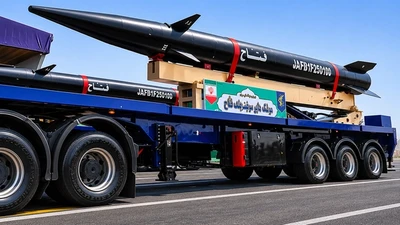
The individual, detained by the IRGC Intelligence Organization, was accused of gathering information in a sensitive area during Israel's October air attack. The media report specifically said that this occurred during the Shahroud attack, which targeted an IRGC missile facility. Satellite imagery from Planet Labs later revealed significant damage to the site, known for building ballistic missiles and launching rockets as part of Iran’s space program.
After their arrest, the person was transferred to Semnan Prison, where they allegedly revealed information about their network and communication links, according to the outlet.
A local judiciary official confirmed the death on Thursday, saying that the Swiss national, facing espionage charges, had committed suicide in their cell.
Switzerland has also confirmed the death. "The FDFA confirms the death of a Swiss citizen in Iran," spokesperson Pierre-Alain Eltschinger told Iran International. "The Swiss Embassy in Tehran is in contact with the local authorities to clarify the circumstances of the death in an Iranian prison," he added.
According to Mizan, Iran's judiciary news website, the detainee asked their cellmate on Thursday morning to purchase food from the prison canteen. While alone in the suite, the detainee reportedly took their own life. "Prison officials immediately intervened to save the individual, but their efforts were unsuccessful," Mohammad Sadegh Akbari, a local judiciary official, was quoted as saying. “Suicide has been definitively confirmed.”
Iran has arrested dozens of dual nationals and foreigners in recent years, often on charges of espionage or security-related offenses. Some of these detainees have been released in exchange for deals involving Iranians held in foreign prisons.