Shahran oil depot in flames after Israeli airstrike, Tehran, Iran, June 15, 2025
Israel has targeted Iran’s energy infrastructure in a major escalation that could unleash deep suffering for millions facing fuel and gas shortages.
According to Iran’s Ministry of Petroleum, Israeli missiles hit a gas sweetening unit at Phase 14 of the South Pars gas field and the vast Fajr Jam gas processing complex—both in southern Iran—as well as three major fuel storage depots in Tehran.
South Pars accounts for roughly 75% of Iran’s total natural gas output. The damaged facilities alone supply around 10% of the country’s gas consumption.
The full extent of the damage remains unclear, but Iranian media report serious harm to Fajr Jam’s gas intake and processing infrastructure. The plant, with a capacity of 50 million cubic meters per day, may have been forced offline.
The Petroleum Ministry also confirmed that 60% of Phase 14’s 20 million cubic meters-per-day output has been halted.
Israel had previously warned it would target Iran’s energy sector if Iranian forces struck Israeli civilians.
Tehran fuel depot also hit
Saturday’s strikes extended to Tehran, where Israeli forces reportedly hit the Shahran, Kan and Rey fuel depots—facilities that supply nearly all the capital’s gasoline and diesel.
Tehran’s total storage capacity is estimated at one billion liters, a quarter of Iran’s national fuel reserves.
A confidential Ministry of Petroleum document obtained by Iran International indicated that, as of late March, the country held 1.56 billion liters of gasoline and 1.28 billion liters of diesel in storage—barely enough for ten days of nationwide use.
Tehran alone consumes over 20 million liters of gasoline and 7.5 million liters of diesel per day.
With those storage hubs damaged, the capital now faces a looming fuel crisis, with more Israeli strikes likely on Iran’s energy infrastructure, as Iranian missiles hit targets in Israel.
So far, at least 14 Israeli civilians have been killed in Iranian attacks, while Iran’s health ministry has reported more than 200 killed.
Closing the Strait of Hormuz?
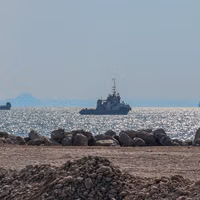
As strikes hit southern gas infrastructure, Iran’s Foreign Minister Abbas Araghchi warned that “spreading the war to the Persian Gulf could drag the entire world into conflict.” He gave no specifics, but lawmaker Esmail Kowsari said Tehran is considering closing the Strait of Hormuz.
Data provided to Iran International by commodity tracker Kpler shows Iran exported 2.2 million barrels of crude oil per day in the first 10 days of this month, and 1.8 million barrels daily on average last month—all through terminals in the Persian Gulf that rely on the strait.
Iran’s only alternative is the Jask terminal, inaugurated on the Sea of Oman in 2020. It was briefly used last October—amid fears of an Israeli strike—but averaged under 200,000 barrels per day and is currently inactive, according to TankerTrackers data.
Because Jask is over 1,000 kilometers from Iran’s main oil fields and has limited capacity, closing the strait would effectively halt Iran’s own oil exports.
The economic fallout wouldn’t stop there: according to Iran’s Ports and Maritime Organization, 80% of Iran’s non-oil trade also passes through the Persian Gulf and the Strait of Hormuz.
The partially developed Chabahar port—built with Indian assistance—handles less than 4% of the country’s total cargo throughput.
Outside the building of the General Directorate of Prisons of Semnan Province
A Swiss citizen Iran says died by suicide in prison was a 64-year-old tourist, a Swiss foreign ministry spokesman told Iran International, adding that Switzerland is seeking more details on his arrest and death from Tehran.
The foreign ministry added on Friday that the individual had been living in South Africa for the past 20 years and was traveling in Iran as a tourist.
The email response from the ministry said that the Swiss embassy in Iran was earlier denied access to the prisoner and now wants Tehran to provide full information about his arrest and death.
"Since Switzerland was informed of the arrest, the Swiss Embassy in Tehran has been in daily contact with the Iranian authorities to obtain more information about the circumstances of the arrest and to gain access to the detained Swiss citizen," the foreign ministry said.
"However, due to the accusations (espionage – national security), the requested consular access was not granted," it added. "Switzerland is demanding that the Iranian authorities provide detailed information."
The Swiss citizen who allegedly committed suicide in Semnan Prison on Thursday had been arrested while collecting soil samples in Iran’s central desert during an Israeli airstrike, media affiliated with Islamic Revolutionary Guard Corps reported.
Meanwhile, local media quoted unnamed Iranian official as saying that person was conducting espionage when he was arrested. The name of the Swiss citizen and the circumstances of his arrest and death remain unclear.
“This individual used prior intelligence training to take their own life during a specific opportunity,” Mashregh News, a publication affiliated with the Islamic Revolutionary Guard Corps (IRGC), reported late Thursday, citing an unnamed security official.
"Switzerland is demanding that the Iranian authorities provide detailed information on the reasons for his arrest and a full investigation into the circumstances of his death," the Swiss foreign ministry said.
The individual, detained by the IRGC Intelligence Organization, was accused of gathering information in a sensitive area during Israel's October air attack. The media report specifically said that this occurred during the Shahroud attack, which targeted an IRGC missile facility. Satellite imagery from Planet Labs later revealed significant damage to the site, known for building ballistic missiles and launching rockets as part of Iran’s space program.
After their arrest, the person was transferred to Semnan Prison, where they allegedly revealed information about their network and communication links, according to the outlet.
A local judiciary official confirmed the death on Thursday, saying that the Swiss national, facing espionage charges, had committed suicide in their cell.
Switzerland has also confirmed the death. "The FDFA confirms the death of a Swiss citizen in Iran," spokesperson Pierre-Alain Eltschinger told Iran International. "The Swiss Embassy in Tehran is in contact with the local authorities to clarify the circumstances of the death in an Iranian prison," he added.
According to Mizan, Iran's judiciary news website, the detainee asked their cellmate on Thursday morning to purchase food from the prison canteen. While alone in the suite, the detainee reportedly took their own life. "Prison officials immediately intervened to save the individual, but their efforts were unsuccessful," Mohammad Sadegh Akbari, a local judiciary official, was quoted as saying. “Suicide has been definitively confirmed.”
Iran has arrested dozens of dual nationals and foreigners in recent years, often on charges of espionage or security-related offenses. Some of these detainees have been released in exchange for deals involving Iranians held in foreign prisons.