A growing divide in Iran over how to approach negotiations between Tehran and Washington over Iran's nuclear program appears to have reached the office of Supreme Leader Ali Khamenei.
Khamenei has largely silenced Tehran's hardliners ahead of the third round of talks with Washington but some opposition persists within his own office.
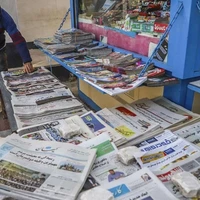
Two newspapers funded and maintained by Khamenei’s office —Kayhan and Ettela'at —have been presenting starkly different perspectives on the talks over the past week. Both are among Iran’s oldest newspapers, and their top management is personally appointed by the Supreme Leader.
Kayhan, known for its consistently anti-US stance, has maintained a hardline, pessimistic view on the negotiations, even after Khamenei’s rhetoric softened in his recent speeches.
The newspaper insists that "the talks will lead to nowhere." Previously, the daily had writted "negotiating with the United States would be foolish." In a controversial satirical commentary, Kayhan even called for the assassination of President Donald Trump.
The newspaper’s editor, Hossein Shariatmadari, wrote on April 18 that "Iran is engaged in a hybrid war with the United States, and the Iranian government should adopt a combat posture against Washington."
Later, on April 22, the daily quoted IRGC-linked Defa Press website as saying, "Iran is sufficiently armed with top-secret weapons to attack Diego Garcia and confront US and British forces there. Iran’s Shahed-136 drones can reach Diego Garcia, located approximately 4,000 kilometers from its borders."
The report added, "Iran can set fire to Diego Garcia with its improved Khorramshahr ballistic missiles, while its cruise missiles can target massive U.S. vessels in the Indian Ocean."
Although the articles may be a mix of falsehoods, disinformation and wishful thinking, they appear to reflect abiding suspicions of the diplomatic outreach among hardliners.
'Embarrassing themselves'
Earlier, Ettela'at had welcomed the negotiations. In an analysis published on April 22, the newspaper sought to expose "those who are undermining the talks."
"Three groups in Iran are attempting to obstruct the negotiations. Although they are too weak to derail the process entirely, they might succeed in discouraging some people and embarrassing themselves."
In an apparent reference to previous Iranian governments and their leaders, Ettela'at identified the first group as "those who question why negotiations were not allowed when they were in power and could have claimed them as their own achievement."
The second group, according to the newspaper, consists of "those who equate negotiations and compromise with treason. They chant radical slogans, create tensions, and sometimes their rhetoric proves costly for the government. On occasion, they even incite small protests in the streets." T
This appeared to be a clear reference to ultraconservatives, such as members of the ultra-conservative Paydari Party and the editors of Kayhan.
The third group attempting to obstruct the negotiations, Ettela'at wrote, is "the foreign-based Iranian opposition," which the newspaper characterized as "bankrupt opportunists."
"Let us support détente and the ongoing negotiations," the daily insisted.
This development could be seen as an extension of Khamenei's "good cop-bad cop" strategy. However, the timing –just as negotiations continue—and the stark contrast between the two perspectives strongly suggest a deeper divide within Khamenei's office.
While pockets of resistance against a potential deal with Washington persist, some Iranians—such as sociologist Ebrahim Fayyaz—are already considering the aftermath of an agreement.
Characterizing the negotiations as inevitable, Fayyaz said in an interview with Khabar Online, "This is the first time Iranians are engaging in negotiations with a world power on equal footing."
At the same time, he warned that radical rhetoric from hardliners, particularly those affiliated with Iran’s state television, could point to serious internal instability.