“It is ideology, flexible ideology. Extremist, but flexible,” Alizadeh said. “Using lies, creating lies—that’s part of their strategy.”
Alizadeh, who served in Iran’s Ministry of Foreign Affairs for 22 years, said Tehran’s current posture is motivated by a desire to stay afloat amid both internal unrest and external pressure.
Despite having defected, Alizadeh says he remains in contact with individuals inside Iran’s Ministry of Foreign Affairs and remains familiar with official policy thinking.
He offered insight into the mindset of Supreme Leader Ayatollah Ali Khamenei, calling him a revolutionary who clings to the vision of his predecessor, Ayatollah Ruhollah Khomeini, to export the Islamic Revolution.
“The reality is dictating to Khamenei that in this situation—internally because of the economic problems inside Iran, and tension with many parts of the world, particularly with Israel and the United States, and now with the European Union,” he said.
According to Alizadeh, pressure is mounting: Israel’s strikes on Iran’s regional proxies, economic hardship, domestic dissent, and the looming threat of “snapback” sanctions from the E3 (Britain, France, and Germany) are all pushing Tehran toward tactical concessions.
Despite its defiant stance, he said, Iran will most likely cave to US demands—but only temporarily.
Flipping his lights on and off, Alizadeh emphasized: “The nuclear program is like this: switch on. Switch off."
Iran permits nuclear inspectors into the country, he added, but blocks human rights monitors because Tehran can pause nuclear activities but cannot hide rights abuses.
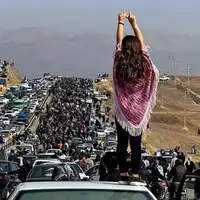
Alizadeh served as a diplomat in Finland during the 2009 contested elections, when Mahmoud Ahmadinejad’s declared victory sparked mass protests.
Supporters of opposition candidate Mir Hossein Mousavi claimed the vote was rigged, leading to a nationwide crackdown.
That moment, Alizadeh said, shattered his lifelong beliefs.
“When the Green Movement erupted in Iran was a moment that I always describe it as rebirth for myself,” he said.
Alizadeh pointed to the lack of public outrage from Iran’s hardliners in the face of renewed diplomacy—even with President Donald Trump whom the detest for ordering the killing of military leader Qasem Soleimani and withdrew from an earlier nuclear deal during his first term.
“Trump is in office—the Trump who killed Qasem Soleimani and the Trump who withdraw his country out of the JCPOA,” Alizadeh said. “None of the hardliners are saying anything against the talks. So, in fact, it's a matter of survival. They know this is a real game.”
Alizadeh said he advises American officials that Iranian diplomacy should not be compared to the Western model. In Iran’s case, it’s a calculated tool to manipulate perception.
“For Khamenei, diplomacy is a tool. He used it as instrument to trick people that, I am a rational person. Iran under me is a normal country like all the others,” Alizadeh said.
To hear more from Hossein Alizadeh, watch the full episode of Eye for Iran on YouTube or listen on Spotify, Apple Podcasts, Castbox, or Amazon.