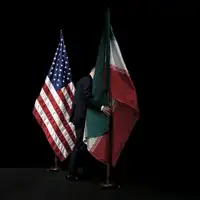
In the days following the first round of indirect talks in Oman on April 12, which were followed by further discussions in Rome on Saturday, clerics, political figures, and media outlets compared a potential US-Iran agreement with a treaty the Prophet Muhammad signed with his adversaries in Mecca in 628 CE, showing a rare softened tone.
The Treaty of Hudaybiyyah allowed for a ten-year truce and provided Muslim access to pilgrimage in Mecca the following year in exchange for several concessions to the Prophet’s enemies.
Ayatollah Kazem Nourmofidi, Khamenei’s representative in Golestan Province, said in a sermon that at the time, some Muslims saw the treaty as unjust and believed the Prophet should not have conceded.
“But that peace proved to be a clear victory,” he argued, justifying the talks which had initially received so much criticism from the country's hardliners who have long opposed negotiations with the US.
An article on the current talks with the US published by Tasnim News Agency, which is affiliated with the Islamic Revolutionary Guard Corps (IRGC), similarly referred to the Prophet's negotiations with the enemies of Islam and the controversial Treaty of Hudaybiyyah, but argued that his strategic flexibility and concessions led to far greater conquests.
Supreme Leader Ali Khamenei made no direct reference to the recent Muscat talks during a speech to senior military commanders after the first round of talks in Oman but adopted a tone of cautious pragmatism later. “We are neither overly optimistic nor overly pessimistic about these talks,” he said—before offering a stark caveat: “I am very pessimistic about the other side.”
Khamenei’s calibrated remarks reflect a blend of strategic openness to diplomacy and deep skepticism about American intentions, appeasing the hardliners.
This is not the first time religious symbolism has been invoked to justify shifts in foreign policy. In 2013, as Iran began talks that led to the 2015 nuclear deal (the Joint Comprehensive Plan of Action, or JCPOA), Khamenei referred to his shift as a “heroic flexibility”—a reference to Imam Hassan, the second Shiite Imam, who accepted a truce with a hostile ruler to protect himself and his followers from harm.
Today, Khamenei’s renewed openness to negotiation has again fractured Iran’s hardline camp. Some factions have moved to align with the Supreme Leader’s position. Others—particularly ultra-hardliners who cannot openly challenge Khamenei without facing political consequences—remain visibly frustrated.