As Iran’s political establishment braces for Donald Trump’s return as US president, a senior figure in Ali Khamenei's office has sought to downplay the Supreme Leader's recent remarks, in which he urged Iranian officials to disregard US demands.
What did Mehdi Fazaeli say about Khamenei's speech?
Fazaeli, regarded as an official authorized to interpret Khamenei's views, told Hamshahri newspaper in Tehran, “It has often happened that a group of people misunderstand a statement [by Khamenei] or pretend they have misunderstood it, taking the liberty to make unjustified interpretations and judgments.”
He said that Khamenei's remark, widely seen as a barrier to potential talks with Trump, was not meant to rule out negotiations if the two sides' positions align.
Fazaeli further argued that Khamenei's message was a directive for Iranian officials to prioritize and uphold national interests above all else.
He claimed that there are instances in governance, where a country's interests align with those of a foreign nation. However, he also appeared to emphasize that such decisions are driven solely by national interests, even if they coincide with the other country’s desires. The motivation behind these decisions, he said, is rooted in domestic priorities, not external influence.
Tehran's media widely covered Fazaeli's explanations, which aimed to soften perceptions of Khamenei’s intransigence regarding potential talks with the new Trump administration—a prospect many in Iran are hopeful for.
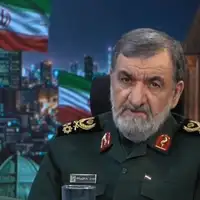
Mehdi Fazaeli, a senior official in Khamenei's office. Undated
President Masoud Pezeshkian and some senior officials in his administration advocate for negotiations with Washington to lift US sanctions and stabilize Iran's rapidly deteriorating economy. In what some interpreted as a gesture of goodwill by Tehran, the government offered to send help to the US to contain the ongoing fires in California on Saturday.
Moderate conservative Ali Larijani, a former parliament speaker and Khamenei’s adviser, has suggested that Iran may be open to serious negotiations with the Trump administration on the nuclear issue.
Larijani who has assumed a more prominent public role as Khamenei’s adviser in the past few months has suggested that Iran could guarantee not to build a nuclear bomb if the US meets Iran's conditions, emphasizing that Washington’s withdrawal from the 2015 nuclear deal did not halt Tehran’s nuclear advancements.
What did Khamenei say about the US in his speech?
Khamenei delivered the speech to a group of visitors from Qom, commemorating the anniversary of Islamist revolutionaries' protests against the Shah in January 1978.
The protests took place shortly after US President Jimmy Carter's visit to Iran, during which he described the country as "an island of stability."
The unrest in Qom was sparked by a newspaper article seen as insulting Ruhollah Khomeini, who would later become the Islamic Republic's first Supreme Leader. The crackdown on the protesters set off a wave of demonstrations nationwide, culminating in the Islamic Revolution of February 1979.
In his speech, Khamenei cited the Qom protests as evidence that Carter and his administration misunderstood the revolutionaries' strength and “miscalculated” the situation in Iran at the time.
Khamenei asserted that the US, which he repeatedly referred to as "the enemy," has consistently misjudged Iran, leading to decisions like imposing sanctions to cripple the Iranian economy. However, he claimed these efforts have failed, and the US is now seeking to compensate for its setbacks.
“Yes, the sanctions caused harm to the country. It’s not as though they didn’t. They did harm us,” Khamenei said, adding, “God willing, the Iranian nation will one day hold them accountable for these losses.”
In his lengthy speech, Khamenei refrained from directly addressing talks with the US or European parties to the nuclear deal. Instead, he urged officials of the Islamic Republic to resist US demands and prioritize what he described as the preferences of the Iranian people—though in reality, these preferences often mirror the decisions of the Islamic leadership and, ultimately, his own directives—on issues such as the hijab, the economy, and foreign policy.
Iranian officials would be threatening “the country’s democracy and its republicanism” if they complied with the US demands in these respects, he said.
“Why? Because people voted for us, they brought us to power, to work in their interests -- not America’s,” he added.
Khamenei seemed to draw a parallel between the situation in January 1978 and the present, suggesting that the US would be mistaken in believing the Islamic Republic is now in a weakened position and could be coerced into an agreement it does not want to make.
What authority does Fazaeli have to speak for Khamenei?
Fazaeli, deputy chief of the Office for the Preservation and Publication of the Works of the Leader of the Revolution, holds a senior position within Khamenei’s office.
In recent months, he has often spoken on the record to "clarify" or offer "context" for Khamenei’s statements on controversial issues.
In at least one instance, ultra-hardliners accused Fazaeli of lying after he indirectly confirmed in a tweet that Khamenei had endorsed the Pezeshkian government’s decision to amend a specific law.
They also argue that Fazaeli lacks the authority to act as Khamenei’s spokesman. Other officials within Khamenei’s office have neither confirmed nor denied Fazaeli’s statements.
German-Iranian political prisoner Nahid Taghavi, 70, has been freed from Tehran’s Evin prison and returned to Germany, her daughter announced on Monday.
“It’s over. Nahid is free! After more than 4 years as a political prisoner in the Islamic Republic of Iran, my mother Nahid Taghavi was freed and is back in Germany,” her daughter Mariam Claren wrote on X.
German Foreign Minister Annalena Baerbock expressed joy over Taghavi's release, calling it "a great moment of joy that Nahid Taghavi can finally embrace her family again" in a post on X.
A spokesperson from Germany's Federal Foreign Office told Iran International that the "government has worked hard to secure Mrs Taghavi's overdue release."
"It is good news that the incarceration of Mrs Taghavi has been ended and that she was reunited with her family. Mrs Taghavi and her family have endured unbearable hardship," the spokesperson added.
Taghavi was arrested in Tehran in October 2020 and, as detailed by her daughter, endured psychological torture during her detention. She was confined to solitary confinement in the notorious Ward 2-A of the Revolutionary Guards at Evin Prison for 220 days.
Amnesty International said Taghavi was released last year on January 9 under house arrest, wearing an ankle tag and restricted to a 1,000-meter radius, returning to prison after 50 days on 28 February. In September, Taghavi was temporarily released again under the same conditions before her final release this week.
Sweden's prime minister on Sunday accused the Islamic Republic of using organized criminal groups to orchestrate crimes in the Scandinavian country.
"Iran is using organized and violent criminal gangs to carry out serious attacks within Sweden," Prime Minister Ulf Kristersson said on Sunday, calling it part of "hybrid attacks and proxy wars" on the Scandinavian country's soil.
“Sweden is not at war. But there is no peace either," he said on the opening day of Sweden’s three-day annual Folk och Försvars (people and defense) conference in Sälen, northern Sweden.
The Swedish prime minister noted that “true peace requires freedom and the absence of serious conflicts between countries. But we and our neighbors are exposed to hybrid attacks, carried out not with robots and soldiers, but with computers, money, disinformation and the risk of sabotage.”
Those who want peace, he said, must “be prepared for war”.
Last year, Sweden's security service said that the Iranian government had been using criminal networks within Sweden to carry out violent acts against other states, groups and individuals, specifically Israel.
Tehran enlisted criminals to carry out armed attacks on Israeli embassies in Stockholm and Copenhagen, a Swedish police source and another informed source told Iran International in October 2024.
In May, Sweden arrested two teenage boys - aged 14 and 15 - after a shooting near the Israeli embassy. The Swedish intelligence agency at the time accused Tehran of recruiting gang members to attack Israeli interests in the Scandinavian country.
US President Joe Biden and Israeli Prime Minister Benjamin Netanyahu discussed "the fall of the Assad regime in Syria and the weakening of Iran’s power in the region" in a phone conversation on Sunday, the White House said.
Air pollution in Iran claimed the lives of over 30,000 people and cost the country an estimated $12 billion in last Iranian year, according to the Ministry of Health.
Abbas Shahsavani, the head of the Air Health and Climate Change Group of the Ministry of Health, announced on Sunday that based on monitoring a statistical population of 48 million people, the number of deaths attributed to air pollution was 30,692 in the Iranian year 1402 (roughly March 2023-March 2024).
It represents a 17% increase (4,385 more deaths) compared to the previous year, when 26,307 deaths were recorded. Shahsavani noted that the year 1401 (March 2022-March 2023) also saw a significant 26% increase in air pollution-related fatalities compared to a year earlier.
The crisis is particularly acute in Tehran, where only 12 days – a mere 3% of the year – had safe levels of particulate matter less than 2.5 microns (PM2.5), a dangerous pollutant that can penetrate deep into the lungs and bloodstream.
Tehran's air pollution has persisted for 10 consecutive days, with Ahvaz, Mahshahr, and Abadan also experiencing "red zone" (very unhealthy) air quality on Sunday. Several other cities, including Zanjan, Ramhormoz, and Shadegan, reported unhealthy air for sensitive groups.
The worsening air quality has led to a 30% increase in visits to government medical centers for non-communicable respiratory diseases since late December.
Over the past week, hundreds of people across Iran have been hospitalized due to heart and respiratory problems, forcing school, university, and government office closures in some provinces.
While dust storms decreased in western regions last year, they intensified in eastern areas, particularly in Zabol and Iranshahr in Sistan-Baluchestan province, which Shahsavani identified as the country's most polluted cities.
The increase in sandstorms in Sistan-Baluchestan province is linked to the drying of key regional rivers and wetlands, including the Hirmand, Hamun, and Jazmourian.
Isfahan and Mashhad, two major metropolitan areas, are also experiencing high levels of pollutants.
As the cost mounts, the Ministry of Health has been tasked with investigating the health and economic impacts of air pollution since 1396 (March 2017-March 2018), aiming to advocate for effective measures to mitigate the problem.
Farzaneh Bijanipour, a prisoner held in the notorious Qarchak Prison in southern Tehran, passed away on Saturday evening due to lack of medical care, a Norway-based human rights organization reported on Sunday.
According to the report by the Iran Human Rights Organization, Bijanipour visited the prison's infirmary in poor condition, but the doctor accused her of feigning illness and, after a subsequent visit, only prescribed a painkiller.
Later on Saturday evening, she became unconscious and passed away after being transferred to the infirmary, the IHR said. Prison authorities transferred her to the hospital once she was already dead.
Widespread violations of the right to healthcare have been reported in Iranian prisons over the past decades, with a number of prisoners losing their lives due to the neglect of prison authorities and deprivation of access to medical services.
Last year, UN human rights experts voiced deep concern over Iran's persistent refusal to grant "timely and adequate healthcare" to human rights defenders and other detainees.
They highlighted a troubling pattern of ill-treatment among Iranian detainees, marked by inadequate access to essential medical care, with a particular emphasis on the plight of human rights activist and Nobel Peace Prize laureate Narges Mohammadi.
“Our deep concerns about the physical and mental integrity of Narges Mohammadi have been communicated to the Iranian Government,” the experts said in a statement released on the UN website in August.
The experts emphasized that “the healthcare of prisoners, as well as the obligation not to expose any prisoner to ill-treatment, is the responsibility of the State,” reminding that the Islamic Republic of Iran is a party to the International Covenant on Economic, Social and Cultural Rights (ICESCR) and the International Covenant on Civil and Political Rights (ICCPR).
“Prisoners have the right to equivalent healthcare available in the community and must be given prompt access to medical attention in urgent cases,” the experts underscored.
Amnesty International has underscored the gravity of the situation, asserting that Iranian officials have effectively turned the nation’s prisons into "waiting rooms of death."
According to a 2022 report by Amnesty International, Iranian authorities are perpetrating alarming violations of the right to life by deliberately denying ailing prisoners access to lifesaving healthcare. This "deadly cruelty" involves both blocking or delaying emergency hospitalization and consistently denying adequate medical care throughout imprisonment. As a result, prisoners' health deteriorates, leading to unnecessary pain and suffering and, in some cases, preventable loss of life.
The rights group further highlighted that numerous cases of suspicious deaths in custody, potentially linked to the denial of medical care, have emerged in recent years, underscoring a troubling crisis of impunity for violations of the right to life.