Israel accuses UN of appeasing Iran as ties plumb new lows
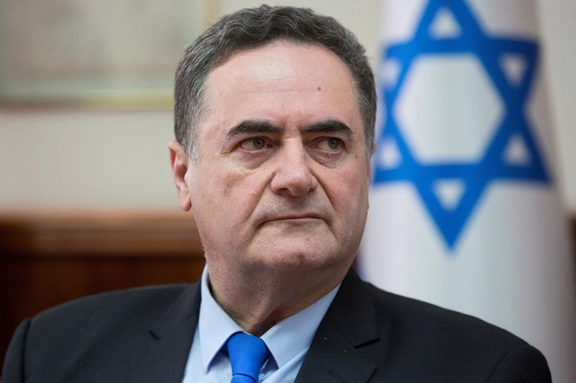
Israeli foreign minister Israel Katz
Israel's foreign minister on Thursday accused the United Nations of appeasing Iran in a post on X with a manipulated image depicting the UN chief bowing before Iran's supreme leader, signaling a new low for their relationship.
Israeli Foreign Minister Israel Katz chastised the body for not condemning Iran or Lebanon's Hezbollah after the Tehran-backed group launched an attack which killed an Israeli citizen and four foreign workers.
"UN Secretary-General @antonioguterres did not bother to condemn Hezbollah or call for sanctions against them. He is only busy attacking Israel and appeasing terrorist organizations and the Iranian axis of evil that calls for its destruction," Katz wrote.
"Guterres and the @UN have long lost their compass and conscience. We will continue to fight until all residents of the north can safely return to their homes."
Israel passed a law on Monday banning the UN Palestinian refugee agency UNRWA from operating in the country, in a move that could impact its work in Gaza as the humanitarian situation there continues to deteriorate.
In a speech at the General Assembly last month, prime minister Benjamin Netanyahu attacked the United Nations as an “antisemitic swamp” and an “anti-Israel Flat Earth Society”, maintaining Israel's right to confront Iran and its allies in the region.
Israel this month barred U.N. Secretary-General Antonio Guterres from entering the country because it said he had not sufficiently condemned Iran's missile attack on Israel on October 1.
Fierce fighting
Meanwhile fighting continued to rage around Israel's northern border as a hoped-for ceasefire to fighting between Hezbollah and Israel failed to materialize.
The Israeli military made a rare statement saying it had hit "weapons storage facilities and command centers" belonging to Hezbollah’s elite Radwan Force and the group’s armament unit in the al-Qusayr area, close to Lebanon’s border with Syria.
According to Syrian state media, a number of civilians were wounded and material damage was caused by the Israeli strikes in Homs province.
Earlier in the day, the Hezbollah attack on northern Israel's Metula referred to by Katz killed five people, as Lebanon said Israeli strikes killed six health workers in the country's south.
US envoys and Israeli officials were due to meet in Israel on Thursday to discuss efforts towards a ceasefire in both Lebanon, where Israeli forces are battling Iran-backed Hezbollah, and in Gaza, where they are fighting Iran-backed Hamas.
The United States will help oversee a Hezbollah-Israel ceasefire by which UN forces and the Lebanese army replace the Iran-backed group in the south of the country, according to an unverified draft published by Israel's Channel 11.
Israel has been carrying out strikes against Iranian-linked targets in Syria for more than a decade as Iran has increased its presence since the Syrian civil war began in 2011.
Raids have also ramped up since last year's October 7 attack on Israel by Palestinian militant group Hamas sparked the Gaza war. Iranian-backed militants from Syria, along with countries such as Iraq and Yemen, have been acting against Israel since October 7, in allegiance with Hamas after its invasion of Israel.
Israeli security personnel patrol an alley in Jerusalem's Old City April 17, 2022.
Israel said it uncovered another Iran-backed spy operation following a wave of arrests over the past month, as spy cells are allegedly activated across the country.
Israel has historically been one of the toughest places to recruit spies and foreign operatives, but recent weeks have seen a surge in arrests of Jewish immigrants from Russia and Azerbaijan.
The latest citizens to be arrested were a married couple, Rafael and Lela Goliev, who live in the mixed Arab and Jewish city of Lod. The 32-year-olds were arrested after carrying out tasks on behalf of an Iranian infrastructure that recruits Israeli immigrants from the Caucasus countries, Israeli authorities say.
The investigation revealed that Rafael Goliev was recruited into the plot by fellow Azeri Elshan Agayev, 56, acting on behalf of Iranian officials.
“As part of the operation, Golayev carried out surveillance missions on security sites in Israel, including the Mossad's headquarters, and collected intelligence on an academic working at the Institute for Security Studies who the Iranians marked as an assassination target,” a statement from Israel Police said.
Goliev was also asked to locate a person who would serve as the assassin for the Iranian operation. Some of the tasks were carried out by Goliev with the help of his wife Lela who will be served with an indictment today.
The two, both of Azeri origin, had been in contact with the handler since 2021, but in the last month, it is the sixth cell busted for working for Iran. In the last year, the incidences have spiked, reaching a head in October with all the cases coming from either Russia or Azerbaijan.
The city of Lod in Israel
Israel’s former head of Interpol, Asher Ben Artzi, told Iran International on Thursday as the news broke that the situation reflects a disconnected segment of Israel’s immigrant population. Following the collapse of the Soviet Union, several Jews used the right of return to move to Israel and thousands more Russians have fled to the Jewish state in the wake of the war in Ukraine.
“These people come from a very closed society, it’s not like native born Israelis who could never conceive of doing such a thing,” he said. “In all my years in the security services here, I never thought I would see this day. It’s a tragic thing that people who come here seeking refuge, can do this all for the pursuit of greed.”
Israel’s former head of Interpol, Asher Ben Artzi
Immigrants from the former Soviet Union tend to live in more closed communities and integrate less than other immigrants, as well as often being among the less economically well-off segments of the population.
Iranian-born Israeli Beni Sabti, also a researcher at the INSS, told Iran International that Iranians are catching “people or communities in Israel who are not paid enough and are dissatisfied in life”, a vulnerable sector of society which now numbers around one million of Israel’s 10 million population.
Ronen Solomon, an Israeli defense and intelligence analyst, told Iran International that using Azeri for communications may have revealed a gap in Israel’s monitoring capabilities, which are more robust for Persian and Hebrew languages.
Ben Arzti, a veteran of Israel’s security and intelligence sector, noted that Iran enjoys greater operational freedom in Azerbaijan, enabling it to potentially recruit and groom agents there for deployment to Israel.
Solomon further suggested that the recruited Azeris may come from Iran’s Azeri speaking population, making them especially vulnerable to recruitment efforts.
Like previous plots, Solomon said the fact they communicate on Telegram also exposes the weakness of the social media platform which protects the identity of users even when engaged in criminal activity.
Other targets of surveillance in the operation included the Moldovan consulate in Tel Aviv, the national electric company, the port of Haifa, public shelters in Tel Aviv, and graves of victims of the October 7 attacks.
According to the indictment, Goliev received an amount of approximately $600 for each day of surveillance and photography in the mission. His handlers ordered him to purchase an operational phone, high quality cameras, a laptop as well as to use the coding software they installed on the laptop, in order to transfer the information they collected safely. In total, the couple received around $26,000, the police said.
Tamir Hyman, the former head of Israeli defense intelligence and head of the INSS, told Israel’s Ynet: "It is not surprising that the members of the Institute for National Security Studies are a target for Iran and its proxies. Although the institute is an independent research institute, and is not part of the defense establishment, it is the leading defense research institute in Israel and as such, Iran seeks to harm its people.”
Last week, an indictment was filed against seven residents of northern Israel who operated as part of an organized squad recruited by an Iranian agent, and during the war engaged in information gathering and photography of military facilities and bases - among others, those that were the target of the Iranian missile attack on October 1.
Hardliners aligned with the office of Iran’s Supreme Leader have intensified their stance against Israel, calling for renewed attacks in retaliation for Israel’s October 26 strikes on Iranian military targets.
Vatan-e Emrooz, known for its hardline positions against the United States and Israel, emphasized that hostilities with Israel neither began on October 7, 2023, nor ended on October 26, 2024, when Israel launched air strikes against Iran. The paper asserted that “Iran will pull the trigger,” meaning a possible retaliation against Israel.
Ultraconservative Saeed Jalili, an adviser to Khamenei on Iran's Supreme National Security Council, stated that “the enemy should be slapped in the face,” according to the government-owned Iranian Students News Agency (ISNA).
Jalili, who ran against President Masoud Pezeshkian in the June presidential election, added that Iran cannot permit Israel to act with impunity. Quoting verses from the Quran to support his stance, Jalili further claimed that the ideology of the Islamic Revolution has upended Israel’s calculations.
Meanwhile, the Kayhan, a hardline newspaper linked to Khamenei's office, wrote that a cease-fire with Israel is impossible.
As it often does, the ultra-hardline Kayhan linked regional issues to US interests, writing that US Presidents Biden and Trump both suggested Iran must choose between dismantling "resistance groups"—its regional proxies—or entering a war, assuming that either path would pressure Iran into compromising on its nuclear program and regional ambitions. However, it appears Tehran has opted to confront Israel directly, showing neither fear of war nor inclination toward negotiations, Kayhan said, praising the uncompromising stance.
Also ruling out a cease-fire in the wars in Lebanon and Gaza, the Kayhan wrote that no one can reach a sustainable settlement at the UN or in meetings in Paris, Doha or Cairo. The daily argued that the United States and France that give bunker-buster bombs, missiles and air defense systems to Israel and the regional countries that keep Israel's lifelines open lack the honesty and qualification to broker cease-fire negotiations.
The daily added that the "assassination" of Hamas and Hezbollah leaders eliminated all the chances for a cease-fire.
The commentary added that while Iran seeks peace and stability in the region, it remains doubtful about the prospects for a cease-fire, grounding its diplomatic efforts in a thorough understanding of ongoing developments. Kayhan further noted that President Biden’s congratulations to Israel following Sinwar’s “martyrdom” and the outcomes of the Persian Gulf Cooperation Council meeting indicated that calls for a cease-fire were premature and ill-timed.
The daily, funded by Khamenei’s office, emphasized that Iran supports any decision made by "the resistance" and welcomes regional and international efforts backing the “legitimate defense” of the people in Gaza and Lebanon.
Kayhan also quoted Iran’s Foreign Minister Abbas Araghchi, stating that "Iran has identified its targets in Israel" and emphasizing that "US forces operating the THAAD air defense system in Israel are legitimate targets for Iranian forces." Araghchi further warned that "The United States will bear responsibility for any possible Israeli attack on Iran."
The newspaper interpreted Araghchi’s remarks to mean that “Israel, along with US bases and forces in the region, will no longer be safe,” suggesting that the Islamic Republic now views US interests and forces in Iraq, Syria, and possibly Bahrain as legitimate targets.
New Lebanese Hezbollah leader Naim Qassem attends a public function in this archive image
The United States will help oversee a Hezbollah-Israel ceasefire by which UN forces and the Lebanese army replace the Iran-backed group in the south of the country, according to an unverified draft published by Israel's Channel 11.
"During initial 60-day implementation period, Lebanon will dismantle and confiscate all military assets, arms, and infrastructure of all non-state armed groups south of the line (of the Litani River)," the document said.
The White House in a statement neither confirmed nor denied the authenticity of the document.
"There are many reports and drafts circulating. They do not reflect the current state of negotiations," it said.
The origin and author of the printed document stamped "DRAFT" and subtitled "for discussion only" was not immediately clear and none of the other relevant parties have yet commented on its authenticity. It was dated October 26.
The period of calm would start with a 60-day ceasefire and envisions 10,000 Lebanese soldiers eventually deploying to the rugged Lebanese region from which Hezbollah draws much of its support and has been heavily bombed and invaded by Israeli forces.
UN Resolution 1701, a 2006 international agreement by which Hezbollah would be largely replaced and checked by UN forces, would be the basis of the ceasefire according to the document.
Hezbollah's new leader Naim Qassem said on Wednesday that the group would agree to a ceasefire under certain unspecified conditions if Israel wanted to stop the war, but that Israel had so far not agreed to any proposal that could be discussed.
Lebanon's health ministry has said 2,822 people have been killed in Israel's military campaign in Lebanon since October 2023 and more than 1.2 million people have been displaced.
Around 60,000 Israelis have been displaced by nearly a year of fighting near northern border areas and Israeli Prime Minister Benjamin Netanyahu has made returning them safely to their homes a main war goal.
Iran's Supreme Leader Ali Khamenei tours a missile facility alongside top military officials
Days after Israel’s unprecedented air strikes on multiple military targets in Iran, media outlets in Tehran, think tanks, and some Iranian officials are now assessing the attack’s impact and implications.
This marks a shift from earlier efforts to downplay the significance of Israel’s operation and may reflect Supreme Leader Ali Khamenei’s directive to "neither downplay nor exaggerate the impact of the attack."
Meanwhile, Khamenei stated that it was up to other officials to determine how to respond to Israel. Several observers, including Iran International political analyst Morad Veisi, interpreted this as a sign that Khamenei was once again attempting to sidestep responsibility for a potential conflict with Israel.
In a Tuesday report, the pro-reform website Rouydad24 website in Tehran stated that Saturday’s attack has effectively ended the shadow war between Iran and Israel, raising the question of whether Iran is now prepared for open conflict.
The website quoted Mohammad Khajoui the director of the Lebanese Studies Group at the Middle East Strategic Studies affiliated with the Iranian Foreign Ministry as saying that it is still too early to answer that question.
The website noted that while some argue the attack inflicted significant losses on Iran, others see it as a mere show by Israel. Regardless, Rouydad24 asserted that both Iran and Israel now face an unprecedented situation, with the outcome still uncertain. It suggested that the direction forward may ultimately be influenced by the results of the U.S. election and any potential cease-fire in Gaza and Lebanon.
Khajoui argued that both sides will try to magnify the importance of their own initiatives and to downplay the actions of the other side. This, he said, makes an accurate assessment of the situation difficult.
The Middle East expert explained that since the 1979 Islamic Revolution, Iranian politicians have been divided on how to approach Israel. One faction, driven by ideological beliefs, advocates for Israel’s elimination, while another believes that, as a Western-backed state, Israel could be controlled rather than destroyed. Ultimately, Iran’s political system settled on a strategy of empowering anti-Israel groups in the region rather than directly engaging in attacks against Israel.
Iran openly supported anti-Israeli groups, overlooking the fragile balance that risked escalating into full-scale war. Following Hamas’s October 7, 2023, incursion, Jerusalem sought to turn its setback into an advantage by weakening both Hamas and Hezbollah. However, as tensions escalated, Iran inched closer to direct involvement, leading to the current situation, Khajoui explained.
He added that Iran is unable to respond swiftly to Israel’s attack, placing Tehran in a difficult position as it was unprepared for the current situation. Meanwhile, all options available to Iran come at a high cost. Iran also recognizes that if it chooses inaction or steps back, Israel is likely to press forward. For now, Iran’s only viable approach is to await the outcome of the US election and a potential cease-fire in Gaza and Lebanon.
Meanwhile, Iranian lawmaker Fada Hossein Maleki informed reporters that Khamenei has entrusted the Iranian armed forces with decision-making on how to respond to Israel. However, as analyst Morad Veisi noted, “Iran’s Supreme Leader, Ali Khamenei, frequently deflects responsibility on challenging decisions, issuing ambiguous statements that enable him to sidestep blame if things go wrong.”
Based on the Iranian Constitutional Law, the Supreme Leader is the sole authority to decide on matters of war and peace, and he knows better than anyone else that he is the commander-in-chief of the armed forces. So, in fact, he is handing over decision-making to himself, but tries to evade responsibility and blame others if his decisions backfire.
Maleki, a member of the Iranian parliament's national security and foreign relations committee, stated that Iran’s response to Israel would be determined with “prudence.” This remark suggests that Tehran may not be able to reach a decision as swiftly as some in the press might anticipate.
In his first speech as Hezbollah's Secretary-General, Naim Qassem stressed Iran's steadfast and unconditional support for the armed Lebanese group, underscoring their persistent unity despite heavy blows they have both taken from Israel in recent weeks.
"Iran supports our project and doesn't ask anything of us," Qassem said on Wednesday. "We don't fight on behalf of anyone or for anyone's project; we fight for Lebanon," he added.
The new Hezbollah leader also pledged that the group would continue its path of war with Israel, following the agenda set by his predecessor Hassan Nasrallah who was killed in an Israeli airstrike on the Lebanese capital in September.
"We will continue our war plan within the outlined political frameworks; we will remain on the path of war," he said.
Qassem, who had served as Hezbollah’s deputy leader since 1991, was elected by the group’s Shura Council. At 71, he is regarded as a foundational figure within Hezbollah.
Iranian leaders publicly extended their congratulations to Qassem on his appointment. Iranian President Masoud Pezeshkian commended his “defense of Lebanon’s sovereignty and ideals of the resistance front,” while Iranian Parliament Speaker Mohammad Baqer Ghalibaf praised Qassem’s enduring commitment to Hezbollah’s mission in Lebanon and across the region.
Meanwhile, Israeli Defense Minister Yoav Gallant alluded to Qassem’s potential vulnerability, posting on X shortly after the appointment, “Temporary appointment. Not for long.” He added in Hebrew, “The countdown has begun.”
Iran's Islamic Revolutionary Guard Corps founded Hezbollah in 1982 and has provided substantial arms and financial backing over the decades.
Although the scale of Iranian support has varied over the years, US officials estimated in 2018 that Iran channels approximately $700 million annually to Hezbollah.
Unconfirmed reports suggest that on October 5 Qassem was flown from Beirut to Tehran aboard an aircraft belonging to Iranian Foreign Minister Abbas Araghchi. While Iranian officials have yet to confirm these reports, Qassem’s potential relocation to Iran would imply that Hezbollah's leadership in Lebanon is now managed remotely.