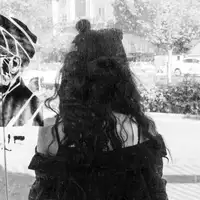
Faezeh Hashemi at an anti-government rally. Undated
Former presidential daughter turned dissident, Faezeh Hashemi, has sparked controversy with her recent letter from Evin Prison. She accused "leftist and monarchist" prisoners of creating "an atmosphere of fear" and labeled their actions as "tyranny."
Many in Iran's "reformist" camp have welcomed Hashemi’s letter but she has come under attack from other political groups who believe she is now advocating reformism despite her past statements that the Islamic Republic is incorrigible.
The debate between regime change and reformism is a key divide in Iranian politics. A shrinking group of loyal politicians and influential figures argue that the Islamic regime, under Ali Khamenei, can still be reformed. In contrast, a growing number of dissidents and younger people in Iran and abroad are calling for regime change.
Hashemi’s father who for decades was the second most powerful man in the Islamic Republic, and helped bring Ali Khamenei to power in 1989, allowed the Revolutionary Guard (IRGC) to become an economic player in the country. Still, his daughter Faezeh is known for her critical remarks about Khamenei and the IRGC.
The prominent reformist politician, journalist, and former political prisoner Abbas Abdi is among those who have praised Hashemi in a Telegram post for “courage” to speak up about the problems she has described in her letter. Ahmad Zeidabadi, another reformist politician and journalist who sympathized with Hashemi, dubbed her “the voice of the really voiceless”.
Critics including photojournalist and former political prisoner Alieh Motalebzadeh have blasted Hashemi not only for the allegations she has made in her letter against her fellow political prisoners but also for the timing of the publication of her letter, days before the second anniversary of the Woman, Life, Freedom protests.
Motalebzadeh alleged in a tweetthat Hashemi has intentionally portrayed other prisoners as “jailers” when “female political prisoners have risen against death sentences and double oppression of women and are paying its costs.”
“Ideological and cultural differences make life in prison difficult for everyone. Various factors are involved in creating tensions many of which are beyond the control of the prisoner and result from the pressures of prison and security bodies. We cannot ignore the main causes and accuse other prisoners in a one-sided manner,” she wrote in another post.
Hashemi released her letter earlier this week from the Women’s Ward of Tehran’s Evin Prison where political prisoners are usually held.
The former lawmaker turned activist who was arrested during the 2022 Woman, Life, Freedom protests is currently serving a three-year and seven-month sentence for propaganda against the regime and blasphemy with tens of other female political prisoners and activists including Nobel Peace Laureate Narges Mohammadi.
Hashemi has accused two groups, “leftists and monarchists”, of forming “pressure groups” and forcing their opinions on others. She has not named anyone in her letter, but many claim that her allegations are directed at Mohammadi and her supporters.
Neither Hashemi nor Mohammadi have yet commented on these speculations.
Hashemi has also drawn a parallel between the attitude and behavior of these fellow prisoners and the government in general throughout her long letter and accused them of exaggerating the difficulties of prison life.
Hashemi was among those who boycotted the recent presidential elections but claims that the “pressure groups” impeded eight others who were not boycotters from voting by blocking access to the ballot box taken to their ward.
In another letter from prison a year ago, Hashemi said Iranians had long moved past the reformists and voting for them in the March parliamentary elections. She also criticized the “absolute power of [the Supreme Leader] and dominance of the Revolutionary Guards (IRGC) in all areas” among other things.
In March the US State Department’s Persian-language Instagram page had to restrict comments to a post that featured a photo of Faezeh Hashemi as part of its Women’s History Month tributes when an overwhelming number of negative comments were made to the post.
Hashemi has served nearly two years of her three-year and 7-month of her sentence and could be released from prison according to law. Her lawyer, Mohammad-Hossein Aghassi, told the Iranian Labour News Agency (ILNA) Wednesday that the prosecutor has, nevertheless, refused to grant his client conditional release from prison.
Aghassi also said he and Hashemi’s brother, Mohsen Hashemi, will contact the authorities about the threat to her life in prison which she appears to be suggesting in her letter.