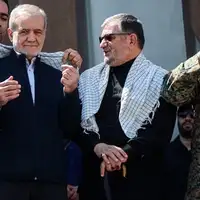
Meanwhile, a prominent conservative politician has expressed satisfaction with President Masoud Pezeshkian's selection of cabinet ministers, noting that Iranian conservatives are pleased with his choices.
Ali Soufi, a well-known "reformist" commentator has told Nameh News website in Tehranthat during the presidential election campaign in June, the Paydari Party and its candidate Saeed Jalili went out of their way to attack candidate Pezeshkian. They also pressured conservative candidate and current Parliament Speaker, Mohammad Bagher Ghalibaf, to withdraw in favor of Jalili, but Ghalibaf refused to cooperate with the ultraconservatives.
Soufi added that Iran's relatively moderate conservatives uphold the concept of an Islamic Republic, while the ultraconservatives advocate for the establishment of a totalitarian Islamic government.
Jalili and the Paydari Party continued their campaign against Pezeshkian and Ghalibaf even after the election. Jalili went so far as to threaten Pezeshkian, warning that his self-declared "shadow government" would make life difficult for him if he didn't follow Jalili's directives, according to Soufi. However, the overwhelming vote of confidence from the Majles for Pezeshkian's cabinet led Jalili and his party to feel defeated. Despite this setback, they persisted with their critical remarks, though with diminished intensity.
Soufi noted that this episode definitively highlighted the divide between the majority of conservatives and the ultraconservative Paydari party. He added that it is highly unlikely Paydari will ever rejoin the conservative camp, as their core ideologies are fundamentally different.
Some Iranian analysts suggested that Supreme Leader Khamenei may have played a role in isolating and sidelining the Paydari Party, effectively ending its political influence. However, others argue that Khamenei has never outright dismantled any political faction before.
The apparent isolation and marginalization of Paydari likely does not signify a fundamental shift in Khamenei's approach. He has repeatedly balanced and rebalanced his loyalists, often shelving them for years before reactivating them, as he did with the "reformists."
In another development, Hamid Reza Taraqqi of the traditional conservative Islamic Coalition Party told Nameh News that conservatives at the Iranian parliament (Majles) are now generally happy with the Pezeshkian administration which, of course, could come under criticism if it fails to obey Khamenei's guidelines and to solve some of the country's problems.
Taraqqi emphasized that Pezeshkian and his cabinet, having risen to power with the backing of "reformists," have demonstrated a commitment to inclusivity by not limiting the administration to their own political faction. He further suggested that it is now time for conservatives to adapt to the new government's vision for the country and its future.
He added that since Khamenei has urged everyone to support Pezeshkian's success, the conservatives will naturally heed his advice and assist the government. "Even their occasional criticism of the administration is intended to be constructive," Taraqqi noted.
In a subtle reference to Paydari's radicalism, Taraqqi further emphasized that, given the challenges the Islamic government faces with Israel and the United States, and the widespread dissatisfaction among Iranians over the economy, all political factions should steer clear of radical actions.