• العربية
  • فارسی
Brand
  • Iran Insight
  • Politics
  • Economy
  • Analysis
  • Special Report
  • Opinion
  • Podcast
  • Live TV
  • Iran Insight
  • Politics
  • Economy
  • Analysis
  • Special Report
  • Opinion
  • Podcast
  • Live TV
  • Theme
  • Language
    • العربية
    • فارسی
  • Iran Insight
  • Politics
  • Economy
  • Analysis
  • Special Report
  • Opinion
  • Podcast
  • Live TV
All rights reserved for Volant Media UK Limited
volant media logo

Cleric brags about Iran's religious influence in the West

Jul 10, 2024, 15:04 GMT+1
A mourning procession by Iran-affiliated groups in Africa

The head of Iran's State Endowment Organization, Mehdi Khamoushi, boasted about the country's expanding religious influence as seen by the attendance of Shia mourning processions held across the world.

"The fact that mourning processions are starting in America, Europe, and Africa signifies this very image of sacrifice and martyrdom," he said Wednesday.

Iran has been actively promoting Shiism globally, particularly in Africa, through orchestrated mourning processions during the month of Muharram. The processions, which commemorate the third Shia Imam, Hussein ibn Ali, are a tool for spreading Iran's religious ideology.

Muharram, the first month of the Islamic calendar, is of great significance to Shia Muslims, marking the Battle of Karbala where Hussein ibn Ali and his followers were killed. This symbolic event is leveraged by Iran to propagate Shia values and extend its ideological reach.

According to the Pew Research Center, the number of Shia Muslims is projected to be between 219 million and 285 million in 2030, up from between 162 million and 211 million in 2010.

They predict that Shia Muslims will make up 10-13 percent of the world’s Muslims, roughly the same percentage as today.

In recent years, Iran has facilitated the spread of the processions beyond its borders. In the United States, Europe, and various African countries, such events are drawing participation from local Shia communities and others.

The processions feature gatherings, public displays of grief, and rituals such as recitations, lamentations, and reenactments of the Battle of Karbala.

The events serve not only religious purposes but also function as instruments of cultural and political influence as Iran seeks to strengthen the sense of unity and identity among Shia communities worldwide.

Most Viewed

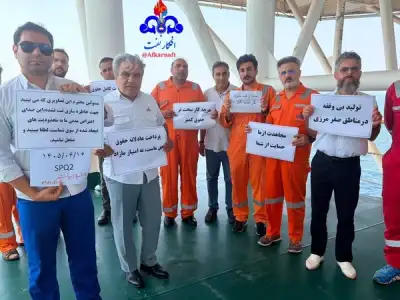
Iran oil workers protest pay conditions at offshore platforms, Assaluyeh
1

Iran oil workers protest pay conditions at offshore platforms, Assaluyeh

2

US carried out covert four-month Hormuz mine-clearing mission - FT

3
ANALYSIS

Iran’s new war strategy seeks to turn blockade into broader economic confrontation

4

Iran doubles gasoline price amid fears of renewed unrest

5
ANALYSIS

Europe’s third-way ambitions on Iran give way to alignment with Washington

Banner
Banner
Banner

Spotlight

  • Iran’s gasoline price hike may add to revenues, but can it ease fuel shortage?
    ANALYSIS

    Iran’s gasoline price hike may add to revenues, but can it ease fuel shortage?

  • Iran deploys security forces as gasoline price rise takes effect
    VOICES FROM IRAN

    Iran deploys security forces as gasoline price rise takes effect

  • Iranian protester undergoes months of secret treatment to save wounded leg
    EXCLUSIVE

    Iranian protester undergoes months of secret treatment to save wounded leg

  • Iran’s new war strategy seeks to turn blockade into broader economic confrontation
    ANALYSIS

    Iran’s new war strategy seeks to turn blockade into broader economic confrontation

  • Europe’s third-way ambitions on Iran give way to alignment with Washington
    ANALYSIS

    Europe’s third-way ambitions on Iran give way to alignment with Washington

  • The gamble behind US attacks on Iran’s oil tankers
    ANALYSIS

    The gamble behind US attacks on Iran’s oil tankers