New president won't improve Iran's human rights situation: UN rapporteur
The United Nations Special Rapporteur on human rights in Iran, Javaid Rehman, speaks in an interview with Iran International
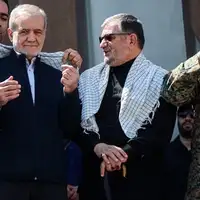
UN Special Rapporteur Javaid Rehman says due to systemic issues within Iran's judicial system, a change in presidency is unlikely to improve the country's human rights situation.
"There are certain systemic issues in Iran starting from 1979 (Revolution). The system is very repressive, intolerant, and non-accepting of democratic values," Rehman said in an interview with Iran International's Mahsa Mortazavi in Toronto, Canada.
He pointed out that the constitutional framework concentrates all powers with the Supreme Leader, creating an absence of an independent judiciary where people's rights can be respected. "There is a need for reform in the constitutional framework," he said, emphasizing that the people need to be recognized with the right to democratic governance, which has been absent for the last 45 years.
Rehman, who will leave his post in July, discussed his findings publicly for the first time outside the UN in Toronto, Canada, after being unable to travel to Iran to investigate human rights in Iran during his six-year tenure. The Iranian government, which dismisses all accusations regarding human rights violations, has not permitted UN special rapporteurs to visit the country and conduct investigations.
In response to Iran International’s question about how he could investigate Iran’s human rights issues without traveling to Iran, Rehman explained that he had held many meetings with the Iranian diaspora and individuals who had first-hand experiences of human rights violations, allowing him to collect substantial evidence.
"We certainly work on the basis of dialogue and human rights discourse and the improvement of the human rights situation," Rehman said.
Rehman also noted that the regime has not allowed any space for civil society to grow, repressing even non-governmental organizations like the Imam Ali organization. "The system needs substantial changes for it to accept democracy, rule of law, and the rights of the people," he asserted.
Previously, Rehman had labeled Iran's mass executions of political prisoners in 1988 as "genocide" and "crimes against humanity." In June, during a UN Human Rights Council session in Geneva, he unveiled a detailed report showing systemic state-sponsored atrocities during a brutal crackdown on dissent. His investigation revealed that thousands of political prisoners, including Baha'is, Kurds, and members of groups like the MEK, were executed in the 1980s, particularly in the summer of 1988, following a fatwa issued by Iran's then-leader, Ruhollah Khomeini, and approved by a four-member death committee.
Rehman said he chose Toronto as his destination due to its significant Iranian diaspora community. He said he wanted to meet people closely connected to Iranian communities within Iran. "It is important for them to understand the perspective of the Special Rapporteur and the challenges I face in my work, including the lack of access to the country, which Iran has unfairly denied me for the past six years," he explained. "Toronto offers a great opportunity to learn more from a community closely following developments in Iran," he added.
Rehman’s comprehensive reports, along with a detailed 400-page report from the Fact-Finding Mission on Iran, have paved the way for international tribunals and greater use of existing international jurisdiction to prosecute those responsible. The focus remains on collecting evidence that can withstand scrutiny in court. Rehman's latest report will be published on his website later this month.