“We are prepared to use all elements of power to prevent Iran from obtaining nuclear weapons,” US top National Security Council arms control official Parnay Vaddi said, stressing that “dealing” with Iran’s nuclear ambitions is not easy, and that the US must also set the conditions for future diplomacy with Tehran.
Vaddi’s intervention comes at a time of increased pressure on Iran to come clean with its nuclear program. Less than a day before his speech at the Arms Control Association (ACA) conference in Washington DC, three European powers (France, Germany and the UK), known as the E3, wrote to the UN Security Council, detailing Iran's violations of its 2015 nuclear deal.
The letter is based on the most recent report by the International Atomic Energy Agency (IAEA), and seems to be an attempt by the E3 to pressure the authorities in Iran to resolve the issue diplomatically and avoid UN sanctions.
Iran has rejected the E3 advance, arguing that it has the right to expand its nuclear work since the US withdrew from the Joint Comprehensive Plan of Action or the JCPOA in 2018.
Earlier in the week, the E3 managed to push a resolution critical of Iran at the IAEA board meeting, despite reservations from the Biden administration, which fears that Iran could retaliate by accelerating its nuclear activity or by encouraging its proxies to resume or ramp up attacks on American forces across the Middle East.
In a notable policy shift Friday, Vaddi indicated that the United States might need to deploy more strategic nuclear weapons in the coming years to deter threats from "adversaries," mentioning Russia, China, North Korea and Iran.
"Absent a change in adversary arsenals, we may reach a point in the coming years where an increase from current deployed numbers is required,” Vaddi told the Arms Control Association, outlining a more “competitive” approach. “We need to be fully prepared to execute if the president makes that decision,"
Only a year ago, the US National Security Adviser Jake Sullivan told the same group that there was no need to increase US strategic nuclear arms deployments to counter the arsenals of Russia and China, offering talks "without preconditions."
The US currently observes a limit of 1,550 deployed strategic nuclear warheads, as set by the 2010 New START treaty with Russia, despite the latter suspending its participation last year in response to US support for Ukraine
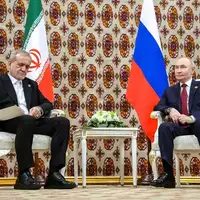
Vaddi on Friday also highlighted increased cooperation among Russia, China, Iran, and North Korea, which the US officials say threatens global peace and stability. This collaboration includes sharing advanced missile and drone technology, as evidenced by Russia's use of Iranian drones and North Korean artillery in Ukraine and Chinese support for Russia's defense industries.
US nuclear doctrine, Vaddi explained, reserves nuclear weapons for deterring attacks by adversaries on the US and its allies and partners. However, if adversaries continue to increase their reliance on nuclear weapons, the US. will have no choice but to adjust its posture and capabilities to preserve deterrence and stability.
The Biden administration has been trying to modernize the US arsenal while remaining committed to international arms control. President Biden has pledged continued compliance with the deployment limits set by the New START treaty as long as Russia observes them.