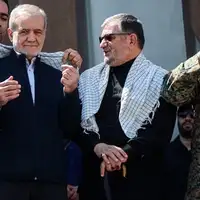
Rafael Grossi speaking after a trip to Tehran, on March 6, 2023
The head of the UN nuclear watchdog has expressed concerns over threats by Iranian officials to consider building nuclear weapons, while also voicing hope that Tehran is ready for serious talks.
International Atomic Energy Agency director Rafael Grossi in London on Tuesday was quoted by two major newspapers as being both concerned and hopeful regarding Iran’s nuclear program.
The contradiction was apparently due to the different emphasis the Financial Times and Guardian put on Grossi’s separate remarks to each publication. The Guardian emphasizedGrossi’s statement that loose talk in Tehran “is very worrying and needs to stop”. However, the FT highlighted Grossi’s optimism that Iran has shown willingness to engage in “serious dialogue” with the IAEA.
Both takeaways from Grossi’s remarks could be equally valid: his optimism after a trip to Iran last week and the continuing loose talk in Tehran by senior officials for opting to build nuclear weapons. However, at this juncture, Grossi’s concerns may be more justified than his expressed optimism.
In recent weeks three Iranian officials have hinted or openly threatened to reverse nuclear doctrine if Iran’s nuclear installations or the Islamic Republic regime are threatened. The latest statement came on Sunday, when senior foreign policy advisor to Supreme Leader Ali Khamenei reiterated the threat. Kamal Kharrazi said that the Islamic Republic would be left with no option but to alter its nuclear doctrine if Israel threatened its nuclear facilities or its existence.
Kharrazi stated that Iran does "not possess nuclear weapons, and there is a fatwa from the leader regarding this matter. But what should you do if the enemy threatens you? You will inevitably have to make changes to your doctrine."
The reason for Grossi’s optimism, however, is less clear, except what he took away during his recent visit to Tehran. Grossi told FT that IAEA’s relations with the Islamic Republic “could be entering a different phase,” apparently based on signals he received when he met with Iran’s atomic chief Mohammad Eslami. But Tehran has been making promises to the IAEA and Western diplomats for two decades, while its nuclear program has reached the weapons development threshold.
Grossi, however, appears to be highly alarmed by threatening remarks of Iranian officials. He told the Guardian, “Loose talk about nuclear weapons is extremely serious for me. And I think it should stop. We are moving closer to a situation where there is a big, huge question mark about what they are doing and why they are doing it.”
Last March, during a visit to Tehran to resolve disputes about severe restrictions on IAEA’s vital monitoring activities, he reached a written agreement with Tehran, but more than a year later nothing has been implemented.
In fact, in September 2023, Tehran withdrew designationsof several inspectors assigned to conduct verification activities in Iran under the Non-Proliferation Treaty Safeguards Agreement. Head of the Atomic Energy Organization of Iran (AEOI), Mohammad Eslami, justified Tehran's decision by claiming that those expelled had a history of "extremist political behavior".
Also, in an interview with PBS on March 29, Grossi had expressed concernover Iran's advancements in its nuclear program alongside restrictions placed on IAEA monitoring activities. He emphasized that without full Iranian cooperation, the agency cannot verify that its program is peaceful. The lack of visibility would be a major setback, similar to the situation during the late 1980s and 90s in Iraq, he explained.