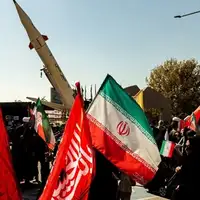
An Iranian woman walks past an anti-Israel banner with a picture of Iranian missiles on a street in Tehran, Iran April 19, 2024.
Israel’s retaliatory attack against Iran’s sophisticated radar system in Isfahan in April carried a strong message that the Islamic Republic’s defense capabilities could not match Israel’s military might, a top Israeli insider and ex-military official told Iran International.
“[We were] sending a message, saying we can completely destroy their air defense on this site, and we can freely attack whenever we want,” said Brigadier General (ret.) Amir Avivi, the founder and chairman of the Israeli Defense and Security Forum (IDSF). His organization is a powerful political and cultural force in Israel – which is made up of more than 30,000 former IDF soldiers and officers.
Avivi, a close friend and Caesarea neighbor of Prime Minister Benjamin Netanyahu, is regularly consulted by key government ministers.
Brigadier General (ret.) Amir Avivi, the founder and chairman of the Israeli Defense and Security Forum (IDSF)
This is the first time an Israeli insider so closely connected to the government details the country's attacks on the Russian-made S-300 air defense system near Iran's Natanz nuclear enrichment facility, and explains the motivations behind the strikes.
On April 19, in the early hours of the morning, Israel’s arm reached far into Iranian territory into the province of Isfahan, just a few days after the Tehran launched more than 300 drone and missile attacks on Israel.
It seemed years of a shadow war between the two nations had ended - and what appeared to be the impossible - a direct conflict between the two nations - suddenly became a reality.
Iranian officials sought to downplay the attack - with Iran’s Foreign Minister Hossein Amir- Abdollahian claiming in an interview with NBC news in April that what happened “was not a strike.”
On May 5, weeks after the retaliation, a member of Israel’s security cabinet and Minister of Transportation, Miri Regev, officially confirmed the strike on an Iranian air base in Isfahan on Israeli TV Channel 14. That marked the first time the attack had ever been even publicly acknowledged by Israel.
Israel’s response, for many, seemed rather limited, but according to Brigadier General Avivi, it was anything but.
Avivi said in an interview with Iran International in Tel Aviv that the attack destroyed the defense system in Isfahan in a “minute” - which he argues tells the Islamic Republic of Iran “you are nothing.”
“In any moment we want to deal with you, in 10 minutes we are going to destroy all your air defense, and then we are going to attack you and that’s it,” Avivi said.
During his service, Avivi held a number of senior roles in the Israeli Defense Force (IDF). He was the deputy division commander of the Gaza Strip, Deputy Comptroller of the Security Forces, Director of the Office of the Chief of Staff, Commander of the Sagi Division, Commander of Battalion 605 and Commander of the School of Combat.
He said he realized two years ago that Iran was “on the way to war.” He wrote a 300-page Israeli national security assessment - sending it to the Israeli government, Mossad and military, claiming “there will be war in the coming years.”
What’s next for Iran and Israel?
Avivi said Israel was currently prioritizing the war against Hamas and bringing the hostages home with the nation fighting on 7 fronts. Iran, Avivi said, was an issue that he believes Israel will deal with - but later.
“We can deal with this. What can they do? Shoot another 400 missiles?”
As a General - Avivi has for years been discussing what an attack from Iran would look like. Now that it’s happened, he said Israel was more likely to go in later and attack Iranian nuclear sites.
He suggested that Netanyahu’s government would likely go to war with Iran in November if there is a change in US administration after the election.
“Our top priority is winning in Gaza. The dealing with Iran will happen in a month or two when we deal with Hezbollah. If we have to go to a full-scale war with Hezbollah, then it would be worthwhile attacking Iran. But this is a difficult decision to make when America is not on board. I think Netanyahu is thinking maybe it’s worthwhile to wait till November, maybe there will be a change in administration. Maybe with the next administration we will attack Iran together and not alone,” says Avivi.
While Iran and Israel continue to engage in proxy fighting and a potential direct war looms - Avivi said Israel has not yet shown even 1 percent of its capabilities.
He said April’s attack in Iran showed two things: “One, we can deal with your capabilities. Two, you cannot deal with ours.”