Militant Attack On Military Base In Iran’s Sistan, At Least One Dead

An armed attack on a military base near Rask in Iran’s Sistan and Baluchestan province killed at least one police officer.

An armed attack on a military base near Rask in Iran’s Sistan and Baluchestan province killed at least one police officer.
The economically challenged province adjacent to Afghanistan and Pakistan is home to a substantial Sunni community belonging to the Baluch ethnic group.
The population has faced ongoing persecution under the rule of Iran's Shiite clerics. The region has consistently witnessed confrontations between security forces and Sunni militants.
Jaish al-Adl, a militant group advocating for enhanced rights and improved living conditions for the Baluchi ethnic minority, has claimed responsibility for the attack. Over the past few years, the group has carried out multiple assaults on Iranian security forces in the province.
IRNA and Tasnim news agencies reported on Wednesday that members of a "terrorist group" launched an assault on the Jangal base in the Rask County at midnight.
According to Tasnim, “the confrontation between the attackers and the forces began at 1am, and after three hours without successfully infiltrating, the attackers withdrew.”
Salim Kadkhoda, the governor of Rask, also informed IRNA that during the conflict, Amir-Hossein Hosseinabadi, a commander from the law enforcement forces, was killed.
However, Jaish al-Adl in a message on its Telegram channel asserted that it has caused "significant damages and human casualties."
The Halvash website that covers developments in Sistan-Baluchestan Province in the southeast had earlier reported explosions and heavy gunfire exchanges around the base in Rask.
Halvash also mentioned that the attackers had previously blocked the routes leading to the confrontation site.
Further details about the incident have not yet been disclosed.
The attack on the base comes in the wake of a previous assault on December 15, where Jaish al-Adl militants targeted a police station in Rask. During that attack, 12 police officers were killed, and eight others were injured.


Tehran's Revolutionary Court has handed down a five-year prison sentence to Mir-Yousef Younesi, the father of a political prisoner, after more than a year of temporary detention.
The verdict has sparked outcry as it was delivered in his absence, with allegations of his refusal to wear prison uniform.
Reza, Younesi's son, took to Twitter on Tuesday to express his frustration, revealing that his father was denied the right to be present in court. The court session proceeded despite objections from his lawyers regarding the "lack of presentation of any evidence by the ministry of intelligence," which were reportedly disregarded.
Younesi was detained on December 28, 2022, in Shahroud, with the ministry of intelligence accusing him of "financial ties with the exiled opposition group Mojahedin-e-Khalq (MEK)."
His family has vehemently contested the charges, asserting that Younesi is an employee engaged in legitimate commercial transactions. The case is purportedly centered around a payment of 130 million rials.
Reza further alleged that the intelligence authorities were well aware of his father's lack of connection to the case's narrative but implicated him as an act of revenge.
Another son, Ali Younesi, a gold medalist from the International Astronomy Olympiad, was arrested in 2020 alongside Amir-Hossein Moradi. Both were subsequently sentenced to 16 years in prison on charges including "corruption on earth," "propaganda against the system," and "conspiracy and collusion with the aim of acting against national security."

US and UK forces shot down 21 drones and missiles fired by Iran-backed Houthis on Tuesday at international shipping in the Red Sea, the US military's Central Command said.
A statement said, “Eighteen OWA [one way attack] UAVs, two anti-ship cruise missiles, and one anti-ship ballistic missile were shot down by a combined effort of F/A-18s from USS Dwight D. Eisenhower,” and air defense fire from supporting warships, including the UK’s HMS Diamond.
US Central Command said there were no injuries or damage reported, adding that this was the 26th Houthi attack on commercial shipping lanes in the Red Sea since November 19.
Iranian-backed Houthi militants have stepped up attacks on commercial vessels in the Red Sea in protest against Israel's war in Gaza. The attacks began after Iran’s Supreme Leader Ali Khamenei called for blockading Israel.
Various shipping lines have suspended operations, instead taking the longer journey around Africa.
The Houthis have vowed to continue attacks until Israel halts the conflict in Gaza and warned that it would attack US warships if the militia group itself was targeted.
Critics have urged the Biden administration to take a more assertive stance toward the Houthis and Iran to stop the attacks, instead of just defensive measures.
US Deputy Special Envoy to Iran, Abram Paley, told Iran International recently that when it comes to dealing with Iran, “words are not enough” and action has to be taken. However, so far, Washington has not targeted the source of the Houthi attacks in Yemen.

Exiled Queen Farah Pahlavi says that 88 years after Reza Shah abolished the hijab, Iran’s “backward regime” has not been able to reverse the progress of women.
Abolishing the hijab on January 17, 1936, was only one aspect of the modernization attempts by Reza Shah Pahlavi the founder of the Pahlavi dynasty. He not only freed Iranian women from hijab, but he also paved the way for them to be active members of society as teachers, government officials, nurses, and highly educated professionals.
Later in the dynasty's rule, Iranian women gained the right to vote and run for parliament, preceding many countries in granting women equal rights. However, the modernization of women and changes in their lifestyles were significantly reversed with the ascent of fundamentalist Shiite clerics to power in Iran in 1979.
In a statement released on the occasion, Farah Pahlavi praised Reza Shah for helping Iranian women to shine and “to free them from the dungeons of prejudice." She said the occasion is a landmark in the evolution of Iranian women's modern identity, adding that "many Iranian women today praise the two kings of the Pahlavi dynasty without even having lived in their period." The women, she said, demand Iran's return to the track of progress of that period.

Farah Pahlavi, characterized the current regime of Iran as "evil" and reiterated that "Finally, light will overcome darkness and Iran will be back on the track to freedom, welfare, and progress."
The modernization process initiated by Reza Shah in the 1920s propelled Iran from the depths of the Middle Ages into the modern world. Women became active and productive members of Iranian society in this evolving nation, as people transitioned from carts to trains and enrolled in newly established universities to acquire modern skills, bringing the country in line with the rapidly developing global landscape.
A modern justice system brought an end to clerical rule, limiting their involvement to solemnizing marriages and divorces, which still required registration at the Judiciary offices.
One of the initial actions taken by the Islamic regime after 1979 was the imposition of compulsory hijab on women. This was done to facilitate the suppression of women in society and symbolize the reversal of the modernization efforts initiated during the Pahlavi era.
Later, the clerics established their domination on the judicial system by replacing judges with clergymen who often were not trained to handle judicial cases. The law ceased to exist, and every decision was left to arbitrary ruling by clerics who often came from small villages.
Meanwhile, the destruction of the academic system persists as the regime dismisses university professors and replaces them with regime insiders loyal to Supreme Leader Ali Khamenei. Many officials bestow upon each other the title of "doctor," often without having completed high school. It was even exposed during televised presidential election debates in 2021 that Ebrahim Raisi, who later became president, had only received an elementary education, yet he holds the title of "Ayatollah, Doctor Raisi."
The suppression of women is one of the most elaborate examples of how the Iranian regime works. In early January, Roya Heshmati, an Iranian woman presented a dramatic account of how she was given 74 lashes for not wearing hijab. As her story went viral on social media, the regime tried to deny her account. Interestingly, tens of other women came out to tell their stories about being lashed in previous weeks and months.
Critics say that hijab is the Islamic regime's last trench to defend its existence and Islamic identity as it has lost its Islamic credential after major financial corruptions were disclosed. Nonetheless, the Islamic Republic ruthlessly cracks down on women who defy the compulsory hijab using the ‘morality police’ and the IRGC's Basij militia, while also passing laws to enforce hijab with the motto "Cover or suffer." Particularly, since the 2022 Women, Life, Freedom movement, many women have been suffering in jail and receiving lashes as religious punishment, although sharia scholars say there is very little if any about compulsory hijab and its punishment in the Quran.

While Iran’s Yemeni proxy, the Houthis, attack commercial shipping in the Red Sea, disrupting free flow of goods, oil has so far remained mysteriously immune.
In its threat to the key shipping corridor, which the Houthis say is to block vessels to Israel in support of Hamas amid the Gaza war, so far, oil has been untouched, Reuters reported on Tuesday.
It is plausible, albeit unsupported thus far, that Iran, concerned about the freedom of its own oil shipments toward China, has taken measures to ensure that tankers remain unharmed in the Red Sea, responsible for 12 percent of the world's oil shipments, including those from Saudi Arabia.
Even in Tehran, Iran’s leaders know how ‘sacred’ oil is and to push the world’s leaders into conflict over its shipment, may be a step too far amid an escalating proxy war.
December’s oil and fuel tanker traffic in the Red Sea was stable, even though many container ships have rerouted due to Houthi attacks, according to Reuters data.
But it seems Iran may be capitalizing on the newfound instability. Last week, reports claimed China’s oil trade with Iran has stalled as Tehran withholds shipments and demands higher prices from its top client, tightening cheap supply for the world's biggest crude importer.

The cutback in Iranian oil, which makes up 10% of China's crude imports and hit a record in October, could support global prices and squeeze profits at Chinese refiners.
Independent refineries favor Iranian oil as it’s cheap, and high quality. Iranian Light, the main export grade, trades at a discount of about $13 a barrel.
However, the Houthis’ blockade has driven up shipping costs and insurance premiums, which will have global ramifications, and led to a US-led coalition of more than 20 nations, which are ready to take military action if attacks on global shipping continue.
Some oil companies like BP and Equinor have diverted cargoes to a longer route around Africa but oil continues to flow. "We haven't really seen the interruption to tanker traffic that everyone was expecting," Michelle Wiese Bockmann, a shipping analyst at Lloyd's List, told Reuters.
A daily average of 76 tankers carrying oil and fuel were in the south Red Sea and Gulf of Aden in December, the area close to Yemen that has seen attacks. That was only two fewer than November's average and just three below the average for the first 11 months of 2023, according to data from ship tracking service MariTrace.

Rival tracking service Kpler tracked 236 ships on average daily across all of Red Sea and Gulf of Aden in December, slightly above the 230 daily average in November. The additional cost of sailing around the Cape of Good Hope off Africa rather than via the Red Sea would make voyages to deliver oil less profitable.
According to data from ship analytics firm Marhelm, it costs as much as $85,000 a day to ship oil on Suezmax tankers, which can carry as much as one million barrels. Aframax vessels, which can move 750,000 barrels, cost $75,000 a day.
In a rare attack on oil, last month saw a missile fired by Yemen’s Houthi rebels hit a Norwegian-flagged tanker in the Red Sea off the coast of Yemen near a key maritime choke point.
The assault on the oil and chemical tanker Strinda in the Bab el-Mandeb Strait, was a rare example of oil bearing the brunt of a war which is being waged by Iran’s proxies surrounding Israel’s borders and beyond since October 7’s invasion of Israel by Hamas, killing over 1,200 mostly civilians and taking over 240 hostage.
Consequently, tanker traffic in the south Red Sea region briefly dipped between December 18 and December 22 when the Houthis intensified attacks on vessels, averaging 66 tankers, but movements resumed after, according to MariTrace.
Container ship traffic in the area has fallen more sharply, down 28% in December from November, according to MariTrace. According to LSEG data, several oil majors, refiners and trading houses have continued to use the Red Sea route, perhaps aware of the importance of oil even to the grand puppet master of the Middle East’s proxies.
“Shippers and their customers really want to avoid a schedule disruption. So they are still taking the risk," said Calvin Froedge, founder of Marhelm, speaking to Reuters. He noted that many oil tankers transiting the Red Sea were carrying Russian crude to India, which the Houthis have no interest in attacking.
Other tankers, chartered by trading house Gunvor's unit Clearlake, Indian refiner Bharat Petroleum and Saudi Arabia's Aramco Trading Company, have all navigated the route in recent weeks. Iran’s ally Russia, whose oil supply remains key amidst its own sanctions, also remains India’s largest supplier, and the complexities of disrupting an already fragile relationship does not bode well for Tehran.
Since the second half of December, at least 32 tankers have diverted or transited via the Cape of Good Hope, instead of using the Suez Canal, according to ship tracking service Vortexa.
The tankers that are diverting are mostly those chartered by companies who announced a pause on Red Sea movement, or those operated by US and Israel-linked entities.
For now, Tehran seems to be playing a smart diplomatic game, but how things turn in coming weeks is anyone’s guess as the Houthis continue to recruit tens of thousands of militants in its war on Israel.

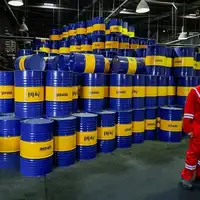
A significant fire and explosion, suspected to be caused by a gas leak, occurred at a cosmetics factory near Tehran on Tuesday, injuring 53 individuals.
The incident occurred at a facility in Fardis, Alborz province, west of Tehran, where some of the victims are currently in critical condition, as stated by state media.
Preliminary investigations suggest that the blast was triggered within the production line of the factory, according to an official quoted by state TV. The injured individuals have been swiftly transferred to nearby hospitals for medical attention.
Ahmad Mahdavi, the head of the Emergency Medical Services Management Center of Alborz Province, provided an update, stating, "Overall, the general condition of most of the injured is good, and they are under medical care." He added that extensive damage occurred during the incident, and investigations into the precise cause are underway.
Hossein Ashouri, head of the Fire Department of Fardis Municipality, reported to the official Iranian news agency IRNA that "As a result of a widespread fire due to an explosion in a factory producing cosmetics and hygiene products in Simindasht of Fardis, some injuries and damages have occurred." Ashouri noted that the incident was reported to the Fardis Fire Department around 15:30, prompting immediate deployment of emergency response teams to the scene.
The previous week witnessed two bomb explosions in southeast Iran, resulting in the deaths of nearly 100 people and numerous injuries during a ceremony commemorating IRGC Commander Qasem Soleimani, who was killed by a US drone in 2020.