Iran And Its Proxies Should Behave, Says US Special Envoy

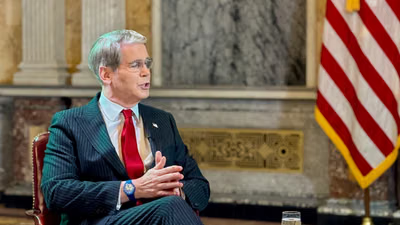
When it comes to dealing with Iran, “words are not enough” and action has to be taken, the US Deputy Special Envoy to Iran, Abram Paley, told Iran International.
When it comes to dealing with Iran, “words are not enough” and action has to be taken, the US Deputy Special Envoy to Iran, Abram Paley, told Iran International.
In an exclusive interview, with Samira Gharaei, Paley said the Biden administration has been “very clear” in both public and private messaging that “now is not the time for Iran or for the groups that it supports to take advantage of the situation [in the Middle East] and advance their own destabilizing interests.”
Iran and its regional allies have ramped up their operations against Israel and the US since last October, when Israel’s military began its onslaught on Gaza in response to the Hamas rampage of Israeli border areas.
For three months now, Iran-backed groups in Iraq and Syria have been targeting US bases, Hezbollah in Lebanon has been launching missiles towards northern Israel, and Yemen Houthis have been attacking commercial vessels in the Red Sea, all invoking Israeli war on Gaza as the reason for their actions, and calling for a ceasefire.
President Biden has refused to back the growing calls for a ceasefire in Gaza, though, and Paley reiterated in his interview that the administration’s support for Israel is unwavering.
Critics of the Biden administration on all sides –those who advocate more pressure on Netanyahu and those demanding a tougher stance on Iran– say lack of decisive action would not help calm, but aggravate, the situation and lead, eventually, to the kind of full-scale regional war that the administration is hoping to avert.
“I’m not going to preview US actions,” Abram Paley said when addressing the question of deterrence, and what the US government might do if the Iranian regime and its proxies continue their attacks on American interests in the region.
“We view Iran as an adversary and a state sponsor of terrorism… but we don’t focus on just one thing… we’re going to remain committed to focusing on a full range of Iran’s destabilizing behavior: from its nuclear program to its crackdown on human rights at home, to its provision of weapons to groups in the region.”
Many Iranian-American activists say the Biden administration is “soft” on Iran, demanding more pressure and less compromise, especially when it comes to human rights abuses and the US support dissidents and activists inside Iran.
“We’re going to stand with the Iranian people,” Paley responded. “We’re going to continue to make sure that their voices are heard… and that they stay connected to the outside world.”
Since coming to office, President Joe Biden seems to have framed his Iran policy around a wish to revive the abandoned 2015 nuclear deal or at least come to another (written or unwritten) agreement that would limit Iran’s nuclear program.
This doesn’t seem to have worked, however.
IAEA, the UN nuclear watchdog, confirmed in its last report of December 2023 that Iran has resumed enrichment to up to 60 percent, close to the roughly 90 percent that is required to make a nuclear weapon –after a temporary slowdown, brought about by release of some frozen Iranian funds and turning a blind eye on oil exports to China.
“We believe that diplomacy is the only way and the best way to arrive at a sustainable, effective resolution to [Iran’s nuclear] program over the long tem,” US deputy special envoy to Iran addressed the issue. “But at this point we’re very very far from that, given Iran’s continued escalation.”
Mr. Paley has been acting as special envoy after Biden's top choice Robert Malley was suspended after his security clearance was revoked due to an unspecified reason.
Asked about his former boss and what may happen to him next, Paley said, “I can’t comment… but despite that situation, the work at the State Department vis a vis Iran has continued.”