Iranian Tea Importer Faces Allegations Of Currency Misuse

The head of Iran’s Inspection Organization has disclosed that a prominent tea importer has come under scrutiny for questionable financial practices.

The head of Iran’s Inspection Organization has disclosed that a prominent tea importer has come under scrutiny for questionable financial practices.
The company, handling the majority of the country's tea imports, reportedly received a staggering $3.37 billion in foreign currency at discounted government rate for tea and machinery imports from 2019 to 2022. However, it has allegedly sold $1.4 billion of the currency on the free market at a higher rate.
Zabihollah Khodayian highlighted the company's alleged transgressions, emphasizing its violation of premium-grade tea orders. However, he did not disclose the name of the company.
“Despite registering a $14 per kilogram order for premium Darjeeling tea from India, the company purportedly imported significantly cheaper Kenyan tea and bought Iranian grade-two tea at a value of around $2 per kilogram,” added Khodayian.
The government, controlling the economy and foreign currencies allocates cheaper foreign currency to facilitate crucial imports.
The Central Bank of Iran operates the NIMA currency scheme to make imports more affordable and control inflation. The system allows exporters to sell foreign currency at a reduced rate and permits importers to purchase currency at the same lower rate to finance their transactions abroad.
However, the official government rate of around 370,000 rials to the dollar in the NIMA scheme contrasts sharply with the free market rate of about 510,000 rials. This disparity has led to corrupt practices, where well-connected entities exploit the lower rate, obtaining cheap dollars and diverting them for purposes other than intended imports.
The Iranian government, grappling with economic complexities exacerbated by sanctions, regularly intervenes in the currency market to stabilize the beleaguered rial. Despite these efforts, the challenges persist, and instances of currency misuse continue to pose serious concerns.

A hardline politician recently suggested that that an absolute ruler in Iran is not enough, “absolute obedience” is needed, referring to the Supreme Leader.
The statement comes after more questions have risen about how the parliament has become a rubber stamp and hardliners dominating the government get their power from Supreme Leader Ali Khamenei’s office. Consequently, questions also arise as to what the constitutional powers of the Supreme Leader are and do elections and elected offices mean anything, when he can dictate his will.
Hardline cleric Morteza Aqa-Tehrani, the chairman of the central council of ultraconservative Paydari Party recently quoted the party's founding father, Ayatollah Mohammad Taqi Mesbah-Yazdi as having called for the nation's absolute obedience to Supreme Leader Ali Khamenei.
Aqa-Tehrani quoted Mesbah as saying, "The absolute rule of the Supreme Leader is not enough as the theory of government under the Islamic Republic. The system also needs absolute obedience of the people to the supreme leader."

The statement effectively would render the legislative system in Iran meaningless. According to the ultraconservative party, Khamenei can make any decision, and the people will have no choice other than obeying what he decrees. What makes Aqa-Tehrani’s statement more dangerous is that his party is poised to gain absolute majority in the March parliamentary elections that are being heavily engineered to give a monopoly of power to hardliners.
Commentator Abbas Abdi writing in Tehran’s reformist daily Etemad on Saturday argued that those who speak about “absolute obedience” to the Supreme Leader, in fact are doing a disservice to him. A modern state cannot be governed on that basis because the world has changed in the past 200 years and now governing a country needs expertise in different fields, he stated. Those who insist on absolute obedience in fact leave the Supreme Leader in a lonely position, vulnerable to all things that can go wrong and make him a target for blame.
Mr. Khamenei has already entered the unenviable position of being seen as responsible for a once rich and promising developing country that is now on the verge of becoming a failed state. Anti-regime protests in recent years have demonstrated that increasingly many people have turned against Khamenei, seeing him as responsible for a failed state and an impediment to a better life.

Iran’s economy, straddled with unsurmountable inefficiencies of nepotism and political control, has little hope of resuming development and progress. Sitting on the world’s second largest natural gas resources, Iran faces domestic shortages, let alone an ability to export.
Crude oil exports, limited by US sanctions, are not even enough to help bridge a 50-percent budget gap. The country needs $160 billion to overhaul and modernize its energy sector, according to oil minister Javad Owji, but its annual crude exports barely reach $22 billion. Iran resembles a football player who has lost track of the ball and no matter how fast he runs, it seems too late to catch up.
Iranians see this hopeless situation as the result of Khamenei’s 34-year rule, and his hardline loyalists resort to more praise and demands of full obedience, while many see his days numbered at the old age of 84.
Recently, former President Hassan Rouhani publicly referred to the inevitable, the death of the leader, and hinted at the need to look forward. This week, a senior cleric revealed that a small committee is looking into appointing a deputy leader. But the day after Khamenei’s eventual passing is what many whisper about. Who would replace him. Will there be a nasty power struggle, or even a “collective leadership” to replace the Supreme Leader? What will the Revolutionary Guard do? Will they push their own candidate, or they will start an internal power struggle?
Abdi referring to “absolute obedience” wrote, “I would like to say that those who make this statement are essentially pursuing their own agendas. By seemingly expressing support for the velayat-e faqih (Supreme Leader), they aim to advance their projects. Lacking intellectual courage and self-sufficiency, they seek to promote their plans through this statement.”

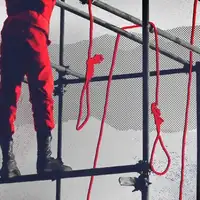
Reacting to reports of the execution of a young man and a young protester, the European Union has called on Iran to refrain from any future executions.
Peter Stano, lead spokesperson for foreign affairs and security policy of the European Union, stated on Friday, "There are credible reports that a minor, Hamidreza Azari, and a protester, Milad Zohrevand, were executed in Iran on November 24 and 23 respectively," emphasizing the European Union’s "firm and principled opposition to the use of capital punishment at all times and in all circumstances." Iran has hanged nearly 700 people this year alone.
Stano also underlined that as a party to the International Covenant on Civil and Political Rights and the Conventions on the Rights of the Child, the Islamic Republic is prohibited from imposing the death penalty for crimes committed under the age of 18.
Hamid Azari was hanged on Friday morning at the Central Prison of Sabzevar in the northwestern province of Khorasan-e Razavi for complicity in stabbing Hamidreza Aldaghi to death in a street fight in April.
Human Rights (IHR NGO), a Norway-based Iran Human Rights Organization, claims to have reliable evidence that Azari was only sixteen years and eight months old at the time and seventeen years and three months when he was hanged.
According to IHR NGO, the Islamic Republic has hanged at least 68 other child offenders since 2010.
Iranian authorities called the victim a “martyr” and claimed he was killed while carrying out his religious duty of calling on citizens to follow the Sharia and refrain from forbidden bahvior.
The victim's family, however, asserts that he got involved in the incident that led to his killing to protect a young girl being assaulted by the young boys, including Azari. They have denied any religious motivation or his association with the Basij militia or hardliner religious groups, as claimed by the authorities.
Stano’s statement also mentions Milad Zohrevand, a construction worker who was arrested during last year’s protests in Malayer in the western province of Hamedan and was hanged on November 23 on charges of killing Ali Nazari, a Revolutionary Guard.
Miladvand’s family and friends say he was only in the vicinity of the place Nazari was shot to death. Authorities have not offered any solid evidence of Miladvand’s involvement in the killing.
The young man who was tried and sentenced to death behind closed doors was never given access to a lawyer and his family were pressured by the authorities not to talk to the media about his case. He was hanged without having a chance to meet his family for a last time before his execution.
IHR NGO said on December 1 that the Islamic Republic has executed over 700 in 2023 including at least 176 since October 7 when the war in Gaza started.
IHR NGO urged the international community and especially European countries to “break their silence on the arbitrary execution of more than three people per day by the Islamic Republic.”
“The critical human rights situation in Iran, and the death penalty in particular, must not be compromised for political and regional considerations. The international community’s silence on executions is considered a green light by the Islamic Republic,” IHR NGO said.
Other prisoners, IHR NGO says, have often been hanged in groups of several in various prisons for political crimes, drug offences and murder.
On November 29, for instance, a group of seven prisoners were executed in Ghezelhesar Prison near Karaj. These included Ayub Karimi who was sentenced to death for moharebeh (enmity against God) and efsad-fil-arz (corruption on earth) charges. Two others were sentenced to death for drug-related charges while the remaining four had been sentenced to qisas (retribution-in-kind) for murder.

As the Iranian regime grapples with growing unrest fueled by unmet demands from retirees and workers, protests and strikes continue in different sectors.
Videos on social media revealed that workers at the Esfahan Steel Company halted operations on Saturday, conveying their discontent through organized gatherings and chanting slogans.
Workers at the Esfahan Steel Company had previously gone on strike multiple times last year, citing the "failure to fulfill promises by officials." Their primary demand revolves around an increase in wages, which lag behind those of counterparts in other steel plants.
Last year, workers at the complex presented a ten-thousand-signature letter, urging President Ebrahim Raisi to address the rights of company workers. However, with no substantial improvements, the discontent continues to fuel demonstrations.
The Esfahan Steel Company, serving as a specialized parent company, holds the distinction of being the first and largest producer of construction and rail steel in Iran. With a production capacity of 3.6 million tons of final products, the complex manufactures a diverse range of structural and industrial steel sections.
There were a number of protests in November, including from Iran's Social Security Organization retirees, employees of the Iranian Offshore Oil Company (IOOC), and retirees and employees of the National Iranian South Oil Fields Company.
Amidst the labor unrest, the regime-run Statistics Center of Iran (SCI) reports a household inflation rate of 45.5%. Alarmingly, approximately one-third of the country is experiencing inflation rates exceeding 50%, as indicated by the same report. It is worth noting that the regime's reporting may not fully capture the gravity of the crisis, as it continues to shield the true extent of the economic challenges faced by the Iranian people.

Amid reports about low-quality gasoline and a surge in air pollution across key industrial hubs in Iran, an official insisted that the low-quality fuel has no impact.
In an interview with the semi-official ISNA news agency, Jafar Salari-Nasab, the CEO of the National Company for the Distribution of Petroleum Products emphasized that “the distributed gasoline meets Euro specifications in terms of quality and octane level.” He highlighted that Euro-grade gasoline, known for its superior quality, is distributed in major cities such as Tehran.
The National Crisis Management Center recently issued a warning about escalating air pollution levels in industrial centers like Tehran, Karaj, Arak, Esfahan, and Tabriz, coupled with a decline in air quality.
Salari-Nasab's comments come in the wake of the Taliban government's standards office rejecting fuel tankers carrying Iranian gasoline, citing substandard quality. According to a recent announcement by the Taliban on November 29, 24 tankers carrying low-quality Iranian gasoline were returned through the Farah border crossing in the last two days. In total, 74 tankers have been sent back from Afghanistan in the past week.
Iran has been grappling with a significant gasoline shortage since last summer, prompting refineries to add substances to base gasoline. The harmful additives have led to the production of non-standard gasoline, contributing significantly to air pollution in the country.
A recent report by Etemad revealed that Tehran experienced only two clear days in the last year, with a simultaneous surge in emergency room visits by residents due to polluted air. Iran currently ranks as the sixth-highest greenhouse gas contributor globally, following China, the United States, India, Japan, and Russia.

Iraq should fulfill its commitments to protect all bases hosting US troops, Secretary of State Antony Blinken told the Iraqi Prime Minister in telephone call on Friday.
“The Secretary called on the Iraqi government to fulfill its commitments to protect all installations hosting U.S. personnel at its invitation and to pursue those responsible for attacks on U.S. personnel in Iraq,” the State Department said in a statement describing the call with Prime Minister Mohammed Shiaa al-Sudani.
The call came after Iranian-backed militant groups in Iraq launched dozens of attacks on military bases hosting US and coalition troops since the October 7 Hamas attack on Israel and the ensuing war in Gaza.
Iran-backed Shiite militants have taken responsibility for the attacks claiming that their actions are in retaliation for US support for Israel in its conflict with Hamas.
The Iranian government has denied any responsibility, claiming that “resistance” groups are acting on their own, angered by the war. However, Iran is in control of all forces it labels as the “Resistance Front” in the region and has repeatedly vowed that their mission is to expel the United States from the region. PM al-Sudani is part of a coalition backed by the Iran-supported groups.
The US military conducted retaliatory strikes against some of the Iraqi groups on November 21, but this has failed to deter the militants. Many critics in the United States have accused the Biden administration of not responding forcefully enough to Iranian-backed groups, some suggesting that retaliation should be directed against the Revolutionary Guard.