IRGC Threatens Retaliation If US Seizes Iranian Vessels

The Revolutionary Guard (IRGC) has threatened to respond in kind if the United States seizes Iranian vessels, as the US has augmented its forces in the Persian Gulf.
The Revolutionary Guard (IRGC) has threatened to respond in kind if the United States seizes Iranian vessels, as the US has augmented its forces in the Persian Gulf.
Speaking at a ceremony on Monday, spokesperson of the Guards, Ramazan Sharif claimed that Iran’s military power is at a level to confront the United States.
“The enemies of the Iranian nation are well aware of its power, especially its military capabilities to confront all threats and plots. We remind once again that mischiefs by America will be met with reciprocal action of the Islamic Republic,” Sharif said.
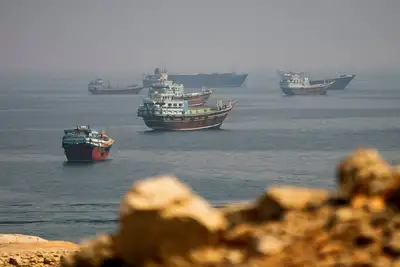
Iran attempted to seize two commercial vessels in early July in the Persian Gulf but was met with a US response and withdrew, according to the Pentagon. Tehran has harassed or seized more than 15 commercial ships in the past two years in the general area of the Persian Gulf.
Anticipating more Iranian action, the White House announced in May that the Biden administration would be making moves in the region, but at the time did not say what they would include.
Later, the Pentagon began to augment the US military presence in the region by deploying F-16 and F-35 warplanes in July and also dispatching three additional naval vessels carrying more than 3,000 sailors, including Marines.
The forces from the Bataan Amphibious Ready Group (ARG) and 26th Marine Expeditionary Unit (MEU) that sailed in mid-July from bases in the US reached the Red Sea on Monday.
Last week, the Pentagon said it is ready to offer onboard armed protection to commercial vessels in the region. Media in Tehran characterized this move as unprecedented and headlines appeared flagging higher chances of a military clash.
Ramazan Sharif in his speech underlined that “We thank the Almighty that Islamic Iran has reached such a degree of power that it is capable of confronting every American mischief, such as responding in kind and seizing their vessels.”
In April, US seized an Iranian oil tanker and in the past it has also confiscated cargos from tankers carrying sanctioned Iranian oil.
In recent months, many media reports have spoken of secret diplomatic efforts to control the tensions with Iran, including releasing Tehran’s frozen funds from countries such as Iraq and South Korea in return for a pledge by Iran not to further increase its uranium enrichment to weapons grade levels.
So far, except a US sanctions waiver to Iraq for a partial release of funds no changes have taken place. Parallel to discussions about Iran’s nuclear program, the US is also trying to secure the release of several American dual-nationals held hostage in Iran. Apparently, the release of $7 billion held in South Korea is the price for releasing the prisoners. But a new complication has emerged with reports that while talks were taking place, Tehran arrested two more individuals, bringing the total to five hostages.
Reporters on Monday pressed the State Department spokesperson Matt Miller for clarification if a fifth person has been seized, but he refused to confirm the news, which was reported by a local newspaper in Iran.
After more than two years of attempting diplomacy with the Islamic Republic, the Biden administration is coming under pressure by its critics, who demand a tougher posture toward Iran and a more vigorous enforcement of economic sanctions.