Atomic symbol, US and Iranian flags are seen in this illustration taken September 8, 2022.
A former senior Iranian lawmaker says Tehran and Washington have agreed to a non-written deal giving Iran some sanctions relief but capping its nuclear program.
Heshmatollah Falahatpisheh, the former head of the Iranian Parliament's Foreign Policy and national Security Committee who often commentates on nuclear-related issues, claimed that Tehran and Washington are willing to agree to an “unwritten deal”.
“This means that the American side will no longer enforce the ‘maximum pressure’ policy [of the Trump administration], close its eyes to some of Iran's energy deals, and [allow] the release of Iran's frozen funds in return for Iran refraining from expanding its nuclear program more than the current level,” he told Khabar Online in Tehran.
Falahatpisheh also said a return to the JCPOA is no longer desired by either of the sides because both know that it can no longer be revived.
A return to the 2015 deal, he said, will force Tehran to give up much of the advancements it has made in its nuclear program at a very high cost, that is, giving up its new and more advanced centrifuges and a stockpile of 60-percent enriched uranium, banned under the JCPOA.
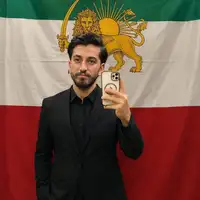
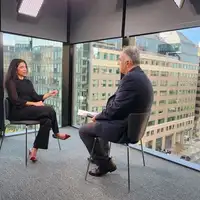
Former lawmaker Heshmatollah Falahatpisheh
Also, the pressure of public opinion in the US has made a return to the deal impossible for the Biden administration, he argued.
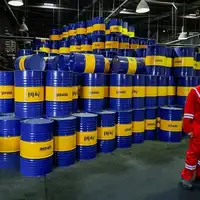
Falahatpisheh also said the US may agree to Iran selling one million barrels of oil per day.
Referring to Supreme Leader Ali Khamenei’simplicit endorsement of some kind of agreement, the moderate conservative former lawmaker told Khabar Online that Khamenei’s stance was “close to the views of moderates such as Mohammad-Javad Zarif, the former foreign minister who was the lead Iranian person in the 2015 deal.
Addressing a group of Iranian nuclear scientists and officials in Tehran Sunday, Khamenei said a deal with West can be accepted if it does not impact Iran’s nuclear infrastructure and insisted that Iran will not opt for nuclear weapons simply because of Islamic principles, “otherwise, they could not have prevented us.”
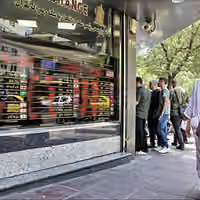
Many in Iran interpret Khamenei’s remarks as endorsement of an deal, similar to his 2013 implicit endorsement of talks that led to the signing of the JCPOA. This interpretation was reflected by a slight drop in forex rates: The dollar which stood at 490,000 rial against the rial Sunday dropped to 470,000 on Monday.
"I'm not opposed to the right diplomatic moves. I believe in what was described years ago as heroic flexibility," Khamenei said in a September 17 speech to Revolutionary Guards (IRGC) commanders.
“Heroic flexibility” in dealing with the West regarding the nuclear issue, he said, was similar to a wrestler exercising flexibility as a tactic to overcome his adversary, but insisted that Iranian diplomats had to remain faithful to the Islamic Republic’s principles. "A wrestler who exercises flexibility for a tactical reason should not forget who his rival is and what his goal is," he said.
Iran's foreign ministry spokesman, Nasser Kanaani, however, on Monday rejected speculations about an interim deal with the US. “We confirm no such thing as negotiations for an interim agreement or new arrangements to replace the nuclear deal,” he told reporters at his weekly press conference.
While confirming that Tehran and Washington had held talks in Muscat, Oman, in the past few weeks, he also denied that the talks had been held secretly as alleged by the media.
Kanaani also said Monday that Tehran and Washington could be “very close to exchanging prisoners” without giving any details.
On Saturday a senior Iraqi official was quoted as saying that his country has acquired a sanctions waiver from the US to pay $2.7 billion of its debt for gas and electricity to Iran. The release of Iranian funds in Iraq could be the price for the release of American, and possibly other western hostages, held by Iran.