Iranian Protester Dies After Attack By Agents, Thrown From Building

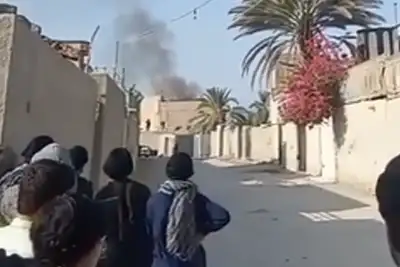
An Iranian protester thrown from the fourth floor of a building when the security agents stormed his residence last week has lost his life.

An Iranian protester thrown from the fourth floor of a building when the security agents stormed his residence last week has lost his life.
According to the information received by Iran International, Hossein Al-e Ali, a 31-year-old protester died from his injuries sustained from the brutal incident after being hospitalized for a week.
Sources close to his family say he was actively participating in the nationwide protests following the death in custody of Mahsa Amini, and lived in hiding for the last two months knowing he was wanted by the security services.
According to Iran International sources, the burial ceremony of Al-e Ali will be held on Thursday, in the Saadi Mausoleum of Shiraz south of Iran.
Al-e Ali was originally from Shiraz and lived in Bandar Abbas for the past few years working as a café owner.
Over 500 protesters including 71 children have been killed by the regime agents since mid-September. Almost 20,000 people have been arrested while the regime has so far executed four people and dozens more sentenced to death.

Many families of protesters fallen during the recent anti-government protests marked the New Year (Nowruz) at the side of the graves of their loved ones this year.
“My son was a hero. He was martyred for his country … Unity is the key to our victory,” said Zhila Khakpour in an Instagram post taken at the side of her son’s grave at Tehran’s Behesht-e Zahra cemetery on Thursday.
Zhila’s 25-year-old son, Ali Seyedi, was shot dead by security forces at a protest rally in Parand, a town 30km to the south of the capital Tehran, on November 4. In the video she posted, she felicitated Iranians for the coming of the new Iranian year and thanked them for supporting the family during their ordeal.
Jila Khakpour at her son’s grave vowing to avenge his killing.
“Everyone says they will avenge you. God willing, we will avenge the bloods of all of you. My darling, I will never let your blood to be trampled on,” she says sitting next to the grave and caressing the image of her son engraved on the stone.
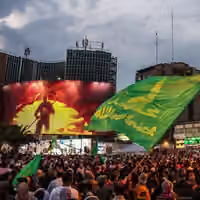
Iranians usually visit the graves of their loved ones on the last Thursday of the year. They wash the graves, adorn it with flowers and candles, and distribute sweets and fruits to those visiting the cemetery but this year the visits have continued into the holiday season with people chanting anti-government slogans and vowing to take revenge in several cases.
Local people and family marking the New Year at Mahsa Amini’s grave.
Hours before the turn of the year, a large crowd gathered at the grave of Mahsa (Jina) Amini in Saqqez in northwestern Iran. The twenty-two-year-old’s death in the custody of the morality police on September 16 sparked a wave of protests across the country that lasted for months.
Videos posted on social media show participants in the ceremony bearing torches and flowers to her grave, singing Kurdish mourning songs and stamping their feet.
People chanting “Down with the Dictator” at the grave of young chef, Mehrshad Shahidi in Arak
In photos widely shared on social media, a little girl Bavan is seen standing at her mother’s grave in Mahabad at Nowruz. The young woman, Fereshteh Ahmadi, was shot in Mahabad on the roof of her house while watching the protests with her little girl. Her grave, like many others in Kurdish areas of Iran, is draped in red tulle and is adorned with red flowers to show that she was martyred.
Some other photos posted on social media show the friends and classmates of the ten-year-old Kian Pourfalak at the side of his grave thousands of kilometers away, in Izeh in southwest Iran, shortly before the turn of the year Monday.
Kian was shot by plainclothesmen in the family car in November during a night of protests in Izeh. His father, Meysam Pirfalk has been confined to a wheelchair after months of hospitalization and several surgeries but his mother, Zeynab Molaei-Rad and his three-year-old brother Radin were unharmed in the attack.
People in Izeh chanting against Khamenei and IRGC at the grave of Kian Pourfalak before the turn of the year.
The government has arrested several citizens it accuses of “terrorism” for the shooting, but Zeynab insists it was the security forces that killed her son. In a fiery speech at her son’s burial, she said she had no doubt about who had shot her family and implicitly accused Supreme Leader Ali Khamenei of responsibility for her young son’s killing.
There were dozens of children and teenagers among the over 500 killed during the protests across Iran, either as protesters or bystanders. The deaths of the children caused protesters to dub the regime as “child-killer”.

A prominent centrist politician in Iran says at least 75 percent of the population is unhappy about the government's performance and the prevailing situation.
Saying this, Executives of Construction Party leader Hossein Marashi told the party's newspaper Sazandegi that "If dissidents decide to take to the streets, no one can stop them."
Marashi's remarks corroborates the statements of several other Iranian politicians as well as the results of many studies since September when the nationwide protests started and continued relentlessly for over four months, with occasional flare-ups in recent weeks.
Opinion surveys and commentators say that Iranians are unhappy because of the deep economic crisis, lack of social freedoms and no opportunity to shape elections.
Marashi warned that his party will not take part in any elections as long as the government does not acknowledge the need for true reforms. He added that the Islamic republic should not merely rely on its staunch supporters. It should instead garner support from the majority of Iranians.
He said elections under current circumstances cannot bring about reforms. The government should attach more priority to reforming the election process.

The politician was referring to the last two elections in 2020 and 2021 when most candidates were barred from running and only selected loyalists were allowed to register.
Meanwhile, Marashi admitted that reformists and moderates did harm to the country by insisting on former President Hassan Rouhani's re-election in the 2017 without demanding his full commitment to reforms.
Several studies in the past months, including one that was conducted by the National Security Monitor Magazine said that most Iranians wanted a change in governance. The magazine's research also concluded that the government's interference in social and cultural matters such as women's dress code and lifestyle will increase people’s distrust in the government.
Another study conducted in December 2022 revealed very similar attitudes between those in the country and abroad. “In response to the question “Islamic Republic: Yes or No?” 81% of respondents inside the country responded “No” to the Islamic Republic, 15% responded “Yes,” and 4% were not sure. Of the Iranian respondents abroad, 99% responded “No,” opting against the Islamic Republic,” the Netherlands-based GAMAAN Polling Agency reported.
While the political impasse inside Iran and the international diplomatic deadlock over Tehran's nuclear program continue, inflation and prices have been rising causing further dissatisfaction. According to Etemad Online, the price of ghee has a had a 288 percent increase and beef rose by 133 percent between March 2022 and March 2023.
The report by Etemad Onlie also showed a 125% rise in the price of lamb meat, while the price of onions had a 250% hike during the same period. Other prices rose as 82% for eggs, 89% for fish, 78% for rice and cheese.
This comes while the authorities and representatives of government-controlled labor unions reached an agreement on minimum wages for the new that started March 21, giving just a 28-percent raise while inflation is well above 50 percent.

Iran’s foreign ministry said Tuesday that European Union and British sanctions announced Monday were intended to divert attention from serious problems in Europe.
The EU Monday imposed a new package of sanctions against Iran in response to human rights violations, adding eight individuals and one entity to its list of designations.
"In particular, the Council is sanctioning members of the judiciary responsible for handing down death sentences in unfair trials, and for the torturing of convicts," the EU said in a statement.
Foreign ministry spokesman Nasser Kanaani was quoted by the official IRNA news agency as saying that Europe “instead of intervening in the internal affairs of others should avoid violent behavior and crackdown on protesters,” referring to protests in France.
Kanaani has been regularly criticizing France for alleged violations of human rights against its citizens, saying it uses violent methods against protesters.
The United States, European Union and individual European countries have imposed several rounds of sanctions against institutions and individuals carrying out rights violations against antigovernment protesters and arresting people for simply voicing support for the Woman, Life Freedom movement.
Around 500 civilians were killed by Iran’s security forces in the first five months of the protests that began in September after Mahsa Amini, a young woman was killed in the custody of the notorious ‘hijab police.’
Kanaani, calling Western sanctions “illegal and illogical” threatened retaliation, saying Iran reserves the right to “respond” to sanctions.

Messages by foreign officials and Iranian activists to mark Nowruz, the Persian new year, are mainly addressed to women in Iran who are leading antiregime protests since September.
US President Joe Biden and First Lady Jill Biden hosted a ceremony at the White House for the occasion on Monday and issued a statement that acknowledged Iranians' revolt for freedom.
“This year, Nowruz comes at a difficult time for many families, when hope is needed more than ever—including for the women of Iran who are fighting for their human rights and fundamental freedoms,” the Bidens said, vowing that Washington would “stand with them, and all the citizens of Iran who are inspiring the world with their conviction and courage.”
“And together with our partners, we will continue to hold Iranian officials accountable for their attacks against their people,” the statement added. President Biden said, “It’s the start of a new year that reminds us of the hope that lies ahead – even in the darkest of times.”
Secretary Of State Antony J. Blinken also decried the “brutal crackdown at the hands of the Islamic Republic," noting that “Many families face an empty chair at their Nowruz table this year, as friends and family members have been killed or detained by Iranian authorities.”
Member of the European Parliament Charlie Weimers, who has been very active to garner European leaders’ support for the protests in Iran, issued a video message wishing that “light truly overcomes darkness,” in reference to popular movement against the Islamic Republic.
Exactly at 54 minutes, 28 seconds past midnight Tehran time on March 21, the ancient Nowruz festivities began, but this year many families are bitter over the loss of a loved one or distressed by the imprisonment of a relative. Immediately after the turn of the year, many Iranians chanted slogans against the regime and its leaders with activists and celebrities releasing Nowruz messages that wished for an end to the Islamic Republic this year.
Many Iranians put pictures of those killed during the anti-regime protests and colored eggs with “Woman, Life, Freedom” slogan in their “Haft-Seen” tables. According to videos on social media, people held gatherings to keep the flame of protests burning in many cities, including Kurdish-majority city of Sanandaj, Mahabad, Bukan and Piranshahr in West Azarbaijan province, and Saqqez, the hometown of Mahsa “Jina” Amini, whose death in police custody ignited the nationwide rallies.
Prominent dissident figures, such as exiled prince Reza Pahlavi, Nobel Laureate Shirin Ebadi, Sunni leader Mowlavi Abdolhamid and footballer-turned-activist Ali Karimi as well as Canada-based activist Hamed Esmaeilion also talked about the political upheaval in the country, reiterating their demands for justice and calls for regime change.
"I congratulate the proud nation of Iran on the arrival of the new year. I hope that in the new year, poverty, injustice and discrimination will disappear from the country, political prisoners will be released and the noble nation of Iran will regain its rightful place in the world and achieve its rightful demands,” Abdolhamid tweeted.
In his video message addressed to the people of Iran, Pahlavi said, "In this year, you created an epic in the name of women, in the name of life and in the name of freedom against one of the most oppressive regimes in history... you made the world admire your courage and greatness.”
Several human rights groups, including Amnesty International, echoed the sentiment, issuing messages in honor of those who were killed or arrested during their fights against the violations by the Islamic Republic.

Iran's authorities have committed violations in recent months that may amount to crimes against humanity, a UN expert told the Human Rights Council on Monday.
Javaid Rehman, Special Rapporteur on the situation of human rights in the Islamic Republic of Iran cited cases of murder, imprisonment, enforced disappearances, torture, rape, sexual violence and persecution.
Iran has been swept by protests since the death of a young Iranian Kurdish woman, Mahsa Amini, in custody last September. The authorities used deadly force against protesters, killing around 500 people, injuring thousands and arresting more than 20,000 others.
Addressing the Geneva-based council, , Rehman said he had evidence that Amini died "as a result of beatings by the state morality police".
Iran's state coroner has said Amini died from pre-existing medical conditions, not blows to the head and limbs, but hospital records leaked to the media included x-rays showing severe trauma to the head.
Rehman added that the scale and gravity of crimes committed by authorities as part of a broader crackdown against protests following her death "points to the possible commission of international crimes, notably the crimes against humanity".
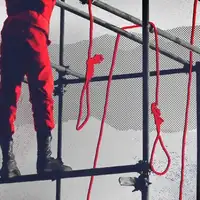
He voiced outrage at the execution of at least four people linked to the protests and said that a total of 143 people had been executed in the country since January following "grossly unfair trials".
Iran's Ambassador Ali Bahreini told the Geneva-based council that the allegations were imaginary and Iran was being singled out and targeted in the council.
Reporting by Reuters