Schools To Remove Khamenei’s Portraits As Students Tear Them Down
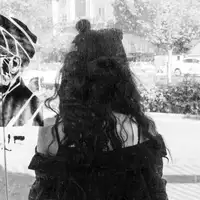
A schoolgirl pulling down a photo of Iran’s current and former rulers
Amid nationwide protests that have even mobilized Iranian high school students, the Islamic Republic authorities are removing photos of the Supreme Leader in fear of being torn or damaged.
According to an article in Ham-Mihan daily on Saturday, school principles were ordered to remove Ali Khamenei’s portraits, and the pictures of the founder of the Islamic Republic Ruhollah Khomeini, hanging in classrooms in all the schools in Iran.
The decision was made after numerous videos surfaced on social media showing students tearing down the photos or replacing them with antigovernment slogans or photos of Mahsa Amini, the 22-year-old woman whose death in the custody of hijab police sparked the current uprising against the clerical regime.
According to the report, Basij paramilitary forces have assumed a more active role in the management of schools, and many principals have been summoned or fired due to their lack of harsh reactions to protesting students.
Outraged by government violence against schoolgirls, people in the northwestern city of Ardabil took to streets on Saturday to protest violence by security forces against their children.
Based on information received by Iran International, school officials tried to force the students to sing a song, “Hello Commander” in praise of Iran’s ruler Ali Khamenei. Some students refused and then government agents showed up, beating and assaulting the girls. One student reportedly died of her injuries, and another one is hospitalized in critical condition, with reports of several arrests.
US Special Envoy for Iran Robert Malley has expressed concern about the use of live ammunition by the Islamic Republic’s security forces against the protesters across the country.
In a tweet on Saturday, Malley said, “Sadly, but unsurprisingly, Iran’s government continues to fire on peaceful protestors rather than listening to them.”
Referring to a meeting civil society activists on women’s rights in Iran on Friday, he said that “We had a valuable conversation with human rights activists on the situation in Iran and steps the US can take to support its people’s fundamental rights.”
US President Joe Biden and his top officials in a flurry of meetings and statements on Friday pledged support to Iranians protesting for their basic rights as the protests are entering the second month since they started following the death in custody of 22-year-old Mahsa Amini.
Joe Biden, visiting a college in Irvine, California said he is “stunned” by the popular protests and that the US stands with Iran’s “brave women”.
Vice President Kamala Harris, US National Security Adviser Jake Sullivan and Secretary of State Antony Blinken in Washington DC also met separately with Iranian civil society activists based abroad, earlier in the day.
Three Iranian women led by Nazanin Boniadi, an Iranian-born British actress and activist, met with Blinken and other State Department officials to discuss how the United States can support Iranians who have been protesting for more than four weeks.
As anger has risen among Iranians over an attack on students in a high school for girls this week, fresh nationwide protests began on Saturday around noon.
The government has shut off all mobile internet access since Saturday morning in anticipation of large demonstrations, especially in the northwest, among Azari-speaking Iranians who have been outraged by government violence against schoolgirls in Ardabil, with a majority of Azaris.
Based on information received by Iran International, school officials tried to force the students to sing a song, “Hello Commander” in praise of Iran’s ruler Ali Khamenei. Some students refused and then government agents showed up, beating and assaulting the girls. One student reportedly died of her injuries.
Unrest has continued every day, including Friday, with protests in several cities, but today’s protests are expected to be larger and more widespread.
Despite the Internet disruption in Iran, news and videos have started trickling out of the country and we follow the situation closely and will update readers throughout the day.
Below we posted news and videos as we received them and tried to verify their authenticity.
Our Live Coverage that began at 13:30 local time on Saturday, ended at 00:42 on Sunday.
Residents from Tehran's southern neighborhood of Nazi Abad are still out on the streets chanting antigovernment slogans, while many women who observe the Islamic dress code – or hijab – by choice are seen among the protesters.
The woman in this photo is carrying a banner vowing to get Iran back from the Islamic regime.
In some parts of the city Ahvaz people are still holding gatherings and chanting slogans against the Islamic Republic while a lot of people in their cars are expressing their support with long honks.
Local sources from the Khuzestan province have reported intense fighting between the agents of the regime and people in the oil-rich city of Masjedsoleyman and the city of Lali. Mobile internet networks in Khuzestan are shut down and landline internet is very weak.
In Hamedan, people are seen throwing stones at the security forces, a rare scene for the city whose citizens have usually been among the last to join the antigovernment protests during the past few years.
In the central city of Yazd, security forces are directly shooting at protesters while several neighborhoods of the city were covered by the teargas shot to disperse the protesters.
The Kurdish majority city of Kermanshah was also a scene of protests on Saturday night, with some reports that claimed the streets were in control of the demonstrators.
Videos coming from the city of Ardabil show desperate riot police forces who have resorted to every conceivable measure but are still unable to control the crowds of people, outraged over the death of a teenage girl who was killed a few days ago.
A small group of protesters chanting slogans in front of a shopping arcade in downtown Tehran. Social media reports say security forces and plainclothes agents are present in large numbers in all areas they suspect protests may erupt.
Hardliner news agencies publish video of an interview with the uncle of another young girl who was reportedly beaten to death by Basij militias inside her school in Ardabil Wednesday. He says she has died of a congenital heart condition at home.
Further footage from protests in Ardabil today shows riot police armoured vehicle trying to run over a protester and riot police police kicking the closed shutters of a shop.
Sporadic clashes are reported from Ardabil, where people are attacking security forces a day after after plainclothes forces killed a schoolgirl and injured several others in a raid on their high school. Iranian authorities have denied reports about the death of the student, identified as Asra Panahi, saying she died due to heart failure.
Students at Shariati Technical and Vocational College held a gathering, removed their compulsory head covers and chanted slogans, calling for others to join them.
Female students at Tehran’s University of Science and Culture have unveiled at the campus in defiance of warnings by the university's authorities, chanting slogans for freedom.
Students at Tehran’s Allameh Tabatabai University interrupted an address by one of the authorities of the university who was threatening students with expulsion and warning them against protests at the campus with boos and slogans.
Another video from Ardabil which shows protesters chanting "Down with the Dictator" where girls in a secondary school were beaten up and arrested for refusing to sing a government propaganda song on Wednesday.
Students at Tehran's Science and Technology University are chanting in support of protesters in Kordestan and Sistan and Baluchestan provinces where security forces have used the most violence and killed many.
People have taken to the street in Ardabil, capital of northwestern Ardabil province, where girls in the secondary school were beaten up for refusing to sing the government propaganda song on Wednesday. One of the girls reportedly died in hospital later.
Protesters are chasing the security forces and chanting "Scoundrels, Scoundrels" at them.
Former US President Barack Obama has admitted that he made "a mistake" by not supporting the Iranian people's 2009 Green Movement against the Islamic Republic.
Speaking during a podcast on Friday, he described the lack of public support for the 2009 protests as a missed opportunity to back the democratic aspirations of the Iranian people, saying, "In retrospect, I think that was a mistake. Every time we see a flash, a glimmer of hope, of people longing for freedom, I think we have to point it out. We have to shine a spotlight on it. We have to express some solidarity about it.”
“There is deep dissatisfaction with the Iranian regime,” he said, adding that women in particular are chafing under a series of arbitrary and cruel discrimination exercised by the state in addition to the systematic subjugation of women, which has made them fed up and tired of the regime.
Obama said that whether the current uprising – ignited by the death in custody of 22-year-old Mahsa Amini – “ends up bringing about fundamental change in the regime is hard to predict.”
He explained that back in 2009 and 2010, “there was a big debate inside the White House about whether I should publicly affirm what was going on with the Green Movement because a lot of the activists were being accused of being tools of the West, and there was some thought that we were somehow going to be undermining their street cred in Iran if I supported what they were doing.”
Obama noted that “our moral response to the incredible courage that is taking place in Iran and those women and girls who are on the streets knowing that they’re putting themselves in harm’s way to speak truth to power” is “to affirm what they do and hope that it brings about more space for the kind of civic conversation that over time can take that country down a better path.”
Iran’s Foreign Minister Hossein Amir-Abdollahian has threatened to retaliate if the European Union imposes further sanctions on the country because of crackdown on protests.
In a phone call with Portuguese Minister of Foreign Affairs João Gomes Cravinho, Amir-Abdollahian criticized the “interventionist” statements and measures by other countries, saying that they provoke people and instigate unrest in Iran.
He claimed that some countries consider “riots and terrorist activities” as a form of protest, denouncing the move by European countries that put the issue of additional resolutions or sanctions on the agenda of the upcoming meeting of the Council of Ministers of the European Union.
Despite numerous reports by the Ukrainian military about the use of the Iranian drones by the Russian forces, Amir-Abdollahian repeated claims that “The Islamic Republic of Iran has not and will not provide any weapon to be used in the Ukraine war.”
According to unconfirmed reports, the EU is set to sanction four entities and 11 high-ranking Iranian military and security officials for their roles in the repression of the uprising, ignited by the death in custody of 22-year-old Mahsa Amini.
During a phone conversation with Amir-Abdollahian on Friday, EU Foreign Policy Chief Josep Borrell urged the Islamic Republic to stop the repression of protesters and to release those detained since the uprising began in mid-September.
A senior EU official said Friday that the EU foreign ministers will meet in Luxembourg on Monday also to discuss the transfer of Iranian drones to Russia, noting that the ministers will not take any decisions on additional Iran sanctions but could reach a political agreement on future sanctions linked to a transfer of drones.
Despite reports that Tehran is sending out letters to EU diplomats, claiming that "bilateral relations may not survive" as the EU moves to penalize Iran for killing protesters, the uprising is garnering more and more support among Western government officials and politicians.
US President Joe Biden and his top officials in a flurry of meetings and statements on Friday pledged support to Iranians protesting for their basic rights.
Joe Biden, visiting a college in Irvine, California said he is “stunned” by the popular protests and that the US stands with Iran’s “brave women”.
As a group of protesters were standing with “Free Iran” signs, the President said, “I want you to know that we stand with the citizens, the brave women of Iran.” He continued, “It stunned me what it awakened in Iran. It awakened something that I don’t think will be quieted for a long, long time.”
Vice President Kamala Harris, US National Security Adviser Jake Sullivan and Secretary of State Antony Blinken in Washington DC also met separately with Iranian civil society activists based abroad, earlier in the day.
Three Iranian women led by Nazanin Boniadi, an Iranian-born British actress and activist, met with Blinken and other State Department officials to discuss how the United States can support Iranians who have been protesting for more than four weeks.
After the meeting, Blinken tweeted, “Today, I met with civil society partners to discuss what more the U.S. can do to support the people of Iran, particularly its brave women and girls.”
Boniadi in reply tweeted, “I am encouraged by your openness to hearing the democratic aspirations of the people of Iran and we look forward to engaging on next steps to support Iranian civil society to that end.”
The Biden Administration had focused on reviving the Obama-era nuclear deal known as the JCPOA since assuming office, but almost 18 months of indirect talks with Tehran failed to produce an agreement when the protests began in mid-September after Mahsa Amini, a young woman was killed in ‘morality’ police custody.
Iranians living abroad, particularly in the United States were outraged and began to campaign for world attention to Amini’s case, which symbolized the degree of human rights abuses perpetrated by the Islamic Republic’s clerical-military regime. Mahsa Amini’s hashtag on Twitter quickly took off as no other issue before, reaching hundreds of millions of responses.
The administration’s first response was relatively quick, sanctioning Iran’s ‘morality police’ and listing seven senior officials one week after Amini’s death and a few days after large protests broke out. It also moved to ease restrictions on Internet-related technology for Iranians as the government often shut off access to control flow of information about the protests.
But a question lingered in the minds of many Iranians about the administration’s policy to return to the nuclear deal that former President Donald Trump had abandoned in 2018 and imposed heavy economic sanctions on Tehran. Although talks are in deadlock, a potential new deal would release tens of billions of dollars to the authoritarian government that it can use to suppress its people, particularly women.
The administration came up with a new position this week, saying it is not “focused” on reviving the JCPOA, and its attention is on the protests. Friday’s meetings with Iranian activists followed that apparent shift in its Iran policy.
But many Iranians have been demanding a clear break with the nuclear talksthat would forestall any lifting of sanctions and release of billions of dollars in frozen Iranian funds in foreign banks.