Second Israeli Air Strike In A Week Damages Aleppo Airport

An Israeli air attack on Syria's Aleppo airport Tuesday has damaged the runway and taken it out of service, Syrian state media quoted a military source as saying.

An Israeli air attack on Syria's Aleppo airport Tuesday has damaged the runway and taken it out of service, Syrian state media quoted a military source as saying.
The Israel missile attack was launched from the Mediterranean Sea, west of the coastal city of Latakia, at 8:16 p.m. local time (1716 GMT), the source said.
Syrian air defences intercepted Israeli missiles, downing several of them, the Syrian state news agency (SANA) claimed earlier on Tuesday.
It was the second reported attack in less than week. On August 31, Israel fired rockets at the airport, which resulted in material damage, according to Syrian state media.
Israel has intensified strikes on Syrian airports to disrupt Tehran's increasing use of aerial supply lines to deliver arms to allies in Syria and Lebanon including Hezbollah, regional diplomatic and intelligence sources told Reuters.
The Ukraine war and Russia’s distraction has given a freer hand to Israel to attack targets in Syria. Since mid-2017, Israel has launched hundreds of air strikes against Iranian arms supplies and positions.
Tehran has adopted air transport as a more reliable means of ferrying military equipment to its forces and allied fighters in Syria, following disruptions to ground transfers.
Last week's attack damaged Aleppo airport just before the arrival of a plane from Iran, a commander in an Iran-backed regional alliance who was familiar with the incident told Reuters.

Israel’s president has addressed the German parliament, urging the legislators to stop the looming deal with Iran that threatens Israel and denies the Holocaust.
During his speech in the Bundestag on Tuesday, Isaac Herzog called the Islamic Republic “ineligible for concessions, under any circumstances,” and warned of “dark forces of hate, led by Iran” that threatens both Israel and stability in the Middle East, calling on the international community to stand on the “right side of history.”
Iran is behind “radical forces sowing terror, grief and devastation and seeking to menace everyone in the world,” he added, saying, “The possession of weapons of mass destruction by a UN member state that calls on a daily basis for the annihilation of another UN member state is simply inconceivable. Threats and endeavors to annihilate Israel are inconceivable.”
Following his meeting with German President Frank-Walter Steinmeier in Berlin, Herzog said “Iran is openly striving for Israel’s destruction, and the international community must treat it severely, firmly and assertively. Toothless and watered-down accords and sweeping benefits will not stop Iran.”
Reiterating that Iran “has proven that it cannot be trusted,” he said that Israel “will stand up and assertively and powerfully defend its citizens and Jewish communities all around the world. We expect our allies to stand firmly by our side at this hour.”
Germany is one of the main world powers currently negotiating the revival of the 2015 nuclear deal as an agreement is seen likely in the next few weeks despite persistent gaps between Tehran and Washington.

US Ambassador to Israel Thomas Nides said Monday that President Joe Biden has assured Prime Minister Yair Lapid that Washington will never tie Israel’s hands against Iran.
Reiterating the pledge to stop the Islamic Republic from acquiring nuclear weapons, Nides said at a press conference in Jerusalem that “We understand the aggression of Iran,” adding that “[Biden] was very clear to the prime minister in that belief.”
“We also would like a diplomatic solution, but only under the conditions the president has laid out with our European colleagues. There are many gaps and conditions that have to be reached before we would actually agree to an agreement,” Nides said.
He made the remarks as a congressional delegation, including Robert Menendez, the chairman of the Senate Committee on Foreign Relations, is visiting Jerusalem. Menendez told a press conference that Biden has pledged to submit any agreement on Iran’s nuclear program to Congress for review.
He added that a review would be conducted by his committee and that there would be a vote on such a deal, noting that he was unsure if the outcome of that vote “would meet the threshold under the law to nullify the agreement.”
Republican Senator Lindsey Graham of South Carolina, also part of the congressional group, said the delegation was briefed by Mossad chief David Barnea, who will be in Washington this week to attend closed-door classified meetings of House and Senate intelligence committees.
“The Mossad leader’s trip to the US will focus on tightening security and intelligence coordination with the Americans surrounding the Iranian nuclear issue,” read a Sunday statement from Lapid’s office.

Iran’s Revolutionary Guard (IRGC) navy has added three new military vessels to its fleet including a patrol combat warship named after Qasem Soleimani, killed by a targeted US air strike in 2020.
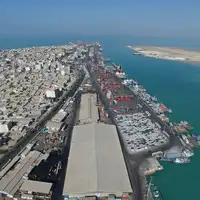
Addressing the unveiling ceremony in the southern Iranian port city of Bandar Abbas on Monday, Major General Mohammad Bagheri, Iran's chief of staff for the Armed Forces, said the Soleimani patrol combat warship is a multi-hulled watercraft that can carry choppers and can unload strike speedboats and vertical take-off and landing (VTOL) drones, adding that it is the first Iranian military vessel equipped with air defense missiles with a vertical launching system that can fire mid- and short-range missiles.
He claimed that the hull of Shahid Soleimani-class missile corvette is made with radar-evading stealth technology construction techniques, meaning that it has a very low level of radar cross-section thanks to its shape.
In addition to Bagheri, the IRGC Chief Commander Major General Hossein Salami, Commander of the IRGC Navy Rear Admiral Alireza Tangsiri and a number of other high-ranking military officials, commanders and state officials attended the ceremony.
The IRGC Navy also delivered Shahid Rouhi and Shahid Dara high-speed and missile-launching assault boats.


In July, the United States Naval Institute published satellite photos showing that Iran was constructing new stealth missile boats on the island of Qeshm in the Strait of Hormuz in the Persian Gulf.
On Sunday, two surface-to-surface missile launchers, one logistic vessel and one Ghadir-class submarine were added to the South Fleet of the Iranian Army Navy of the country.

The Commander of the Iranian Army’s Air Force has confirmed that the Islamic Republic is seeking to purchase Sukhoi Su-35 fighter jets from Russia.
Brigadier General Hamid Vahedi said on Monday that buying Su-35s is on the agenda of the Air Force but the country has no plans to buy Sukhoi Su-30s, both developed from Sukhoi Su-27 which was a Soviet-origin twin-engine supermaneuverable fighter aircraft. Su-35 is single-seat but Su-30 is a two-seat, multi-role fighter.
According to reports, the Army’s Air Force needs at least 64 aircraft, 24 of which will come from Egypt's order which remained undelivered due to US pressure on Cairo.
Tehran-Moscow deals for drones, satellites and other aviation equipment have been increasing in recent months. Russia not only launched a satellite for Iran in August, but its personnel were also reportedly sent to train on Iranian military drones to use in Ukraine.
As tensions remain high between Washington and Tehran, the United States military said earlier in the day that it flew a pair of nuclear-capable B-52 long-distance bombers over the Middle East in a show of force, the latest such mission in the region as tensions remain high between Washington and Tehran.
The bombers took off from the Royal Air Force base at Fairford, England, and flew over the eastern Mediterranean, the Arabian Peninsula and the Red Sea on Sunday in training missions together with Kuwaiti and Saudi warplanes. Three Israeli F-16 fighter jets accompanied the American bombers “through Israel’s skies on their way to the Persian Gulf,” the Israeli military said, describing the country’s cooperation with the US military as key to “maintaining aerial security in Israel and the Middle East.”

Iran's most senior military commander says the "enemies" endanger the safety of navigation by launching and sending small unmanned reconnaissance maritime drones.
Major General Mohammad Bagheri, the chief of staff for the Armed Forces of the Islamic Republic, made the remarks on Monday referring to a series of encounters between Iranian and United States naval forces last week.
"Enemies are trying to compensate for the reduction of force in the Middle East by creating new units," he said, adding that “They endanger maritime security by dispatching small unmanned surveillance drones, but the armed forces' response to vessels wandering in open waters will be decisive."
He also criticized Israel joining the United States Central Command (CENTCOM), calling it a ‘threat’ for Iran. “We do not tolerate the presence of the Zionist regime," Bagheri said, noting that "We will not make any compromises regarding the rights of the Iranian nation and the security of our seas and lands,"
Iran seized and released two American sea drones in the Red Sea on Friday. Later in the day, US officials reported that Iran returned the two captured maritime drones after being confronted by US destroyers but the unmanned vessels were missing their cameras.
On Tuesday, the US Naval Forces Central Command said that the US Navy prevented a support ship from Iran’s Revolutionary Guard’s Navy -- named Shahid Baziar -- from capturing an unmanned vessel operated by the US 5th Fleet in the Persian Gulf.
Iran’s tough military tone is coupled with its hardening of diplomatic posture in the ongoing talks to revive the 2015 nuclear agreement, the JCPOA.