• العربية
  • فارسی
Brand
  • Iran Insight
  • Politics
  • Economy
  • Analysis
  • Special Report
  • Opinion
  • Podcast
  • Live TV
  • Iran Insight
  • Politics
  • Economy
  • Analysis
  • Special Report
  • Opinion
  • Podcast
  • Live TV
  • Theme
  • Language
    • العربية
    • فارسی
  • Iran Insight
  • Politics
  • Economy
  • Analysis
  • Special Report
  • Opinion
  • Podcast
  • Live TV
All rights reserved for Volant Media UK Limited
volant media logo

Sandstorm, Air Pollution Shut Down Tehran And Several Other Cities

Jul 4, 2022, 14:36 GMT+1
Tehran air pollution

Sandstorms and dangerously polluted air led to the closure of schools and some government offices in Iran’s capital Tehran as well as several other cities across the country on Monday. 

Abed Maleki, a senior member of the city’s governor-general’s office, announced the closures Sunday evening, and cautioned vulnerable residents to take precautions. Banks and the Tehran Stock Exchange would remain open, he added. 

According to reports, several cities from the North Khorasan province to the southwestern Khuzestan province are also shut down, with many citizens decrying the government’s discrimination in announcing the closures. The level of pollution is much higher in eastern and southern cities but the government rarely shuts down schools and businesses. 

Tehran was logged as the most polluted city in the world in April with air quality hazardous and visibility very low largely due to the very high level of airborne particles. The capital’s pollution is mainly blamed on poor government policies, desertification and low water levels, as well as climate change that has intensified sandstorms.

Since mid-March, massive dust storms have hit various parts of the country, causing a health crisis that has forced the government to shut down schools and government offices in some cities and cancel outdoor sporting events on multiple occasions. 

Dust storms, originating in both Iran and neighboring countries, have also increased markedly in recent years in several Iranian provinces, notably Khuzestan, Kermanshah, and Sistan-Baluchestan. 

Moreover, the usage of highly polluting diesel and mazut fuels in power plants jumped in Iran in 2021 on top of increases in previous years.


Most Viewed

Why Trump said no to Iran’s Hormuz proposal
1
ANALYSIS

Why Trump said no to Iran’s Hormuz proposal

2

Hormuz oil flows rise despite Iran threats against shipping

3

UAE outmaneuvers Iran’s Hormuz strategy, state TV analysts say

4

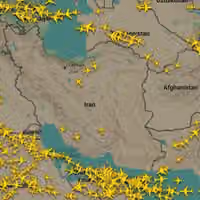
Iran’s shrinking air links raise costs, strain regional ties

5

Iran’s rial hits another record low under economic and military pressure

Banner
Banner

Spotlight

  • Iran’s shrinking air links raise costs, strain regional ties

    Iran’s shrinking air links raise costs, strain regional ties

  • Why Trump said no to Iran’s Hormuz proposal
    ANALYSIS

    Why Trump said no to Iran’s Hormuz proposal

  • Iran’s oil industry has too many masters
    OPINION

    Iran’s oil industry has too many masters

  • Iran wrong to expect midterms to restrain Trump, former US official says

    Iran wrong to expect midterms to restrain Trump, former US official says

  • Trump may be buying time on Iran until after the midterms
    PODCAST

    Trump may be buying time on Iran until after the midterms

  • US and Iran want a deal, but neither wants to move first
    ANALYSIS

    US and Iran want a deal, but neither wants to move first

Banner
Banner