Iran's Raisi Talks About Upcoming Hard Economic Decisions

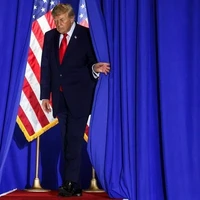
President Ebrahim Raisi spoke at length about the economy first time after protests rocked parts of the country in response to government raising food prices.
President Ebrahim Raisi spoke at length about the economy first time after protests rocked parts of the country in response to government raising food prices.
The official news agency IRNA reported on Saturday, May 21, that “Hundreds of experts and businessmen took part in the gathering” the agency called “the first international privatization event in Iran.”
Speaking at the event, Raisi did not mention last week’s protests or the security forces violent treatment of protesters particularly in Iran’s western provinces. However, as economic journalist Maryam Shokrani has observed, he emphasized “hard decisions to be made which some people may not agree with.”
Raisi also focused on the controversial issue of privatization in Iran and opined that “Privatization does not mean abandoning industrial units. It is the beginning of the government’s supervision on privatized companies.”
The Islamic Republic’s government, religious institutions and the Revolutionary Guard (IRGC) directly or indirectly own 80 percent of the economy, amid nepotism and corruption which has led to paralyzing mismanagement.
For the past 15 years successive governments have talked about privatization, but with a fearsome security apparatus and with power concentrated in the hands of insiders, only they have been able to benefit from the sell-off of government assets.
During the past years, hundreds of workers of privatized companies, particularly in Khuzestan and in the Central Province, protested to the privatization process that has handed over many government companies to well-connected but often disinterested and non-expert individuals who only used the assets to take hefty loans from government banks with no intention to pay back.
Many of these companies including the Sugar Mill at Haft Tappeh and the Heavy Equipment Factory in Arak which used to be profitable in the past, are currently on the verge of bankruptcy according to their workers.
Post-revolution privatization during the past four decades has been criticized by the people, workers and businesses alike. Many believe that profitable businesses have been handed over to the IRGC which effectively owns the lion’s share of productive companies in Iran.
While Raisi said on Saturday that privatization empowers the private sector, many have often charged that the IRGC’s acquisition of companies has left little room for the private sector in Iran.
However, Raisi called for looking back and reviewing the privatization process that has taken place. He said, “fair and critical review of the past is essential and inevitable,” so that lessons could be learned, and corruption could be prevented.
Raisi spoke about motivating “non-government businesses” while the government’s intervention in the market has led to an increase in the price of essential commodities and inflation in Iran that led to protests, during which people called on Raisi and Supreme Leader Ali Khamenei to step down and chanted slogan in favor of a secular government.
In an interview published by Didban Iran website, Iranian sociologist Mohammad Reza Mahboobfar warned that the current economic situation, particularly the policy and eliminating food and fuel subsidies has already led to social problems such as an increase in crime including stealing food.
He said the protests last week raised the alarm for the statesmen that Iranian society is being divided into a majority of extremely poor people and a minority of super-rich individuals. Mahboobfar warned that what has been characterized by government officials as an “economic surgery” should be stopped at once as the widening gap between socio-economic classes has become cause for concern.
Mahboobfar warned: “Making the masses apprehensive is dangerous.”