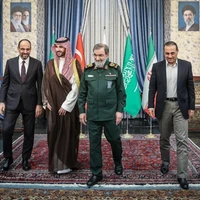
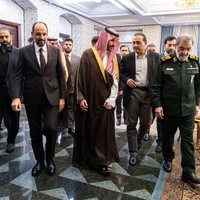
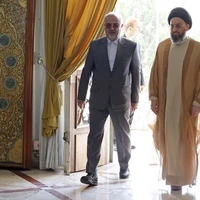
Qatar and Pakistan, two of the principal mediators between Tehran and Washington, made those demands publicly on Tuesday, just one day after Saudi, Pakistani and Turkish officials traveled to Tehran for talks.
The military and security makeup of the delegation reflected the two tracks regional powers are pursuing: diplomacy aimed at containing the conflict alongside deeper defense cooperation in case it spreads.
The parallel efforts reveal the limits of the latest diplomatic push. These countries want to prevent another round of war, but they also want changes in Iranian behavior and are preparing to protect their interests if talks produce none.
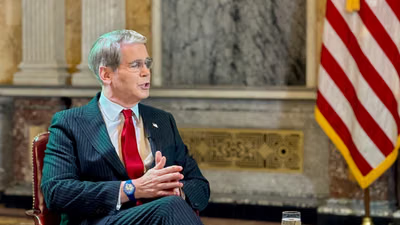
After a Qatari delegation visited Tehran earlier this week, Doha said Tuesday that Iran needed to show “good intentions” for mediation efforts to succeed.
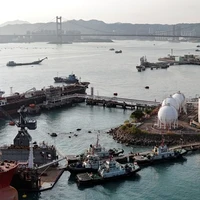
A Qatari Foreign Ministry spokesperson called on Tehran to stop threatening Persian Gulf Arab states and open the Strait of Hormuz.
Pakistan also set out what it expects of Tehran at the UN Security Council on Tuesday. Its representative pointed to the June Islamabad Memorandum of Understanding between Iran and the United States as evidence that diplomatic progress remained possible, while insisting that the International Atomic Energy Agency be allowed to operate without obstruction.
Islamabad said it continued to seek a ceasefire, reduce tensions and create conditions for renewed negotiations between Tehran and Washington.
Preparing for failure
Saudi Arabia, Pakistan and Turkey are strengthening military cooperation under the Mecca defense pact. Talks with Tehran therefore do not mean military preparations have stopped.
Houthi attacks on Saudi Arabia and insecurity along maritime routes have imposed serious costs on the kingdom and affected countries across the region and beyond. For Riyadh, de-escalation with Iran is closely linked to protecting infrastructure, trade and economic stability.
On October 23, Turkey, Egypt, Pakistan and Saudi Arabia, the R4 group, held talks with Britain, France, Germany and Italy in Istanbul. Their joint statement stressed resolving disputes through dialogue and reducing tensions.
The R4 statement emphasized diplomacy but also condemned Houthi attacks, expressed solidarity with Saudi Arabia and Yemen’s government and called for safe and unhindered passage through Hormuz. These are not the positions of countries offering Tehran unconditional support.
Before Istanbul, the possibility emerged of an informal division of labor: direct US and Israeli pressure on Iran on one track, with regional states seeking to contain the consequences of the war, particularly Houthi attacks, on another. The subsequent diplomacy does not rule that out.
Better protection for Saudi Arabia could indirectly benefit US operations, but that does not establish a coordinated strategy or secret agreement. Nor can regional states be treated as part of the same coalition as Israel.
Their opposition to expanding attacks on Iran and continued contacts with Tehran point to different objectives, even if some of their actions have complementary effects.
Two visions of security
The Tehran meeting also exposed sharply different interpretations of what regional diplomacy is intended to achieve.
Ali Bagheri, deputy secretary of Iran’s Supreme National Security Council, described the talks in terms of “endogenous security,” presenting Iran’s defense model as a basis for regional security and linking cooperation with Tehran to countering US and Israeli involvement.
Tehran is seeking to show that despite the war and pressure it faces, it remains indispensable to discussions about the region’s future. But the presence of foreign officials in Tehran does not by itself amount to endorsement of that vision.
Riyadh has emphasized de-escalation, a diplomatic solution and support for Qatari and Pakistani mediation, without suggesting either acceptance of Tehran’s security model or a reduced US role in the region.
Qatar’s latest demands suggest that regional diplomacy is not an embrace of Tehran’s position but an attempt to change its behavior while avoiding a wider war.
Pakistan’s position adds another condition: renewed diplomacy should go alongside unobstructed international oversight of Iran’s nuclear program.
Diplomacy, with limits
The Tehran talks were not an isolated attempt at mediation. Pakistan and Qatar helped secure the June Iran-US memorandum, and both have continued trying to revive negotiations.
The renewed mediation efforts amid a major US military buildup and Israeli threats show that regional countries still see space for diplomacy. But their public demands also demonstrate how far they remain from Tehran on some of the central issues driving the crisis.
The presence in Tehran of Saudi Defense Minister Khalid bin Salman carried particular weight. His previous visit was on April 17, 2025, less than two months before Israel launched its June attacks on Iran.
Regional governments are therefore trying to preserve the possibility of an Iran-US agreement without tying their security to its success. They want to contain Houthi attacks, protect Saudi Arabia and keep Hormuz open, while avoiding a wider confrontation with Iran.
That balancing act is becoming harder. Diplomacy remains active, but so do preparations for what happens if it fails.