• العربية
  • فارسی
BrandBrand
  • Iran Insight
  • Politics
  • Economy
  • Analysis
  • Special Report
  • Opinion
  • Podcast
  • Live TV
  • Iran Insight
  • Politics
  • Economy
  • Analysis
  • Special Report
  • Opinion
  • Podcast
  • Live TV
  • Theme
  • Language
    • العربية
    • فارسی
  • Iran Insight
  • Politics
  • Economy
  • Analysis
  • Special Report
  • Opinion
  • Podcast
  • Live TV
All rights reserved for Volant Media UK Limited
volant media logo

Britain expands Iran travel caution, warns of sudden threat escalation

Oct 27, 2026, 17:53 GMT+0

Britain strengthened its travel advice for Iran on Tuesday, warning of a high risk of sudden escalation in the Middle East and extending its guidance to British nationals planning to travel through the region.

In its updated advice, the UK Foreign Office described the situation as “deeply unpredictable” (previously “unpredictable”) and said the risk of sudden escalation was high, replacing earlier language about possible further attacks and unforeseen escalation.

The advisory now specifically warns that Iran has declared its intention to target US- and Israel-linked organizations, businesses, facilities and institutions, a warning absent from the previous version.

The revised guidance also refers to strikes and retaliatory attacks by “Iran and others” (previously only “Iran”) and traces the conflict to early 2026 (previously July 8).

Britain also expanded its guidance to cover British nationals planning to travel through the Middle East, rather than only those already in the region. It now warns of “airspace closures” (previously “periodic airspace closures”) and “travel disruptions” (previously “potential travel disruptions”).

Most Viewed

Bessent says Iran economy will contract by more than 25%
1
EXCLUSIVE

Bessent says Iran economy will contract by more than 25%

2

Qatar pushes for Iran deal, new US strikes remain possible

3

Oil price surge fuels Iran hardliners’ case against US deal

4
INSIGHT

'Iraq-first' message from Iran ally sparks calls for retaliation

5

Mecca defense pact members hold talks with Iran

Spotlight

  • Iran’s neighbors push diplomacy, prepare for its failure
    ANALYSIS

    Iran’s neighbors push diplomacy, prepare for its failure

  • Three members of Iranian family die within months after protest killing

    Three members of Iranian family die within months after protest killing

  • Iran talks with Mecca pact states may be ‘last chance’ before military action
    ANALYSIS

    Iran talks with Mecca pact states may be ‘last chance’ before military action

  • 'Iraq-first' message from Iran ally sparks calls for retaliation
    INSIGHT

    'Iraq-first' message from Iran ally sparks calls for retaliation

  • Oil price surge fuels Iran hardliners’ case against US deal

    Oil price surge fuels Iran hardliners’ case against US deal

Banner
Banner
Banner
Banner
Banner
•
•
•

More Stories

Two charged over alleged Iran intelligence operation at RAF Fairford

Oct 27, 2026, 17:44 GMT+0
100%
A B-1B Lancer bomber arrives at RAF Fairford airbase, after police declared a major incident at the base and arrested several men on suspicion of offences under the Explosives Act, who have since been released on bail, in Fairford, Gloucestershire, Britain, September 29, 2026.

Two men appeared in a London court on Tuesday over an incident at a British air base used by US bombers to strike Iran, with prosecutors alleging that one of them sought to assist Iranian intelligence.

British national Mohmed Abdulkarim, 24, and Nouman Essghir, a 24-year-old dual British-Iranian national, appeared at Westminster Magistrates’ Court on charges under Britain's National Security Act.

RAF Fairford in southwest England had been used by US bombers carrying out strikes on Iran. The aircraft were withdrawn on security grounds shortly after five British men were arrested outside the base in the early hours of September 27.

Prosecutors said Abdulkarim arranged for five men to travel to the base in three vans at the request of a man identified only as “Ali.”

The group bought around £300 ($400) worth of petrol and stored it in drums, prosecutor Louise Gray told the court.

“One of them was told there was a bomb in the van,” Gray said. One of the men then called the emergency services, prompting police to arrive.

Abdulkarim, who appeared in court in a wheelchair, is charged with engaging in conduct likely to materially assist a foreign intelligence service between August 31 and September 28.

Reconnaissance of US-used base

Essghir was first arrested outside RAF Fairford on September 27 and is accused of entering a prohibited place for a purpose prejudicial to the United Kingdom on August 22.

Prosecutors said he had carried out reconnaissance of the base in August on instructions from “Ali” and was also in one of the vans that returned to Fairford the following month.

After the men were told there was a bomb in the van, Essghir messaged “Ali” asking “wtf (what the fuck) is going on,” Gray said. He received no reply.

The circumstances surrounding the September incident have remained largely unexplained and attracted international attention amid heightened concerns about the security repercussions of the US-Iran war for Western countries.

Prime Minister Andy Burnham said earlier this month that the activity at RAF Fairford was likely coordinated in Iran. Tehran's ambassador to Britain denied the allegation.

Abdulkarim was granted bail and is due to appear in court again in November, while Essghir was remanded in custody.

Police said six other people remain on bail, including four British nationals arrested outside RAF Fairford on September 27.

The decision to release suspects on bail following the incident had drawn scrutiny. Police said on Tuesday that doing so had helped investigators secure the charges against Abdulkarim and Essghir.

Iran’s neighbors push diplomacy, prepare for its failure

Oct 27, 2026, 16:42 GMT+0
•
Ata Mohamed Tabriz
100%
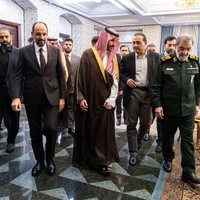
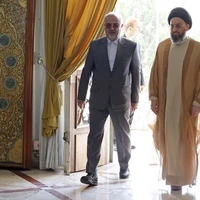
Senior officials from Iran, Turkey, Pakistan and Saudi Arabia meet in Tehran, October 26, 2026.

Regional powers are intensifying efforts to prevent a wider war with Iran, but their diplomacy comes with explicit demands of Tehran: reopen the Strait of Hormuz, stop threatening Persian Gulf states and allow international nuclear inspectors to work without obstruction.

Qatar and Pakistan, two of the principal mediators between Tehran and Washington, made those demands publicly on Tuesday, just one day after Saudi, Pakistani and Turkish officials traveled to Tehran for talks.

The military and security makeup of the delegation reflected the two tracks regional powers are pursuing: diplomacy aimed at containing the conflict alongside deeper defense cooperation in case it spreads.

The parallel efforts reveal the limits of the latest diplomatic push. These countries want to prevent another round of war, but they also want changes in Iranian behavior and are preparing to protect their interests if talks produce none.

After a Qatari delegation visited Tehran earlier this week, Doha said Tuesday that Iran needed to show “good intentions” for mediation efforts to succeed.

A Qatari Foreign Ministry spokesperson called on Tehran to stop threatening Persian Gulf Arab states and open the Strait of Hormuz.

Pakistan also set out what it expects of Tehran at the UN Security Council on Tuesday. Its representative pointed to the June Islamabad Memorandum of Understanding between Iran and the United States as evidence that diplomatic progress remained possible, while insisting that the International Atomic Energy Agency be allowed to operate without obstruction.

Islamabad said it continued to seek a ceasefire, reduce tensions and create conditions for renewed negotiations between Tehran and Washington.

Preparing for failure

Saudi Arabia, Pakistan and Turkey are strengthening military cooperation under the Mecca defense pact. Talks with Tehran therefore do not mean military preparations have stopped.

Houthi attacks on Saudi Arabia and insecurity along maritime routes have imposed serious costs on the kingdom and affected countries across the region and beyond. For Riyadh, de-escalation with Iran is closely linked to protecting infrastructure, trade and economic stability.

On October 23, Turkey, Egypt, Pakistan and Saudi Arabia, the R4 group, held talks with Britain, France, Germany and Italy in Istanbul. Their joint statement stressed resolving disputes through dialogue and reducing tensions.

The R4 statement emphasized diplomacy but also condemned Houthi attacks, expressed solidarity with Saudi Arabia and Yemen’s government and called for safe and unhindered passage through Hormuz. These are not the positions of countries offering Tehran unconditional support.

Before Istanbul, the possibility emerged of an informal division of labor: direct US and Israeli pressure on Iran on one track, with regional states seeking to contain the consequences of the war, particularly Houthi attacks, on another. The subsequent diplomacy does not rule that out.

Better protection for Saudi Arabia could indirectly benefit US operations, but that does not establish a coordinated strategy or secret agreement. Nor can regional states be treated as part of the same coalition as Israel.

Their opposition to expanding attacks on Iran and continued contacts with Tehran point to different objectives, even if some of their actions have complementary effects.

Two visions of security

The Tehran meeting also exposed sharply different interpretations of what regional diplomacy is intended to achieve.

Ali Bagheri, deputy secretary of Iran’s Supreme National Security Council, described the talks in terms of “endogenous security,” presenting Iran’s defense model as a basis for regional security and linking cooperation with Tehran to countering US and Israeli involvement.

Tehran is seeking to show that despite the war and pressure it faces, it remains indispensable to discussions about the region’s future. But the presence of foreign officials in Tehran does not by itself amount to endorsement of that vision.

Riyadh has emphasized de-escalation, a diplomatic solution and support for Qatari and Pakistani mediation, without suggesting either acceptance of Tehran’s security model or a reduced US role in the region.

Qatar’s latest demands suggest that regional diplomacy is not an embrace of Tehran’s position but an attempt to change its behavior while avoiding a wider war.

Pakistan’s position adds another condition: renewed diplomacy should go alongside unobstructed international oversight of Iran’s nuclear program.

Diplomacy, with limits

The Tehran talks were not an isolated attempt at mediation. Pakistan and Qatar helped secure the June Iran-US memorandum, and both have continued trying to revive negotiations.

The renewed mediation efforts amid a major US military buildup and Israeli threats show that regional countries still see space for diplomacy. But their public demands also demonstrate how far they remain from Tehran on some of the central issues driving the crisis.

The presence in Tehran of Saudi Defense Minister Khalid bin Salman carried particular weight. His previous visit was on April 17, 2025, less than two months before Israel launched its June attacks on Iran.

Regional governments are therefore trying to preserve the possibility of an Iran-US agreement without tying their security to its success. They want to contain Houthi attacks, protect Saudi Arabia and keep Hormuz open, while avoiding a wider confrontation with Iran.

That balancing act is becoming harder. Diplomacy remains active, but so do preparations for what happens if it fails.

Israeli exit polls point to deadlock after Iran-dominated election

Oct 27, 2026, 13:55 GMT+0
100%
An advert for an Israeli television channel that will broadcast Israel's election coverage features Israeli Prime Minister Benjamin Netanyahu and former Israeli military chief Gadi Eisenkot, leader of the Yashar party, ahead of Israel's national election, on a bridge in Tel Aviv, Israel, October 21, 2026.

Voting in Israel's election was drawing to a close Tuesday, with Iran a central issue and turnout reaching its highest level at this stage since 1988.

Early exit polls in Israel's parliamentary elections on Tuesday pointed to a divided Knesset, with neither Prime Minister Benjamin Netanyahu's coalition nor the opposition securing enough seats to form a majority on its own.

Projections by Israel's Channels 12 and 13 showed the two blocs closely matched, with Arab parties collectively holding a potentially decisive number of seats in the 120-member parliament.

Channel 12 projected 52 seats for the opposition bloc, 50 for Netanyahu's bloc and 18 for Arab parties. Channel 13 put the opposition at 53 seats, Netanyahu's bloc at 50 and Arab parties at 17. Both projections left the main blocs short of the 61 seats needed for a parliamentary majority.

The exit polls are preliminary and could change as votes are counted.

Record vote

“We have surpassed all the records kept by the Central Elections Committee,” acting director general Dean Livne said. “There hasn’t been such a nationwide voter turnout since 1973.”

Long lines prompted election officials to say polling stations would remain open beyond their scheduled 10 p.m. closing time if voters were still waiting.

“We promise, everyone will vote,” Livne said. “If there is a line at 10 p.m., the polling stations will continue to operate until everyone who arrived by 10 p.m. has voted.”

Iran factor

Iran has featured prominently in the closing days of the campaign.

Israeli media reported that Netanyahu clashed with military chief Eyal Zamir over proposed action related to Iran that Zamir feared could trigger renewed conflict. Netanyahu denied the reports, while Defense Minister Israel Katz called reports of a rift baseless.

Eisenkot backed Zamir, accusing Netanyahu of putting his political survival ahead of national security and warning that he would not allow the military to become a tool in Netanyahu’s “campaign of survival.”

Another opposition leader, Avigdor Liberman, went further, saying any attempt to drag Israel into military action to prevent the election would amount to treason.

Eisenkot, like Netanyahu, says Iran must be prevented from acquiring nuclear weapons and has backed military strikes against its nuclear program.

But he has rejected Netanyahu’s pursuit of regime change in Tehran as an achievable military objective and argued for combining economic pressure and diplomacy with military action when necessary.

Earlier this month, Eisenkot said another attack would be justified if Iran were making a dash for a nuclear weapon, but said he was unaware of any development requiring an immediate strike.

The result is being followed closely in Iran, where Israel’s next government will inherit decisions over whether and under what circumstances to resume military action against Tehran.

Iran could lose 1.4 million jobs this year, official warns

Oct 27, 2026, 12:04 GMT+0
100%
Two men sit beside a fountain in an Iranian park.

Iran could lose up to 1.4 million jobs this year if its economy contracts by seven to eight percent, a senior Labor Ministry official said on Tuesday, estimating that around 2.5 million people are already unemployed.

Malek Hosseini, deputy minister for entrepreneurship and employment development, said Iran's economy contracted by 10 percent excluding oil and 4.6 percent including oil in the spring, citing official figures in an interview with labor-focused ILNA news agency.

According to two decades of Labor Ministry research, every one-percentage-point decline in economic growth corresponds to an average loss of 170,000 jobs, Hosseini said.

“If negative growth of seven to eight percent is recorded by the end of the year, around 1.2 million to 1.4 million people will have completely left the labor market” over the course of the year, he said.

The warning follows remarks by Ali Babaei Karnami, head of parliament's Social Affairs Committee, who said on October 23 that more than 1.7 million Iranian workers had lost their jobs since the start of the 12-day war.

Economist Ahmad Alavi told Iran International on October 18 that poverty, unemployment and declining purchasing power had existed before the war but had since worsened, attributing the country's economic difficulties to the Islamic Republic's policies.

More than one million leave insurance rolls

Around 1.15 million people were removed from Iran's compulsory social insurance rolls between March and August, although further analysis is needed to distinguish retirements, disabilities and new registrations, Hosseini said.

Another 300,000 people joined the unemployment benefits system by the end of August.

Iran's formal labor market recorded a net loss of approximately 500,000 workers during the Iranian year ending March 2026, according to Hosseini.

The official estimated that informal employment accounts for 54 percent of Iran's workforce, compared with 46 percent in formal employment.

“Our labor market suffers from chronic and structural problems,” Hosseini said, adding that the balance had shifted further toward informal and underemployed work since the war.

Government proposes jobs without insurance coverage

The Labor Ministry is developing a public employment program for unemployed people and informal workers affected by the economic crisis, offering short-term construction and service-sector work.

“There is absolutely no social security insurance under the public employment program,” Hosseini said.

Participants will also fall outside the protections of Iran's labor law, although existing employers and workers in registered businesses will remain subject to those regulations.

Hosseini said the ministry was working with the Central Bank to identify informal workers through banking transactions, distinguishing wage income from investment returns.

The official also warned that if raw materials are not adequately supplied, Iran's garment production and distribution chain could suffer losses equivalent to about 60 percent of its pre-war workforce, potentially affecting up to 750,000 jobs.

Workers, retirees and employees across Iran have repeatedly staged protests in recent months over low wages, unpaid salaries, rising living costs, dismissals and job insecurity.

Bessent's tax boycott and fuel advice sparks debate among Iranians

Oct 27, 2026, 11:28 GMT+0
•
Saba Heidarkhani
100%
Shoppers walk through a crowded bazaar in Iran, as the country faces mounting economic pressure and concerns over rising living costs.

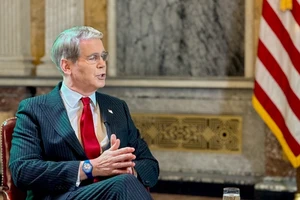
US Treasury Secretary Scott Bessent's advice to stop paying taxes and stockpile fuel drew mixed reactions on Iran International's Instagram page, with commenters debating its practicality and the role of public resistance against the Islamic Republic.

The responses followed Bessent's interview with Iran International, in which he urged Iranians to prepare for severe fuel shortages and forecast a contraction of more than 25 percent in the country's economy in the year ending March 2027.

“My advice to the Iranian people would be: don't pay your taxes because you're not going to get anything back from the government,” Bessent told Iran International's Kambiz Tavana on Monday.

  • Bessent says Iran economy will contract by more than 25%

    Bessent says Iran economy will contract by more than 25%

Bessent also urged households to stock up on heating fuel and fill their gasoline tanks, warning that Washington's Operation Economic Outcast would intensify over the next eight weeks.

The interview prompted a discussion among Iranians commenting on Iran International's Instagram post, with responses ranging from support for economic noncooperation to questions about how individuals could implement the recommendations.

Tax boycott prompts questions over implementation

Several commenters pointed out that income taxes are deducted automatically from salaries, leaving employees with little control over whether they pay them.

“We don't voluntarily pay taxes; they take them from us. Other deductions are made too, and whatever salary remains is paid late,” one commenter wrote.

Others noted that taxes are also included in the prices of goods and services, making them difficult to avoid through individual action.

“To avoid paying taxes, we'd have to stop eating because they're built into essentials. We'd starve if we didn't pay. And what fuel are we supposed to store, and how?” another wrote.

Some business owners and other respondents raised concerns about the consequences of withholding taxes, including potential restrictions on bank accounts and payment terminals.

“If you fail to pay taxes, your card terminal and bank accounts can be blocked. A shopkeeper's livelihood depends on them. We know this route; if it worked, we'd have tried it. Why not listen to people about practical solutions?”

  • US crackdown leaves much of Iran’s shadow banking untouched

    US crackdown leaves much of Iran’s shadow banking untouched

Others questioned how much a boycott of individual tax payments would affect the Islamic Republic's finances.

Fuel recommendations draw questions

Bessent's recommendation to stockpile gasoline and heating fuel also generated discussion about household infrastructure, storage capacity and costs.

Several commenters noted that many Iranian homes use piped natural gas for heating and hot water, rather than fuel that can easily be stored.

“Where am I supposed to store fuel? I live in a 74-square-metre apartment with no balcony or storage. There's barely room for me. Even if I had fuel, how would I use it in my gas heating system?”

Another asked how households could prepare for shortages of piped gas or gasoline.

“How exactly should we stockpile fuel? How can we store the piped gas supplied to our homes, or gasoline for our cars?”

Financial considerations were another recurring theme, with some respondents describing difficulties setting aside money for additional supplies.

“A week after my salary arrives, only a small portion remains in my account, and I have to live on that until the end of the month. How am I supposed to stockpile fuel?” one wrote.

Others responded with humor, including suggestions about filling balloons with gas or storing kerosene in apartments.

Some urge collective action against the Islamic Republic

Not all responses focused on the practical challenges. Some supported Bessent's broader message, arguing that Iranians should take an active role in increasing economic pressure on the Islamic Republic.

“People of Iran, we should act too; we cannot expect the US to do everything. Let's start by not paying water, electricity and gas bills, and shopkeepers should withhold taxes.”

The suggestion also prompted questions about possible consequences, including the disconnection of essential services for nonpayment.

Others raised concerns about the wider impact of Washington's pressure campaign, including the possibility of military action and its consequences for civilians.

  • What Operation Economic Outcast means for Iran, and for everyone trading with

    What Operation Economic Outcast means for Iran, and for everyone trading with

“Are Iranians supposed to do everything – take to the streets, risk their families and lives – only for the US to bomb Iran, divide its territory and take its oil? Ordinary Iranians would be worse off,” one commenter wrote.

Bessent said the US campaign was intended to pressure Iran's leadership rather than its population, forecasting further economic deterioration and serious fuel shortages this winter.