• العربية
  • فارسی
BrandBrand
  • Iran Insight
  • Politics
  • Economy
  • Analysis
  • Special Report
  • Opinion
  • Podcast
  • Live TV
  • Iran Insight
  • Politics
  • Economy
  • Analysis
  • Special Report
  • Opinion
  • Podcast
  • Live TV
  • Theme
  • Language
    • العربية
    • فارسی
  • Iran Insight
  • Politics
  • Economy
  • Analysis
  • Special Report
  • Opinion
  • Podcast
  • Live TV
All rights reserved for Volant Media UK Limited
volant media logo

Former CENTCOM deputy says military readiness needed if Iran diplomacy fails

Oct 27, 2026, 21:35 GMT+0

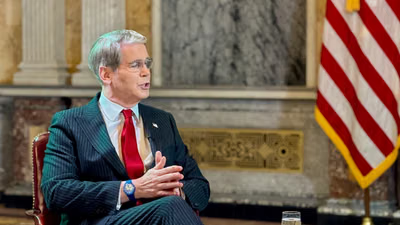
Former US Central Command deputy commander Vice Admiral Robert Harward said Tuesday that diplomatic efforts to curb Iran’s support for the Houthis should continue but warned that military options must be ready if diplomacy fails, in an interview with Al Arabiya English.

“Diplomacy is always at the top of the table, but that hasn’t worked and hasn’t worked with Iran or any of the surrogates,” Harward said.

He said a recent diplomatic visit to Tehran may have been part of an effort to persuade Iran to stop funding and supporting the Houthis, while adding that he did not yet have information about the talks.

“Diplomatic is always at the top of everyone’s list,” Harward said. “You have to be prepared to militarily deal with it when that fails.”

Most Viewed

Bessent says Iran economy will contract by more than 25%
1
EXCLUSIVE

Bessent says Iran economy will contract by more than 25%

2

Oil price surge fuels Iran hardliners’ case against US deal

3
INSIGHT

'Iraq-first' message from Iran ally sparks calls for retaliation

4

Mecca defense pact members hold talks with Iran

5

Two Iran Air retirees died after forgoing treatment over cost

Spotlight

  • Tehran summit divides Iranian hardliners over Yemen and US talks

    Tehran summit divides Iranian hardliners over Yemen and US talks

  • Iran’s neighbors push diplomacy, prepare for its failure
    ANALYSIS

    Iran’s neighbors push diplomacy, prepare for its failure

  • Three members of Iranian family die within months after protest killing

    Three members of Iranian family die within months after protest killing

  • Iran talks with Mecca pact states may be ‘last chance’ before military action
    ANALYSIS

    Iran talks with Mecca pact states may be ‘last chance’ before military action

  • 'Iraq-first' message from Iran ally sparks calls for retaliation
    INSIGHT

    'Iraq-first' message from Iran ally sparks calls for retaliation

  • Oil price surge fuels Iran hardliners’ case against US deal

    Oil price surge fuels Iran hardliners’ case against US deal

Banner
Banner
Banner
Banner
Banner
•
•
•

More Stories

Prosecutor says defendants filmed journalists' addresses to plan attacks

Oct 27, 2026, 21:02 GMT+0
100%
Court sketch from Woolwich Crown Court. Credit: SWNS/Julia Quenzler

Two men accused of assisting Iranian intelligence knowingly helped prepare attacks on Iran International journalists, a prosecutor told a London court on Tuesday, citing photographs and videos of addresses linked to them.

At Woolwich Crown Court, prosecutors alleged that Shapoor Qalehali Khani Noori, 57, and Farhad Javadi Manesh, 46, knowingly assisted Mostafa Sepahvand, 41, in targeting Iran International journalists Mojtaba Pourmohsen and Kambiz Hosseini.

All three defendants deny the charges brought under Britain's National Security Act. Prosecutors allege they gathered information for Iranian intelligence to prepare for serious violence against at least one target, with Sepahvand expected to carry out an attack.

Prosecutor Bill Emlyn Jones accused Noori of being a trusted member of Sepahvand's surveillance team, citing photographs, messages and mobile phone location data. Noori denied knowingly participating in the alleged plot, saying he had taken photographs and videos at Sepahvand's request without understanding their purpose.

Late-night filming and repeated visits

Jones questioned Noori about a video filmed on St Dunstan's Avenue, an address linked to Hosseini, and sent to Sepahvand via WhatsApp at 11:56 p.m. on December 12, 2024.

Noori acknowledged taking the video but said they had gone for a drive because they were bored. He said Sepahvand asked him to film near a park, send the recording and delete it.

Jones challenged that account, suggesting the camera had deliberately focused on a particular house rather than randomly filming the area.

The prosecutor also cited phone and vehicle location data indicating repeated visits to the Malthouse Court area, linked to Pourmohsen, arguing that the movements were part of coordinated surveillance.

Noori said he did not know the significance of the locations and believed the recordings might have been connected to Sepahvand's business activities.

Jones also questioned him about four videos recorded over more than three hours in Kingston upon Thames on March 4, 2025, near premises associated with a business called Need a Fixer.

The prosecutor cited messages discussing recordings at hourly intervals to demonstrate Sepahvand's presence at a location, suggesting Noori knowingly participated in reconnaissance intended to help identify and ultimately attack targets.

Noori denied the allegation, saying he had never suspected Sepahvand of planning violence.

Prosecutor challenges Noori over police interviews

Jones questioned why Noori had not identified Sepahvand as a friend or explained the recordings during police interviews following his arrest in May 2025.

The prosecutor suggested Noori had remained silent because he had not yet developed an innocent explanation for his activities.

Noori said he had followed his solicitor's advice and was distressed by accusations that he had assisted a government he had fled.

He told the court he had been imprisoned three times in Iran and fled the country in 2019 because he feared for his life. During questioning by his defense lawyer, the court heard that Noori was granted asylum in Britain in 2024.

Earlier hearing examined £150,000 payment for alleged attack

During Monday's hearing, prosecutors challenged Sepahvand's claim that he had been deceiving the Revolutionary Guards, arguing that he was motivated by money and assistance with a criminal case in Iran.

Sepahvand acknowledged that a proposed £150,000 payment was conditional on harming a journalist but maintained that he demanded the sum to deter the IRGC and never intended to carry out an attack.

Noori and Javadi Manesh accept visiting locations and taking photographs or videos but deny knowing they were assisting Iranian intelligence.

The trial is scheduled to resume on November 2.

Iran, Russia eye joint oil and gas projects amid US blockade

Oct 27, 2026, 18:18 GMT+0
100%
Russian President Vladimir Putin shakes hands with Iranian President Masoud Pezeshkian during the official welcoming ceremony at the Summit of Heads of State and Government of the Gas Exporting Countries Forum (GECF) in Moscow, Russia, October 27, 2026.

Russian President Vladimir Putin and Iranian President Masoud Pezeshkian discussed joint oil and gas projects in Moscow on Tuesday, as Tehran seeks closer economic ties with Russia while its energy exports remain squeezed by a US naval blockade.

The two leaders discussed expanding political, economic, trade and energy cooperation, including joint projects in the oil and gas sectors, according to a readout from the Iranian government.

Pezeshkian also called for greater cooperation on natural gas exports, saying Iran produces around 280 billion cubic meters of gas annually, ranking behind only the United States and Russia.

He said global developments required greater technical and engineering cooperation and “strategic governance” of international energy markets.

The meeting took place on the sidelines of the Gas Exporting Countries Forum summit, which brought together some of the world's largest gas producers.

Putin also met Qatar's Emir Sheikh Tamim bin Hamad Al Thani on Tuesday and said Russia was ready to do everything within its power to help resolve the “complicated situation” in the Middle East.

The Qatari emir told Putin that the region was going through “difficult circumstances” because of tensions between the United States and Iran.

Moscow offers mediation

Russia has sought a role in efforts to end the US-Iran conflict, repeatedly offering to mediate between Washington and Tehran as regional governments push for renewed negotiations.

Putin has previously told US officials that he believes there remains room for diplomacy with Iran, while Moscow has also offered to help resolve one of the central nuclear disputes by taking Iranian highly enriched uranium out of the country.

Iran faces mounting economic pressure from the US blockade and sanctions, which have sharply curtailed its oil exports.

Russia has provided Iran with diplomatic backing, condemning US and Israeli military action and opposing efforts to increase pressure on Tehran at international bodies.

Moscow and Tehran signed a comprehensive strategic partnership treaty in 2025, although cooperation on major energy projects has remained more limited as the two countries are themselves major oil and gas producers.

Two charged over alleged Iran intelligence operation at RAF Fairford

Oct 27, 2026, 17:44 GMT+0
100%
A B-1B Lancer bomber arrives at RAF Fairford airbase, after police declared a major incident at the base and arrested several men on suspicion of offences under the Explosives Act, who have since been released on bail, in Fairford, Gloucestershire, Britain, September 29, 2026.

Two men appeared in a London court on Tuesday over an incident at a British air base used by US bombers to strike Iran, with prosecutors alleging that one of them sought to assist Iranian intelligence.

British national Mohmed Abdulkarim, 24, and Nouman Essghir, a 24-year-old dual British-Iranian national, appeared at Westminster Magistrates’ Court on charges under Britain's National Security Act.

RAF Fairford in southwest England had been used by US bombers carrying out strikes on Iran. The aircraft were withdrawn on security grounds shortly after five British men were arrested outside the base in the early hours of September 27.

Prosecutors said Abdulkarim arranged for five men to travel to the base in three vans at the request of a man identified only as “Ali.”

The group bought around £300 ($400) worth of petrol and stored it in drums, prosecutor Louise Gray told the court.

“One of them was told there was a bomb in the van,” Gray said. One of the men then called the emergency services, prompting police to arrive.

Abdulkarim, who appeared in court in a wheelchair, is charged with engaging in conduct likely to materially assist a foreign intelligence service between August 31 and September 28.

Reconnaissance of US-used base

Essghir was first arrested outside RAF Fairford on September 27 and is accused of entering a prohibited place for a purpose prejudicial to the United Kingdom on August 22.

Prosecutors said he had carried out reconnaissance of the base in August on instructions from “Ali” and was also in one of the vans that returned to Fairford the following month.

After the men were told there was a bomb in the van, Essghir messaged “Ali” asking “wtf (what the fuck) is going on,” Gray said. He received no reply.

The circumstances surrounding the September incident have remained largely unexplained and attracted international attention amid heightened concerns about the security repercussions of the US-Iran war for Western countries.

Prime Minister Andy Burnham said earlier this month that the activity at RAF Fairford was likely coordinated in Iran. Tehran's ambassador to Britain denied the allegation.

Abdulkarim was granted bail and is due to appear in court again in November, while Essghir was remanded in custody.

Police said six other people remain on bail, including four British nationals arrested outside RAF Fairford on September 27.

The decision to release suspects on bail following the incident had drawn scrutiny. Police said on Tuesday that doing so had helped investigators secure the charges against Abdulkarim and Essghir.

Iran’s neighbors push diplomacy, prepare for its failure

Oct 27, 2026, 16:42 GMT+0
•
Ata Mohamed Tabriz
100%
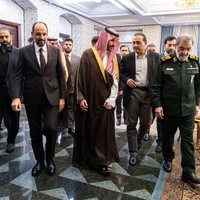
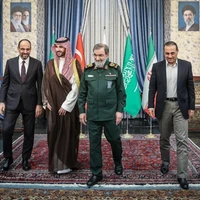
Senior officials from Iran, Turkey, Pakistan and Saudi Arabia meet in Tehran, October 26, 2026.

Regional powers are intensifying efforts to prevent a wider war with Iran, but their diplomacy comes with explicit demands of Tehran: reopen the Strait of Hormuz, stop threatening Persian Gulf states and allow international nuclear inspectors to work without obstruction.

Qatar and Pakistan, two of the principal mediators between Tehran and Washington, made those demands publicly on Tuesday, just one day after Saudi, Pakistani and Turkish officials traveled to Tehran for talks.

The military and security makeup of the delegation reflected the two tracks regional powers are pursuing: diplomacy aimed at containing the conflict alongside deeper defense cooperation in case it spreads.

The parallel efforts reveal the limits of the latest diplomatic push. These countries want to prevent another round of war, but they also want changes in Iranian behavior and are preparing to protect their interests if talks produce none.

After a Qatari delegation visited Tehran earlier this week, Doha said Tuesday that Iran needed to show “good intentions” for mediation efforts to succeed.

A Qatari Foreign Ministry spokesperson called on Tehran to stop threatening Persian Gulf Arab states and open the Strait of Hormuz.

Pakistan also set out what it expects of Tehran at the UN Security Council on Tuesday. Its representative pointed to the June Islamabad Memorandum of Understanding between Iran and the United States as evidence that diplomatic progress remained possible, while insisting that the International Atomic Energy Agency be allowed to operate without obstruction.

Islamabad said it continued to seek a ceasefire, reduce tensions and create conditions for renewed negotiations between Tehran and Washington.

Preparing for failure

Saudi Arabia, Pakistan and Turkey are strengthening military cooperation under the Mecca defense pact. Talks with Tehran therefore do not mean military preparations have stopped.

Houthi attacks on Saudi Arabia and insecurity along maritime routes have imposed serious costs on the kingdom and affected countries across the region and beyond. For Riyadh, de-escalation with Iran is closely linked to protecting infrastructure, trade and economic stability.

On October 23, Turkey, Egypt, Pakistan and Saudi Arabia, the R4 group, held talks with Britain, France, Germany and Italy in Istanbul. Their joint statement stressed resolving disputes through dialogue and reducing tensions.

The R4 statement emphasized diplomacy but also condemned Houthi attacks, expressed solidarity with Saudi Arabia and Yemen’s government and called for safe and unhindered passage through Hormuz. These are not the positions of countries offering Tehran unconditional support.

Before Istanbul, the possibility emerged of an informal division of labor: direct US and Israeli pressure on Iran on one track, with regional states seeking to contain the consequences of the war, particularly Houthi attacks, on another. The subsequent diplomacy does not rule that out.

Better protection for Saudi Arabia could indirectly benefit US operations, but that does not establish a coordinated strategy or secret agreement. Nor can regional states be treated as part of the same coalition as Israel.

Their opposition to expanding attacks on Iran and continued contacts with Tehran point to different objectives, even if some of their actions have complementary effects.

Two visions of security

The Tehran meeting also exposed sharply different interpretations of what regional diplomacy is intended to achieve.

Ali Bagheri, deputy secretary of Iran’s Supreme National Security Council, described the talks in terms of “endogenous security,” presenting Iran’s defense model as a basis for regional security and linking cooperation with Tehran to countering US and Israeli involvement.

Tehran is seeking to show that despite the war and pressure it faces, it remains indispensable to discussions about the region’s future. But the presence of foreign officials in Tehran does not by itself amount to endorsement of that vision.

Riyadh has emphasized de-escalation, a diplomatic solution and support for Qatari and Pakistani mediation, without suggesting either acceptance of Tehran’s security model or a reduced US role in the region.

Qatar’s latest demands suggest that regional diplomacy is not an embrace of Tehran’s position but an attempt to change its behavior while avoiding a wider war.

Pakistan’s position adds another condition: renewed diplomacy should go alongside unobstructed international oversight of Iran’s nuclear program.

Diplomacy, with limits

The Tehran talks were not an isolated attempt at mediation. Pakistan and Qatar helped secure the June Iran-US memorandum, and both have continued trying to revive negotiations.

The renewed mediation efforts amid a major US military buildup and Israeli threats show that regional countries still see space for diplomacy. But their public demands also demonstrate how far they remain from Tehran on some of the central issues driving the crisis.

The presence in Tehran of Saudi Defense Minister Khalid bin Salman carried particular weight. His previous visit was on April 17, 2025, less than two months before Israel launched its June attacks on Iran.

Regional governments are therefore trying to preserve the possibility of an Iran-US agreement without tying their security to its success. They want to contain Houthi attacks, protect Saudi Arabia and keep Hormuz open, while avoiding a wider confrontation with Iran.

That balancing act is becoming harder. Diplomacy remains active, but so do preparations for what happens if it fails.
Israeli exit polls point to deadlock after Iran-dominated election

Oct 27, 2026, 13:55 GMT+0
100%
An advert for an Israeli television channel that will broadcast Israel's election coverage features Israeli Prime Minister Benjamin Netanyahu and former Israeli military chief Gadi Eisenkot, leader of the Yashar party, ahead of Israel's national election, on a bridge in Tel Aviv, Israel, October 21, 2026.

Voting in Israel's election was drawing to a close Tuesday, with Iran a central issue and turnout reaching its highest level at this stage since 1988.

Early exit polls in Israel's parliamentary elections on Tuesday pointed to a divided Knesset, with neither Prime Minister Benjamin Netanyahu's coalition nor the opposition securing enough seats to form a majority on its own.

Projections by Israel's Channels 12 and 13 showed the two blocs closely matched, with Arab parties collectively holding a potentially decisive number of seats in the 120-member parliament.

Channel 12 projected 52 seats for the opposition bloc, 50 for Netanyahu's bloc and 18 for Arab parties. Channel 13 put the opposition at 53 seats, Netanyahu's bloc at 50 and Arab parties at 17. Both projections left the main blocs short of the 61 seats needed for a parliamentary majority.

The exit polls are preliminary and could change as votes are counted.

Record vote

“We have surpassed all the records kept by the Central Elections Committee,” acting director general Dean Livne said. “There hasn’t been such a nationwide voter turnout since 1973.”

Long lines prompted election officials to say polling stations would remain open beyond their scheduled 10 p.m. closing time if voters were still waiting.

“We promise, everyone will vote,” Livne said. “If there is a line at 10 p.m., the polling stations will continue to operate until everyone who arrived by 10 p.m. has voted.”

Iran factor

Iran has featured prominently in the closing days of the campaign.

Israeli media reported that Netanyahu clashed with military chief Eyal Zamir over proposed action related to Iran that Zamir feared could trigger renewed conflict. Netanyahu denied the reports, while Defense Minister Israel Katz called reports of a rift baseless.

Eisenkot backed Zamir, accusing Netanyahu of putting his political survival ahead of national security and warning that he would not allow the military to become a tool in Netanyahu’s “campaign of survival.”

Another opposition leader, Avigdor Liberman, went further, saying any attempt to drag Israel into military action to prevent the election would amount to treason.

Eisenkot, like Netanyahu, says Iran must be prevented from acquiring nuclear weapons and has backed military strikes against its nuclear program.

But he has rejected Netanyahu’s pursuit of regime change in Tehran as an achievable military objective and argued for combining economic pressure and diplomacy with military action when necessary.

Earlier this month, Eisenkot said another attack would be justified if Iran were making a dash for a nuclear weapon, but said he was unaware of any development requiring an immediate strike.

The result is being followed closely in Iran, where Israel’s next government will inherit decisions over whether and under what circumstances to resume military action against Tehran.